[KonTiki2 news from November 2015]

Final preparations

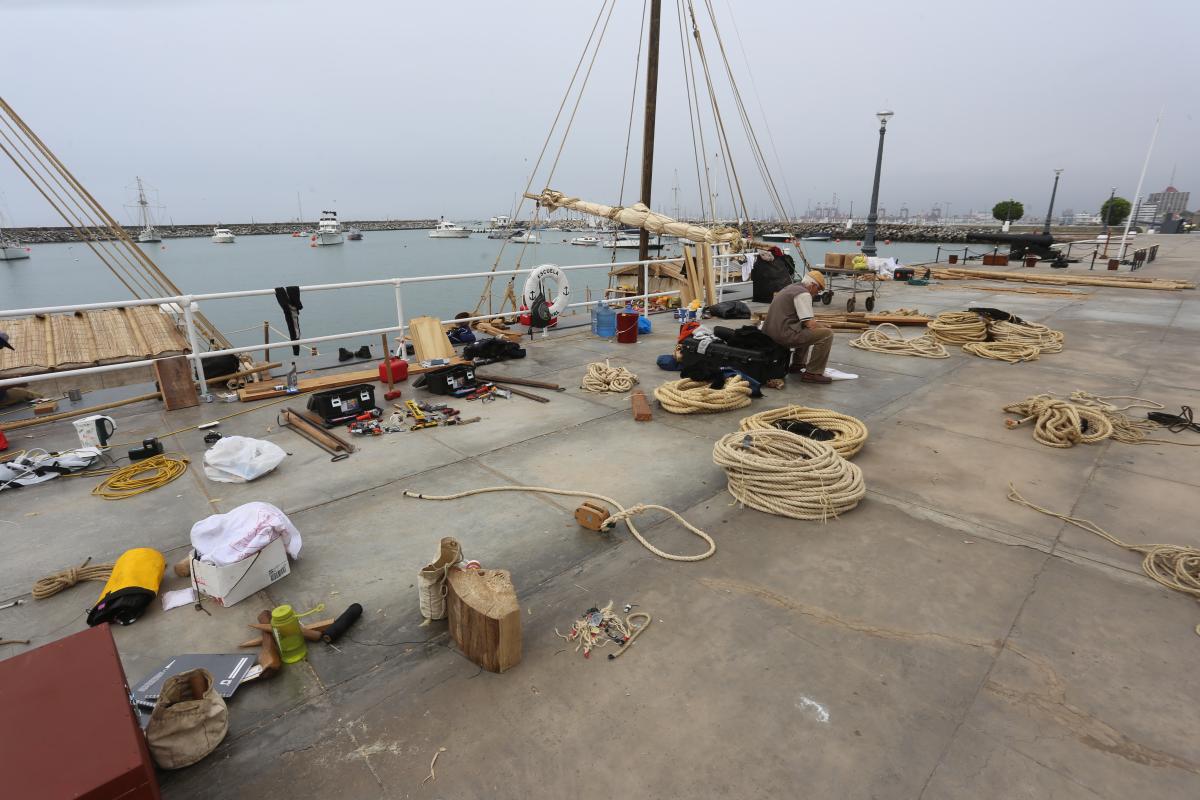
(2015-11-05) Still in port, waiting for final shipment of scientific instruments to join us. Eager to sail, we hear Rapa Nui calling in the far distance.

Technological tour of the Kon-Tiki2 rafts

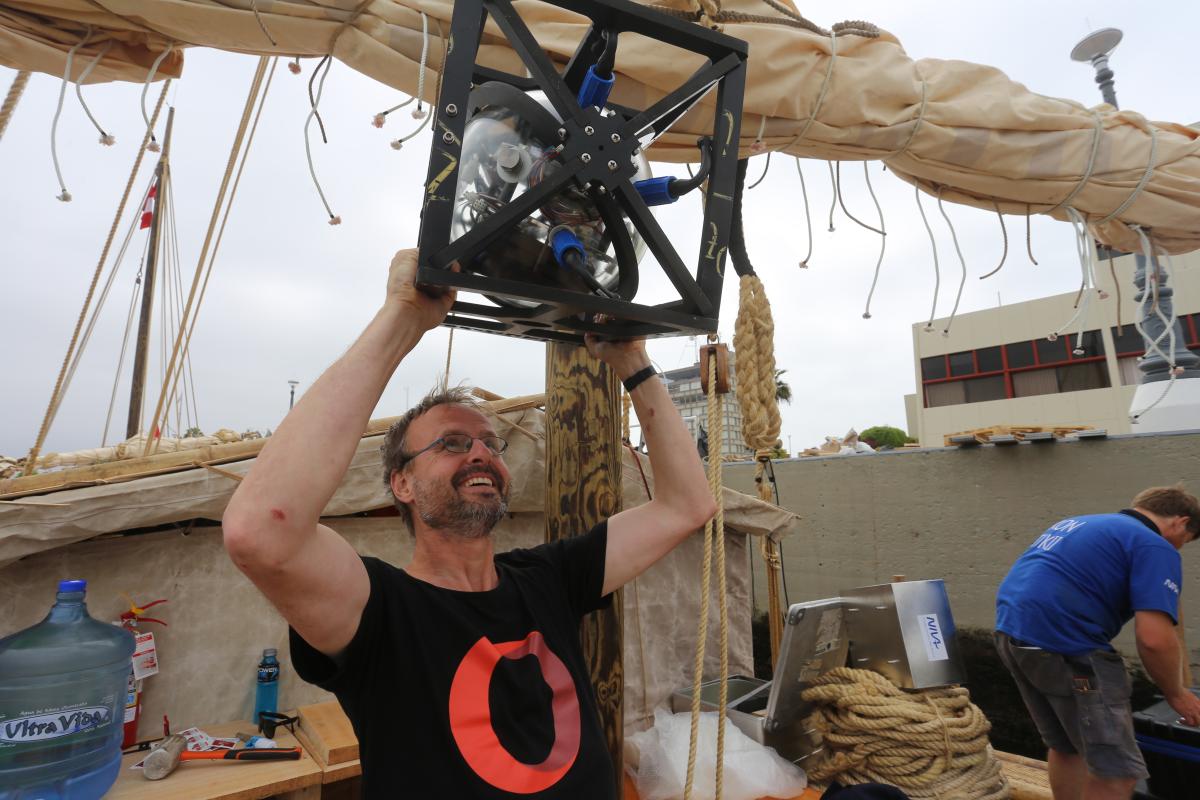
(2015-11-06) Another wonderful video by Luis Herrera, this time with a focus on the technology on board the rafts. Follow Håkon Wium Lie the Expedition's CTO, on a technological tour on the rafts.

We're leaving today!

(2015-11-07) After years of planning, and months of hard work in Peru, the two Kon-Tiki2 rafts will leave port today, at 3PM. We will be escorted out into the Humbholdt current and start sailing tomorrow morning. The crew is trying to make sure all is ready and stowed for a 6-week-or-so journey to the wonderful and mysterious island of Rapa Nui. Updates on this page will may not be so frequent in the weeks to come, but we will try to upload images to this page if the satellites are in the right constellations. We would like to thanks our Peruvian hosts at SIMA and the Peruvian Navy at Escuela Navale. Also, we are grateful to the people who have helped us bring equipment into Peru, and those who have helped us with the necessary paperwork and licenses. Let's go!

First day at sea – sailing into the sunset

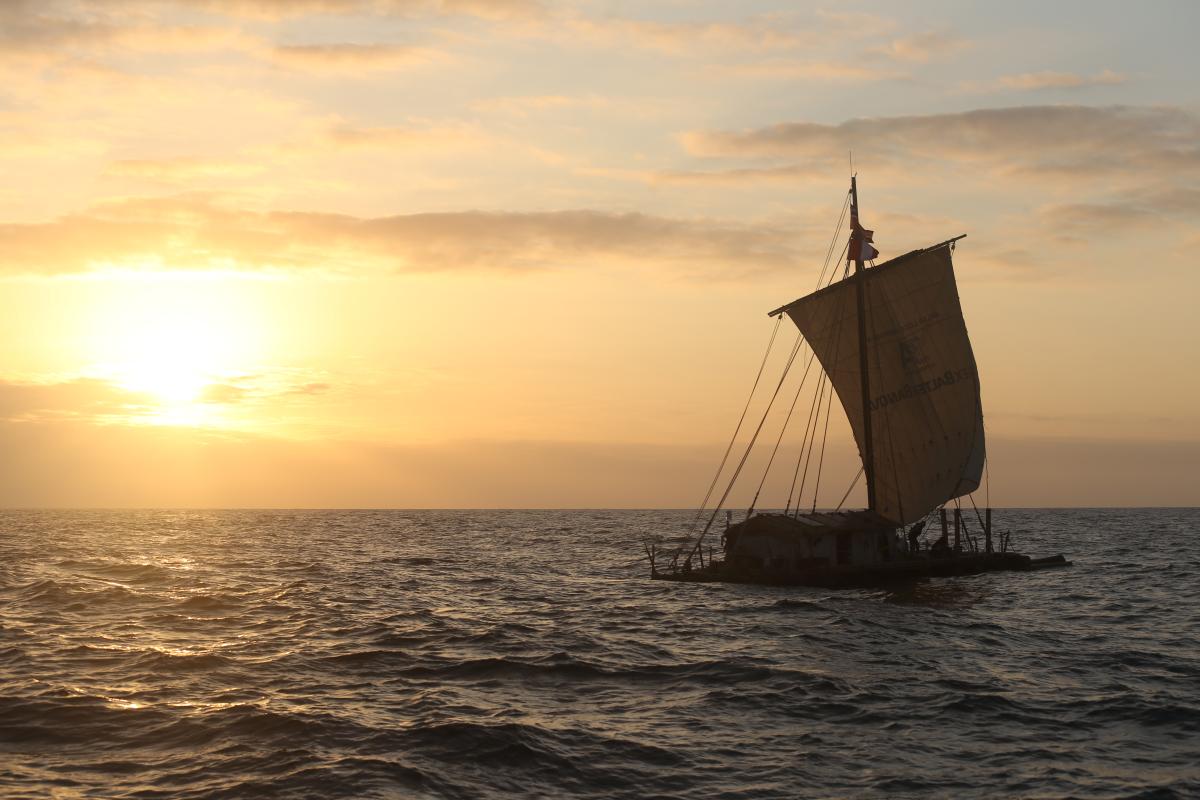
(2015-11-08) The first day at sea started in Lima fog, and ended with two rafts sailing into a beautiful sunset. One of the goals of the expedition is to show that balsa rafts can be sailed, and not just drift. The first day was therefore used to learn the ropes, and – more imoportantly – the guara boards. The rafts do not have rudders, but navigate by raising and lowering guara boards front and aft on the rafts. A fregate from the Peruvian Navy paid us a visit mid day and its helicopter found some compelling angles for their cameras.

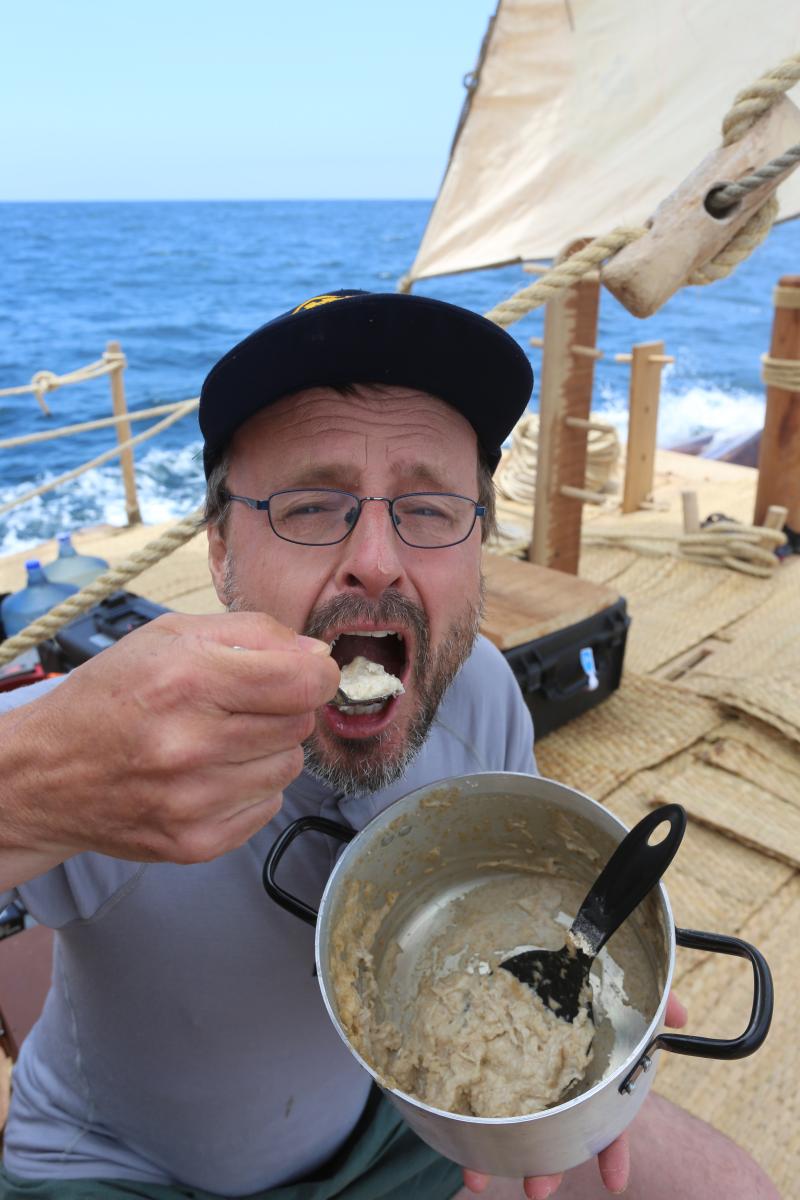
Oatmeal-con-banana for breakfast, scientific equipment recovered, trawling for plastics

(2015-11-09) The crew on the Tupaq Yupanqui raft were served oatmeal porrage with Peruvian bananas for breakfast. After breakfast, an important scientific instrument was recovered in pristine condition below deck (which can be quite wet on a balsa raft). The Manta Trawl, which filters water looking for plastics, was deployed for an hour and the crew started analyzing the findings (more pictures). We can also report of Fair winds, blue skies, and a starry night in the southern hemisphere. For programmers: Our satellite units report our positions every 30 minutes. As an excercise in programming, we invite people to fetch the raw data and create a better visualization of our progress than can be found on our map. You can fine raw data files here. Please send an email to h@kontiki2.com if you have a solution.

Kongsberg echo sounders look down onto life

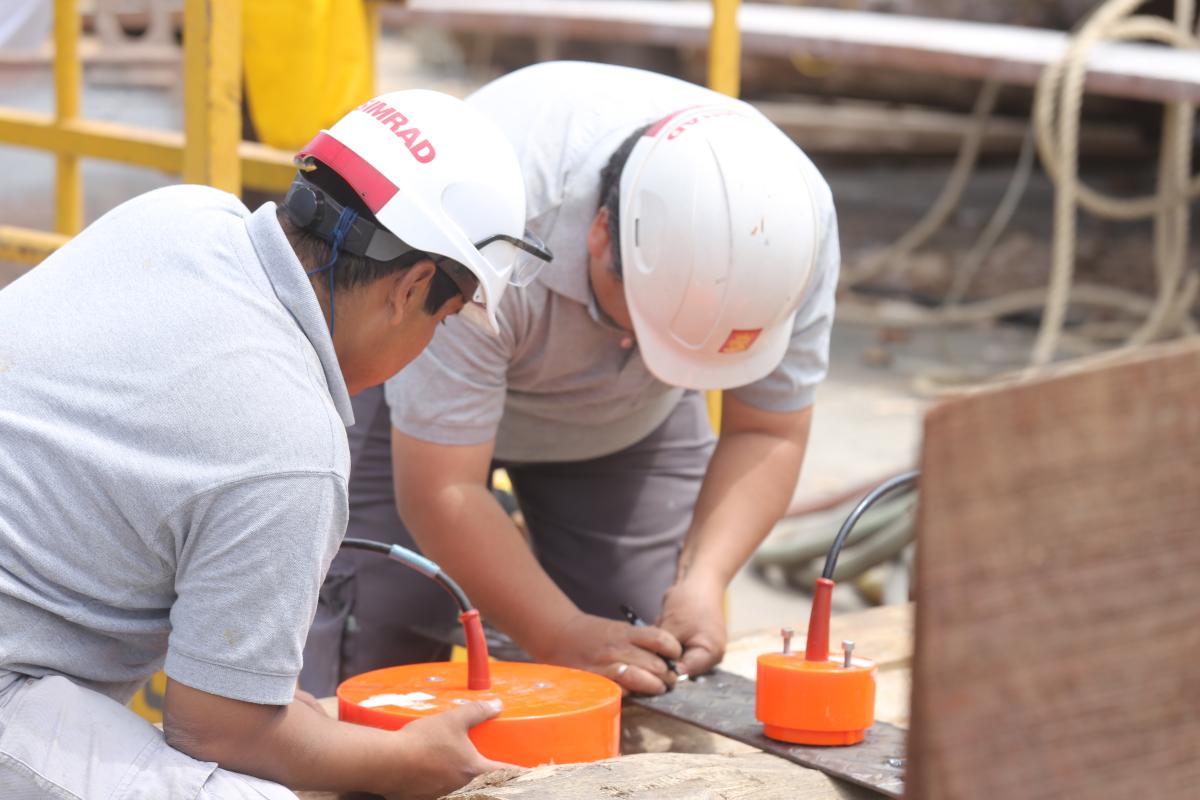
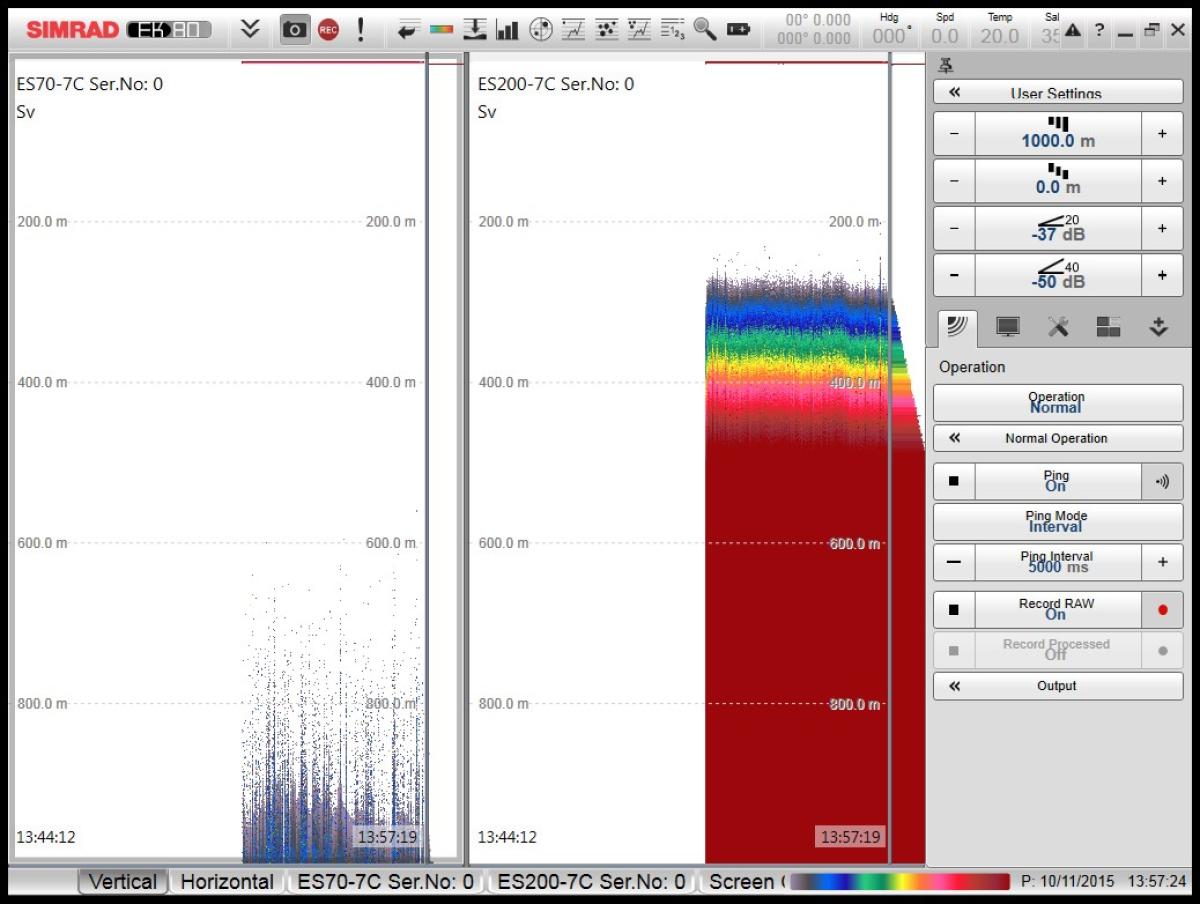
(2015-11-10) As part of the scientific program on the Kon-Tiki2 expedition, we bring advanced echo sounders from Kongsberg Maritime. The sounders themselves are mounted underneath the Tupac raft, and the electronics sit inside the cabin. In these pictures, you can see screenshots of from the software analyzing the life below our raft. Spot any sharks?

Starry night in South Pacific

(2015-11-10) In a late-night talk with Torgeir Higraff, he discusses the bistorical background for the Kon-Tiki2 expedition, the traffic situation in Lima, and importance of starry nights in the South Pacific. Podcast by Håkon Wium Lie. We encourage reuse of content on this page, as long as the Kon-Tiki2 Expedition is credited.

Guara-board sailing in the Pacific

(2015-11-10) Our rafts do not have rudders or propellers to steer us towards Easter Island. Instead we use the famed guara boards. These are movable mini-keels placed front, middle and aft. By adjusting these boards up or down a notch, we can set a course – and the 30-ton raft listens willingly.

In other news, BBC asked why you would you cross the Pacific on a wooden raft?, and the meterorological data we submit are available here

Science update from Kon-Tiki2

(2015-11-11) Cecilie Mauritzen, resident scientist, talks about problems and possibilities brought by a new day at sea. Our balsa rafts are ideal for some scientific equitmeent as they move slowly through distant waters. However, the rafts have primitive facilities with makeshift solar panels and no hardware store nearby. In the Podcast, Håkon Wium Lie also talks about good news and bad news from the echo soudners department.

The two rafts meet

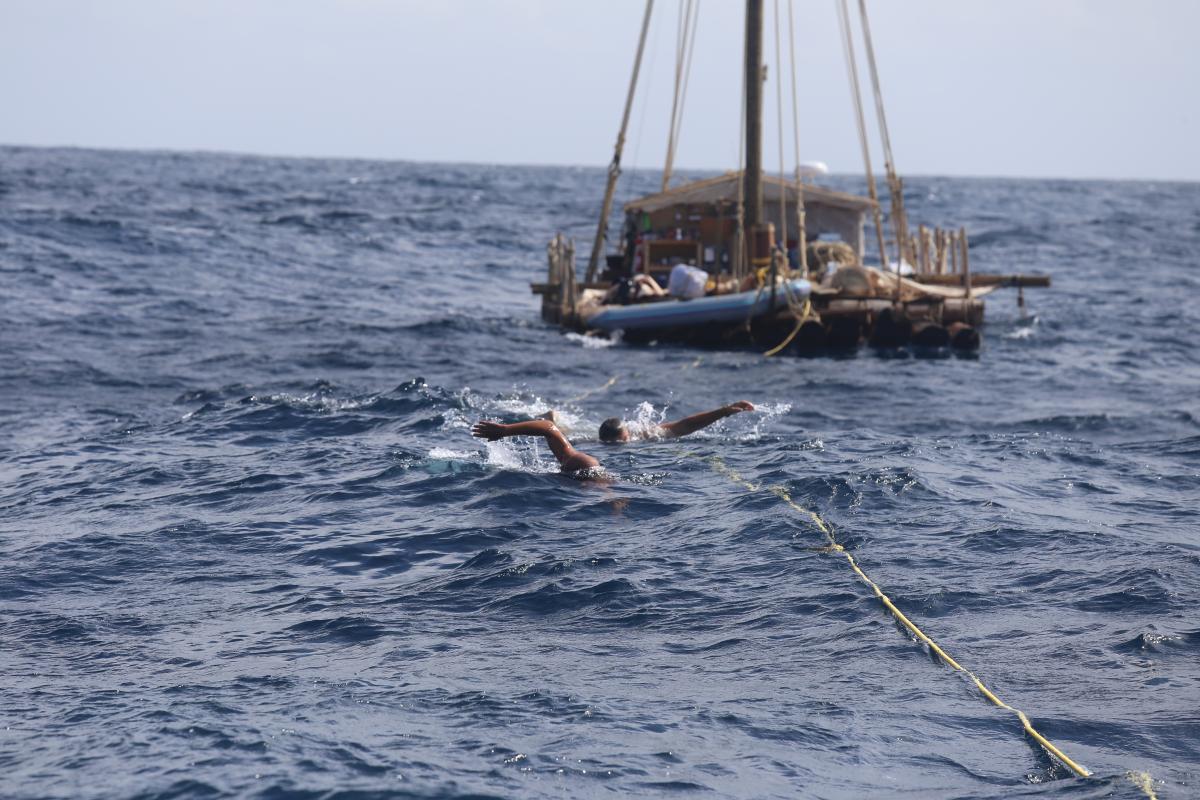
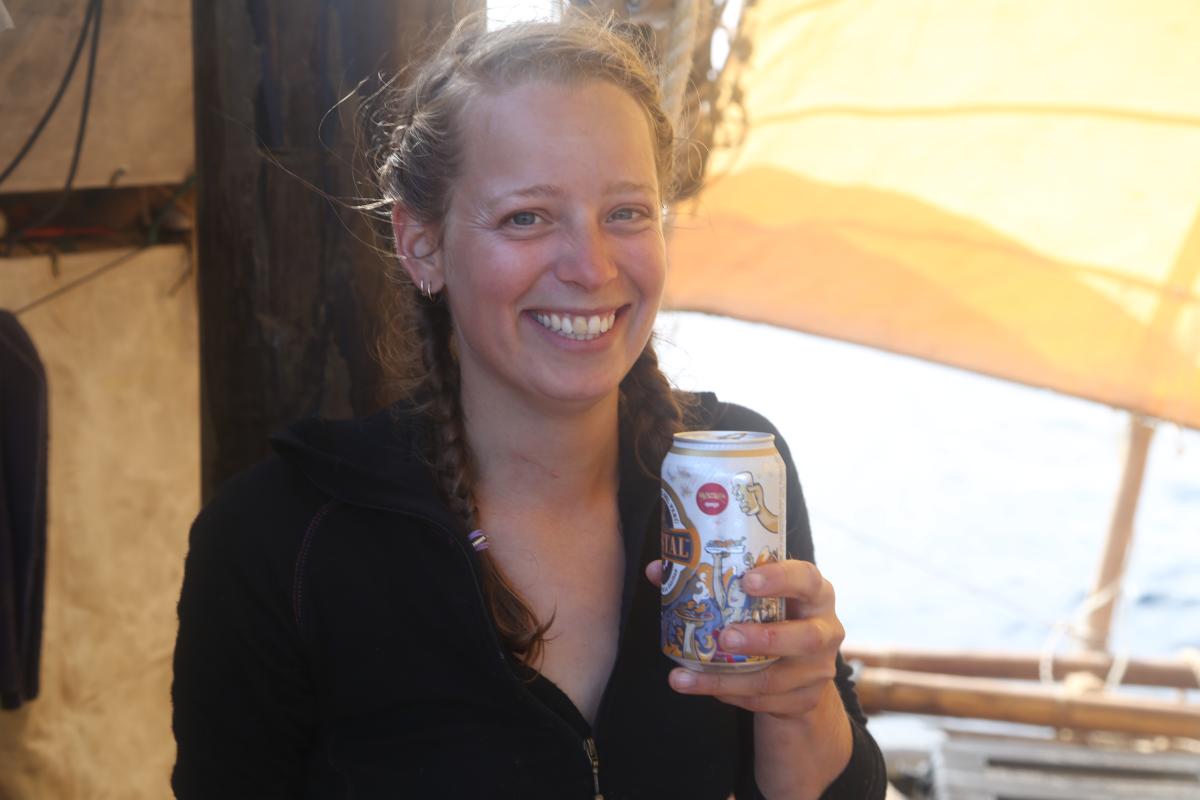
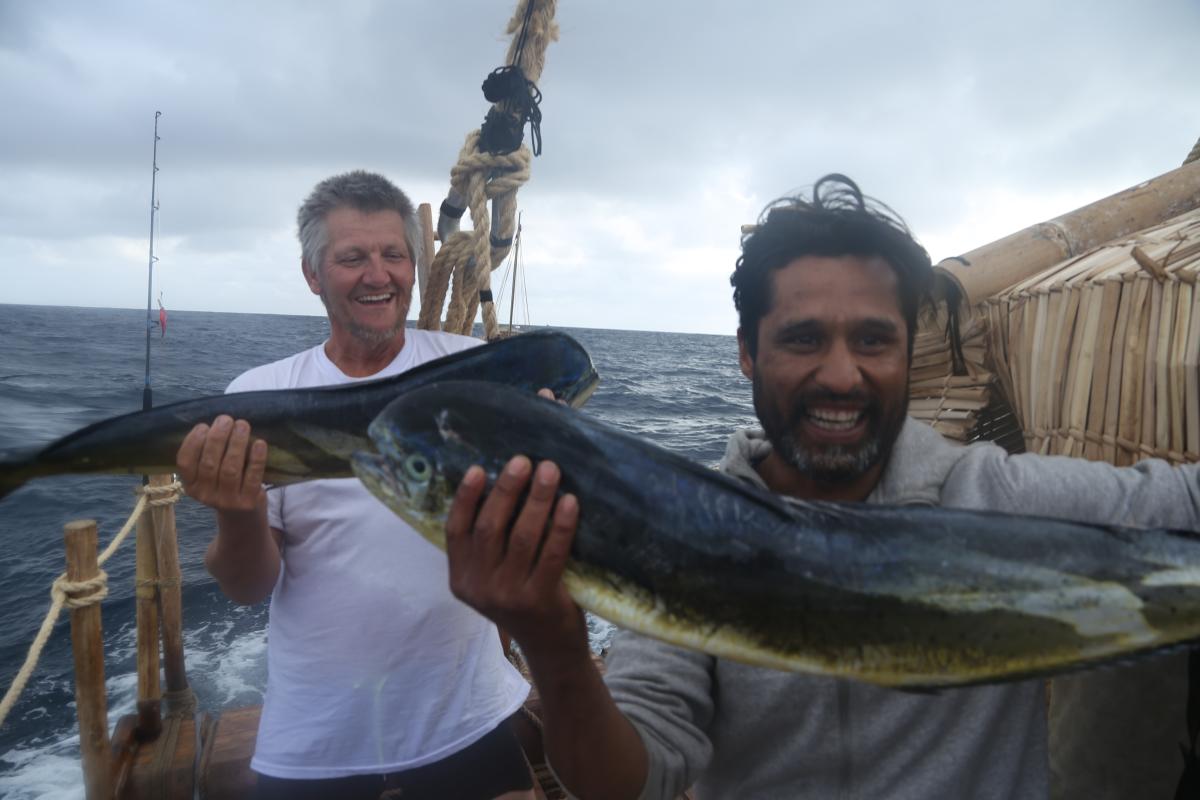
(2015-11-11) The two rafts of the Kon-Tiki2 Expedition met at sea today, and people, skills and material goods moved between the rafts. The first picture shows Boris and Pål swimming between rafts. In the second picture, Captain Kari greets the other raft (du kan lese bloggen hennes). In the third picure, Signe is thankful for a cold beer, brought from the all-male raft. We also caught fish today! The pictures don't tell the full story, but Jostein, Cecilie, Pål and Esteban are excited to have more proteins on the raft. Meanwhile, Ola and Gunvor fixes sails.

Soaring above and looking below our rafts

(2015-11-12) The Kon-Tiki2 expedition brings more electronic devices than any raft has ever carried before. When our resident drone took off from the front deck of Tupac Yupanqui, it was a first. Taking off between sails, ropes and sailors is a challenge — landing it even more so. Our bandwidth does not permit us to publish movies, but even still images look gorgeous from these angles.

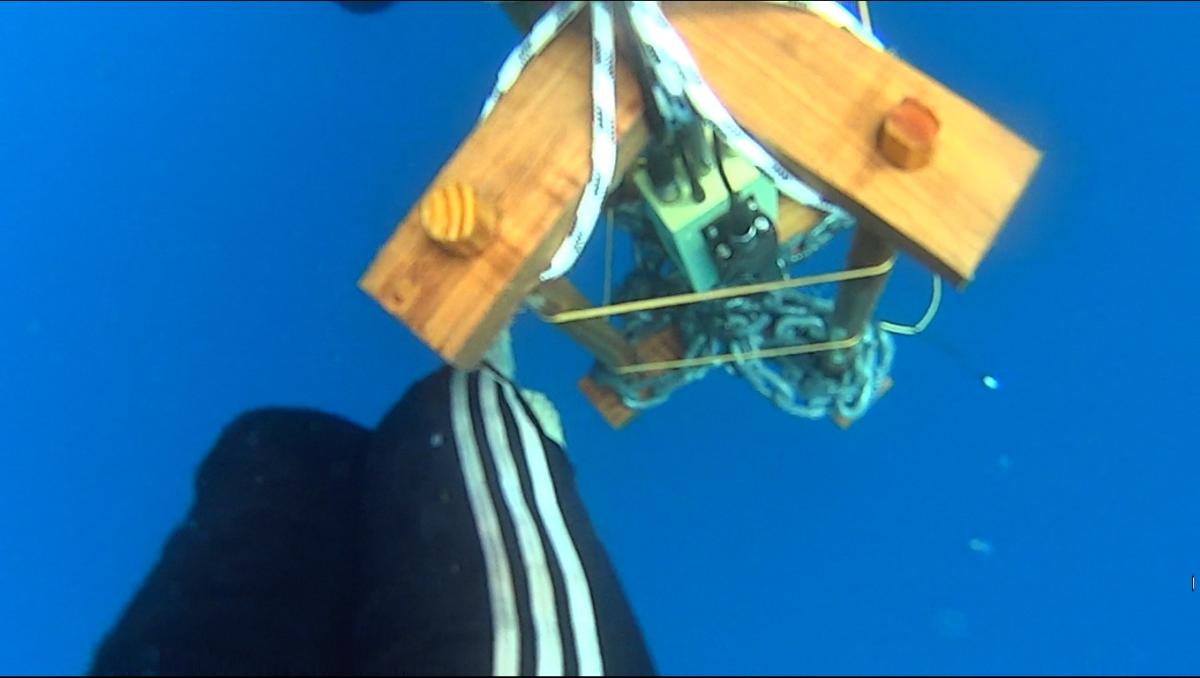
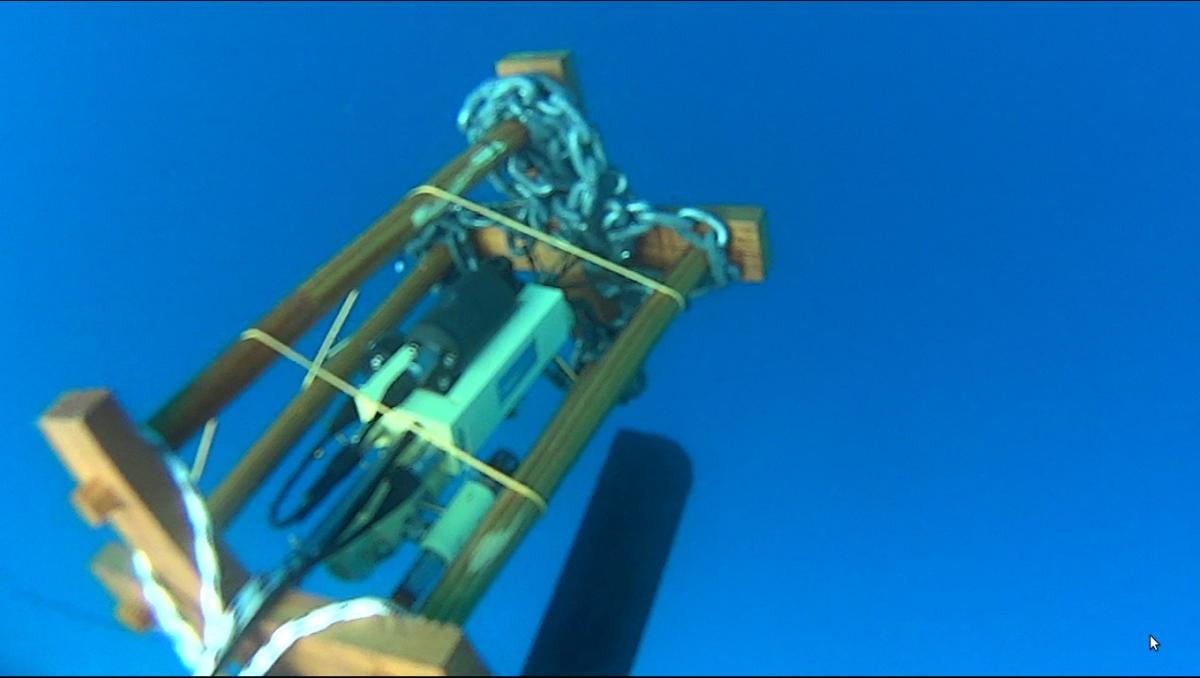
Below water, Rahiti Tane has a ferrybox which measures temperature, oxygen levels, pH values, and various other parameters scientists are looking for. One part of the ferrybox is the CTD, which measures conductivty (i.e. salinity), temperature, and depth. The pictures show how the CTD hangs under the raft, which moves slowly through water. NIVA, the Norwegian Water Research Institute is providing us with equipment and support — both technical and emotional. In a year of El Nino, collecting accurate data in the South Pacific is especially worthwhile. The swimmer with camera is Jostein Heidenstrøm
Jotron help secure our rafts

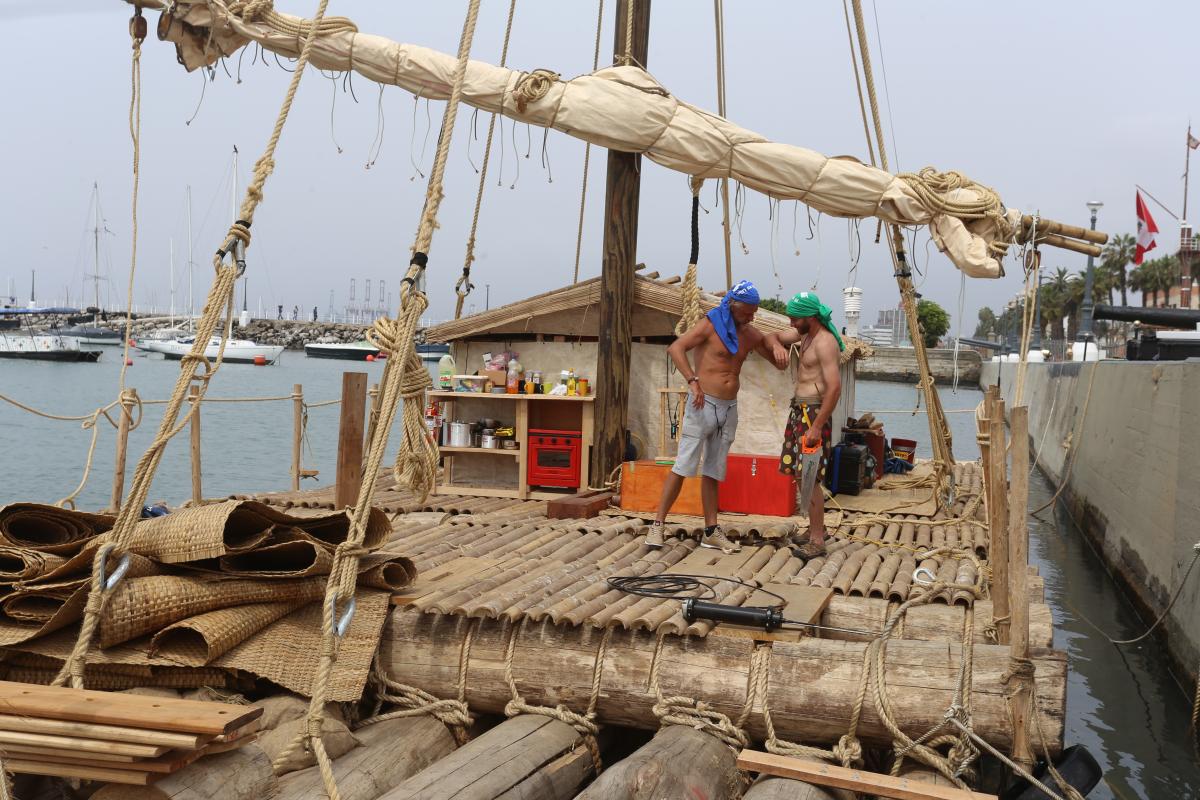
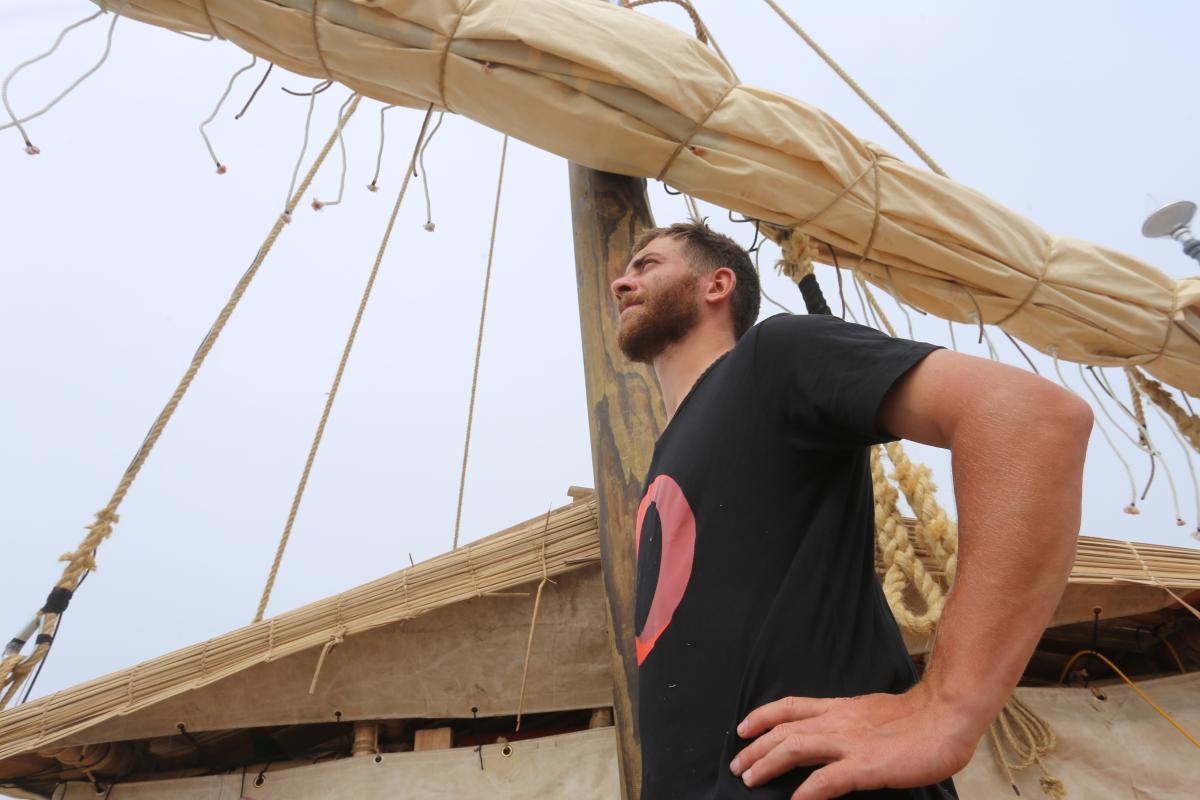
(2015-11-12) Safety is a concern when you set out on balsa rafts across the Pacific. The Kon-Tiki2 Expedition carry advanced safety equipment from Jotron. Jotron is a trusted name in maritime electronics, providing safety equipment for ships, oil rigs – and even balsa rafts! They happen to be based in Larvik, Thor Heyerdahl's home town, and they proudly sponsor our expedition. On board both raft have AIS SARTs (which tell others where we are in emergency), floating VHF radios, and strobe lights for the full crew. This equipment is so important to us that we delayed departure from Callao when the shipment was delayes. In the pictures, Captain Øyvin Lauten and Expedition Leader Torgeir Higraff can be seen with the orange Jotron devices.

Pacific raft cuisine

(2015-11-12) We have generous supplies of food on our rafts. Some of it is meant for our return journey from Easter Island, and is stowed away. Other items are readily available for aspiring Pacific chefs. In the first picture, you see our home-made bread, based on a special bread mix with salt water from Baker Hansen in Oslo. Cecilie has even mixed in some mango, to the delight of Kari and Pål. In the second picture, the crew of Rahiti Tane hosts a dinner on the front deck, underneath a partially lowered sail. Signe, the vegetarian chef, served a fantastic meal with mango, onion and rice. Jostein (left) is eating, as is Pål and Cecilie. The fact that David, our British sailor who has taught himself sailor-Norwegian, pulls out a garbage bag is purely coincidental. The other pictures are from today's lunch on Tupac Yupanqui where chef Torgeir served a fantastic two-course meal based on one fish, a dorado caught by Jostein this morning. We still have fresh vegetables and fruits.

Kon-Tiki2 exposé: how they catch fish

(2015-11-13) A series of pictures from the Rahiti Tane raft reveals how fish is caught by the Kon-Tiki2 Expedition: local fishermen provide supplies. Camila II was generous to share from their catch, and the crew threw all remaining Peruvian currency in return. An ethical exchange of proteins and currency therefore took place. However, as the rafts venture further from the Peruvian coasts, fishing boats will disappear. Will the crew be able to provide for themselves? They have the best equipment, and they have been trained by Dr Hook himself. We'll follow this issue closesly in the time to come.

[The crew on Tupac Yupanqui, the other raft of the expedition, insists that there have been no contact with fishmongers, and that they have, in fact, caught one dorado themselves. Really.]

Trawling for plastics

(2015-11-13) The Manta Trawl is an ingenious device for collecting plastic fragments in the ocean. Our raft pulls the trawl for one hour and thereafter analyze and collect the samples. Today, Jostein and Håkon found two plastic fragments (we think) and some hapless creatures. The samples are photographed, and the position and conditions of trawling is recorded. The plastics fragments are stored for onshore analysis. Some of the crew are eager ot take part in scientific research, others are more interested in the sailing part of the expedition: how to best sail a raft towards Easter Island. If this were a reality-show, no doubt the producers would have found conflicts between the two groups. On Tupac Yupanqui, however, only bliss is found. Except for the hapless creatures.

Flying fish on deck

(2015-11-14) The first flying fish landed on the deck of Tupac Yupanqui this morning. It was quickly turned into bait, and Torgeir went fishing. Nothing. But we have five weeks or so left on this raft and will not give up.

In other news, Jostein removed a layer of salt from the solar panels, and Andrey and Daved held a concert to mark that we have been at sea for a week.

We are 300 nautical miles from the Peruvian coast. We have 1750 nautical miles left to Easter Island (as the crow flies). Exercise for readers: when will we get here?

Onshore programmer charts Kon-Tiki2 voyage

(2015-11-15) Onshore progammer Ian Short has created a new map to chart the voyage of the Kon-Tiki2 rafts. The new map shows our progress through the Pacific, and indiates speed, distance traveled, distance left, and even our estimated time of arrival (ETA) on Easter Island. The map is based on coordinates uploaded every 30 minutes by the Iridium GO units (seen in picture 2) carried by both rafts. The coordinates are available to anyone who would like make maps from here. The old map indicates each observation as discrete points (picture 3). We also have an old-fashioned magnetic compass onbord, and this is the instrument we most rely on when sailing into the sunset.

(We can also reveal that Ian Short is David's father. At yesterday's breakfast, the crew put bets on when the raft would reach Easter Island. David's bet was on December 19, which is the same as Ian's map indicated when first published today. A coincidence? We don't think so :-)

NIVA's three-stage sampler deployed

(2015-11-15) The Kon-Tiki2 Expedition today deployed an advanced three-stage sampler in the South Pacific. The sampler, developed and sposored by NIVA, the Norwegian Water Research Institute, pumped 15,000 litres of South Pacific water through three filtes at a rate of 5 litres per second. The goal of the operation is to detect plastic fragments of varying sizes. The pump drew significant amounts of power from the solar-based power bank. The crew, however, were happy to sacrifice electrons in the name of science – electrons what would otherwise be wasted in onboard personal entertainment systems. The sampler is heavy and must be handled by 2-3 people. Conditions at sea were dynamic, with winds around 14 knots. The sail was lowered during deployment. More pictures

Workout session on Tupac Yupanqui

(2015-11-16) On the testosterone-laden Tupac Yupanqui raft, front-deck workout sessions bring out formidable muscle power. Hardened by raising sails and lowering guara boards on night watches, these men risk their lives inches above shark-infested waters. Notice how the rigging is reflected in Torgeir's sunglasses, how Jostein desperatly brings himself up on the 10th (and final) lapse, and how Håkon disguises his deep fears 4000 meters above the ocean floor.

Local resident greets Kon-Tiki2

(2015-11-16) The Kon-Tiki2 expedition was greeted by one of the local residents of the South Pacific today. As can be seen in the video, a whale stopped by to take a deep breath alongside Tupac Yupanqui. Any marine biologsts out there who can help determine what kind of whale we met? Send us an email!

A visit to Rahiti Tane

(2015-11-18) Today, your correspondent had a rare opportunity to visit Rahiti Tane, the raft with a female captain and mixed crew. I am happy to report that Captain Kari's raft is well-organized, well-fed, and, well, perhaps, slightly better-smelling than the Tupac Yupanqui raft. In the second picture, Kari pulls the sail while Signe keeps an eye on the rigging. In the third picture, Cecilie and the raft mascot waves to onshore followers. Notice how the eggs hang securely from the ceiling. The fourth picture shows the drying rack, radiating neatness. Thereafter sailors Signe and Gunvor discusses sailing strategies with Ola, while the men of Rahiti meet.

Catch of the day

(2015-11-18) The crew cheered on master fisherman David Short as he reeled in a fine dorado from the Tupac Yupanqui deck today. At risk were significant supplies of fat and protein and David did not dissappoint us. David's fishing skills were further enhanced by premimum fishing gear from Penn and Abu.

Our rafts

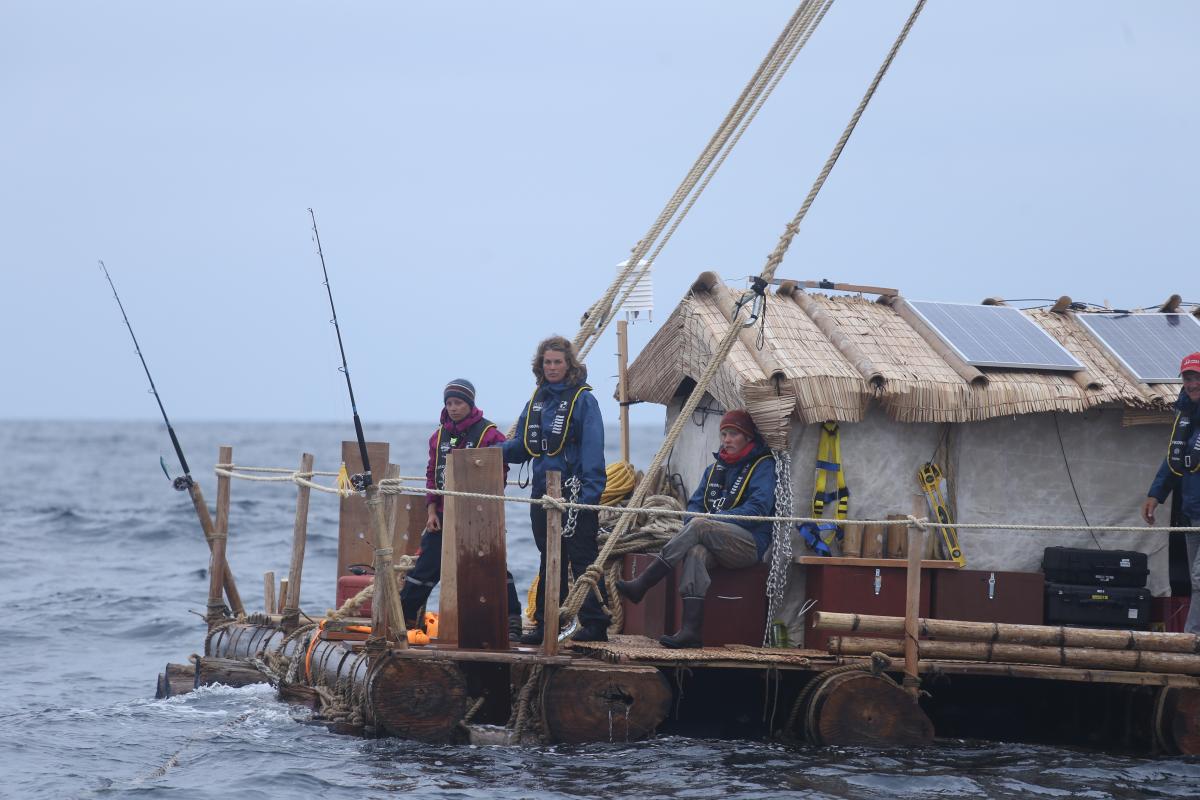
(2015-11-19) The Kon-Tiki2 Expedition sails two rafts, from South America to Easter Island. Roundtrip. The rafts are Rahiti Tane and Tupac Yupanqui. Some of these pictures are photographed from a dinghy; each raft carries a small dinghy with an outboard motor. Travelling from one raft to the other can be dangerous. You do not want to left in the Pacific on a dinghy with a broken engine. Nor do you want ot be crushed by a balsa log as the dinghy approaches the raft. But the dinghy allows for wonderful photos to be taken. We wish we had a bluer sky to offer, but the eather has been overcast most of the time since we left Callao. We hope this will change as we further away from the mainland and the Humbholdt current.

Today's menu

(2015-11-19) Hungry sailors were offered a filling lunch on Tupac Yupaqui today. Yesterday's catch was turned into a delicious meal by our master chef Torgeir. He also found use for some of the vegetables we have, but do not know the names of. David, the fisherman, was happy to see his dorado cooked up, and asked for his phone number to be published. Unfortunately, we're well outside any cellphone network and any interested parties must wait until we reach shore. We hope that will be on Easter Island, but winds must change for us to get there. Could someone turn on the easternly, please?

In other news, the sun grazed us and our solar panels this morning. A bird was spotted from the front deck. We know the name in Norwegian (havsule), but couldn't think of the English term. Do let us know.

Kontikikari's voice

(2015-11-19) Kari Skår Dahl is the captain of the Rahiti Tane raft. In this authetic VHF conversation, she discloses secrets from her raft (backbreaking exercises in the morning), from her work (food is a favorite topic among professionan rescuers), and a nearby Russian doctor. In the pictures, Captain Kari can be seen with her usual smile, and your starstruck correspondent. The two last pictures are take before leaving Callao. If you read Norwegian, you should also visit Kontikikari's blog.

Welcome to the front deck

(2015-11-20) The front deck of the Tupac Yupanqui is alluring, especially in those rare moments when the sun comes out. We invite you to join the photographer, take stroll on our front deck!

Drifters released

(2015-11-20) Two UFO-like creatures were released by the Kon-Tiki Expedition at midnight, local time. The creatures have been kept in captivity on the front deck since our departure from Lima. Last night, Cecilie Mauritzen, Kon-Tiki2's chief scientist, gave orders to release them into the ocean. Once there, they join a herd of ocean drifters that report currents, temperature, and athmospheric pressure. Part of the Global Drifter Program (GDP), the Kon-Tiki Expedition will release 20 of these drifters in waters where few vessels travel. Last night, the sea was rough with winds at 25 knots. Notice how the person releasing the drifter is tied to the raft to not follow along with the drifter.

Whalesurfing

(2015-11-20) Whale sightings occur almost daily on the Kon-Tiki2 rafts. (In comparison, we have not seen any sharks.) In these pictures, you can see the whale with the Rahiti Tane raft in the background. Due to our raft being low in water, we the whale is almost coming right at us. Again, we ask for help from marine biologists: What kind of whale is it?

Life on a raft

(2015-11-20) After 12 days the raft teams of Kon-Tiki2 have settled into the a way of living. On Tupac Yupanqui, the youngest crew member Jostein Heidenstrøm (19) has done what many Norwegian boys did in the era of sailships – he went from school to work as a sailor. But Jostein didn't just join a sailing shim, he joind a raft! He writes:
The adventure has finally started! These first weeks have been amazing. I've been tired from time to time because of seasickness and waking up at 4AM every night, but it has all been a experience. I have learned and seen lots of new stuff already! The first days at sea were very hectic, but now all the tasks are more routine and things run smoothly. I like the raft life and I am looking forward to spend the next weeks on this raft and to celebrate Christmas on Easter Island. To sail a raft and live on e a raft is fantastic!

(Editor's note: As can be seen in the pictures above, Jostein takes on many roles onboard: raft clown, swimmer, master fisherman, budding scientist, and photographer. As we get hungrier, we especially like him as fisherman :)

Giant dorados secure supplies

(2015-11-21) Master fisherman David Short has done it again: a huge dorado was caught this morning, securing fat and proteins for the crew for days. Along with fellow morning watchman Jostein, the fish was tied with a rope before being lifted and photographed. The back deck is slippy due to waves breaking and the dorado, for sure, wanted to escape the pots and pans of Tupac Yupanqui. David's phone number will be disclosed when we get closer to shore – right now we're as far away from a cellphone network as anyone can get.

Rahiti Tane also reports a huge catch: master fisherman Esteban caught a 6 kg dorado, described as a blinking metallic wonderfish over VHF. Pictures will be posted in due course.

Crew profile: Ola Borgfjord

(2015-11-21) Ola Borgfjord is the master sailor on board Tupac Yupanqui. He is the one who is awakened in the middle of the night when other sailors need help. Ola was also instrumental in designing the rafts, and testing scale models at NTNU. In this podcast Ola does not disclose all his secrets, but he offers you a rebate next time your order a viking ship and a balsa raft from Båskott Trebåtbyggeri (FB)!

Spaghetti, anyone?

(2015-11-21) One of the items we worked hard to import to Peru was 4000 metres of 3mm Kevlar rope. The rope is used to lower and raise scientific instruments and cameras in the ocean. 4000 metres is enough the reach the deep ocean floor below us. However, we have a problem. The rope was delivered on bobbins partially made from cardboard. When stored underneath deck (which is a wet zone on a balsa raft) the cardboard has disintegrated and the rope has come off the bobbins. Getting the rope onto the SIMA-made steel bobbin will be an massive job. In the pictures, sailors Ola and David have started the work, shuffling a bag of unraveled rope between them.

Today

(2015-11-21) Cecilie Mauritzen writes: Today turned out to be the nicest day so far. In the afternoon the sun came out in full glory, shining over our newly cleaned raft (Saturday is cleaning day on Rahiti Tane). Even the bodies were cleaned – with more than 21 degrees in the water, and the sunshine, we definitely got tropical Pacific feel. Even if we go back to the normal, gray, cold weather tomorrow, the memories of glorious Saturday November 21st will stay with us long :)

Week 2 at sea:
Pacific cuisine on Rahiti Tane

(2014-11-22) Signe and Gunvor write: We receive quite a few questions about what we eat onboard the rafts. We went shopping about a week before departure and bought what then seemed like a ridiculous amount of food. After repacking and stowing it, however, it seemed to have shrunk. How much do 14 sailors eat during what may become 135 days? How much fish will we catch, and how many oranges, onions, carrots and other fruit and vegetables could we bring without them going bad? In addition to fresh foods we bought what we could find of tinned food, dried food, and quite a lot of rice, beans and lentils. We brought a variety of spices to be able to season things differently from day to day.

Every day starts off with oatmeal for breakfast, accompanied by fresh orange juice and a cup of coffee. We left Peru with 50 kg of oranges and now we're down to the last 10 kg – and dreading the day we'll run out. Lunch is usually rice with leftovers (if the night watch hasn't already eaten them), bread made from porridge and flour, or a fish if we're lucky enough to have caught one. The highlight of the day, however, is dinner. Following is a list of what we have had this past week:

We're quickly running out of fresh vegetables – we'll need to become more creative next week. So boys on Tupac, what did you have?

Epic drone footage from Kon-Tiki2

(2015-11-22) From above, the two Kon-Tiki2 rafts look spectacular set against the magnificant Pacific ocean. Taking off from the front deck is a challenge, and landing it amongst ropes, sails and sailors even more so. But we managed, this time.

Footage from our time in Lima is also available: clip1 clip2 clip3 clip4 clip5 clip6

Animals around us

(2015-11-23) We owe thanks to readers who have helped us identify species encountered on the Kon-Tiki2 rafts. In the whale movie posted, Megaptera novaeangliae was suggested. Someone else called it a Rorqual. Others, again, said humpback. These are all names for the same whale: Humpback = Megaptera novaeangliae = one of the larger rorqual species. In the second whale sighting, several identified it as a pilot whale.

When we asked what bird it was, the answer quickly came back: a Peruvian booby. Another one came back today, shown in the first picture.

We now need help with another puzzling bird, shown in picture 2, 3, and 4. It flies like a swallow, with quick turns close to the water. But it doesn't seem to fish. And in close-ups, like above, it looks more rounded than a swallow. What could it be? And what is it doing out here, 700 nautical miles from shore?

As an extra bonus, we add a picture of our security line, which has become a cozy home for some.

Tracking our rafts

(2015-11-23) Our home page has a little map on the left side, showing the progress of the Kon-Tiki2 rafts. If you zoom in, you can see marked positions where the rafts have sent tracking signals. Each raft has one Iridium GO unit (seen in picture 1, 2, and barely in 3) which continously tracks our positions with the built-in GPS receiver. Every 30 minutes, an email with the current position is automatically sent to our web server. There, a small script gently massages the reported positions add them to a small Google Map on our home page. (If you want to play with our data set, you can find our reported positions here.)

Also, the Iridium GO unit sets up a small wifi network on each raft. Through this network, the crew can send and receive email. In picture 4, the Samsung Galaxy J2 – which comes with Opera Max – is used to connect from outside the cabin. In picture 5, you can see the small outside antenna of the Iridium GO. The Irididium satellites are 780 kilometres above us, and the bandwidth is limited (2.4kbs). However, small text-based messages get through and this is a much-appreciated communication channel with the outside world. Feel free to send us email and stop for a moment to think about the wonderful journey your bits will take!

Installations under water

(2015-11-23) The three-stage sampler from NIVA is a big water pump which uses massive amounts of energy (raft scale). It floats on the side of the raft while it pumps exactly 15.000 litres of water through three filters of varying sizes. We preserve these filters so that onshore researchers later can detect plastics. The sampler was launched today, as was Jostein, our under-water photographer. In these pictures you can see the sampler with the floater box on top. The floater box is carefully calibrated to keep the sampler floating in water. The blue rope is an electrical cable which transmits power as well as control signals; power is cut off after extactly 15.000 litres.

In the last picture, you can see our raft from underneath, including the Kongsberg EK80 echo sounders, guara boards, and a fish!

Another beautiful day

(2015-11-24) The weather has improved and we now have hours of sun every day. This is good for solar panels and crew. In the first picture, the men of Tupac Yupanqui raise the sails. Later, they discover that water bottles stowed underneath their beds have been damaged by the constant movements of the raft. The bottles are moved to the front deck to check for salt content. Meanwhile, a beautiful Peruvian booby came flying by, looking for a snack. The little fellow in picture 5 hid in the Manta trawl, which primarily tries to find plastics. Who is he, and what is he doing at the surface? Did he live on our raft, and jumped ship? Or, is he a representative of the crustaceans, which the white-bellied storm petrel – yesterday's mystery bird, identified by several readers, thanks! – is known to eat? The diameter of the shell is 8-10mm. As always, we are eager to hear from onshore marine biologists. (The image is taken with a 1:1 macro lens and further magnified 2x. You can see our siv under the crab.)

Finally, we see Rahiti Tane in a magnificent Pacific sunset.

Boris Romanov, our medical doctor

(2015-11-24) Boris Romanov is the medical doctor of the Kon-Tiki2 Expedition. In this authetic VHF conversation, he discusses medical incidents on our rafts, appendectomies (not his favorite topic), and his fellow Russian doctor Yuri Senkevich. Yuri joined several of Thor Heyerdahl's expeditions and later became a well-respected TV personality in the USSR. Perhaps Boris also have a career in media? You heard him here first!

The pictures above reveal that Boris is both serious and humorous. This is a good combination for a raft doctor – he is serious enough for us to trust him with our lives, and he's humorous enough for his fellow crew on Rahiti Tane to enjoy his company for six weeks.

Why are we sailing rafts to Easter Island an back to South America?

by Kon-Tiki2 Expedition leader Torgeir Higraff

Thor Heyerdahl proved that ancient South Americans could drift across the Pacific on their rafts. It was a ethnological theory he worked on all his career. Is there more to be done? I think so, and this is what the Kon-Tiki2 Expedition is all about.

Kon-Tiki could not be steered, they could not set a course, keep it, nor define destination. The Kon-Tiki could never have reached a specific target, especially not Easter Island which is too far south for the prevailing currents. Still, Heyerdahl was the first to provide knowledge about balsarafts in modern times. He provoked the archaologists and ethnologists to dig into the prehistory of Polynesia, and inspired millions of people academically.

Heyerdahl proved that balsa rafts could carry people for months at sea. But ancient South Americans could do more: they could steer their rafts, and navigate anywhere in the Pacific. When wind and current push us on Rahiti Tane and Tupac Yupanqui north, we sail towards west and even southeast. How is this possible? Because we are not copying Kon-Tiki, we are copying the rafts from prehistory and early history based on archaeological and historical evidence Heyerdahl was not aware of in 1947. Coastal maritime civilizations in South America had sophisticated navigation skills. Like them, we use guara boards (also called dagger boards) to set course. On our rafts, we adjust he guara boards day and night and we document all major movements of the boards.

Recent studies have shown that South American DNA entered Easter Island between 1300AD and 1500AD. The Kon-Tiki2 Expedition shows how people could have travelled there, and how they sailed back. We also present how Polynesians could sail their rafts to South America. Noone have sailed between Easter Island and South America on a raft in modern times. We are well on our way on the first leg, but the biggest challenges are still ahead.

[Also check our science program with NTNU, NIVA and Kongsberg, and read more about why we do this]

Sunshine!

By Cecilie Mauritzen, Chief Scientist of the Kon-Tiki2 Expedition

It is Tuesday November 24, we are west of 90 W, and we have entered a new type of weather, after being pounded with strong southeasterlies, huge swells, and cloudy, humid conditions for more than two weeks. Today was sunny, calm and wonderful. So sunny in fact, that we pulled out yet another instrument from the Rahiti Tane toybox. In this case a "Microtop" to measure aerosol optical depth of the atmosphere over oceans. These instruments require a clear view of the sun, so ours had so far been collecting dust.

With the Microtop measurements we participate in a global network of 500 voluntary ships who contribute to monitor how the aerosol content of the atmosphere changes with space and time. The program is coordinated by NASA. Remember, these particles have an overall cooling effect on the atmosphere, but regionally they can have a huge impact on how temperature and even precipitation varies from place to place. So that's why it is so important that the voluntary ships keep collecting their data, year in and year out. And today, we did our little part :)

Flyt Forlag

(2015-11-24) For our English-speaking audience, this story offers pictures of happy people reading real paper books on a raft in the Pacific. However, if you read Norwegian, you should look more closely. On the shelves of Rahiti Tane, Signe picks out her favorite book from Flyt Forlag, a Norwegian publisher specializing in maritime books. Our bookshelves are stacked with books from Flyt forlag, to Øyvin's delight. He is our most avid reader, and has – really – read through most of the collection on Tupac Yupanqui. Ola is also an eager reader, while Håkon has found that the drifters provide perfect back support for reading about Colin Archer. Many of the books are about past expeditions, reminding us that we are not the first Norwegians to sail the oceans. Others are self-help books, like "Lær å seile" ("Learn to sail"). I guess we should have read that one before we set out.

Rainbow over Rahiti Tane

(2015-11-25) A beautiful rainbow grazed Rahiti Tane this morning. In the pictures, you can see the full rainbow, part of the sail on Tupaq Yupanqui, and – with difficulty – a small dot on the horizon (inside the rainbow, on the left side). The smallness is due to the angle of the lens, and the superior sailing by the Rahiti Tane crew.

In other news, we are aware of reports about the earthquake in Peru. Here at sea, 800 nautical miles from ther Peruvian coastline, we have not seen or felt anything unusual during the night watch. Thanks to those who reported, we appreciate your concern.

Congratulations, Torgeir Higraff!

-->
(2015-11-25) Kon-Tiki2 Expedition leader Torgeir Higraff celebrated his 43th birthday today, at 14 degrees South, 92 degrees West. He was greeted by the Rahiti Tane Raft Choir, in a special performance of Hurra for deg. In well-rehearsed solo performance, media celebrity Boris Romanov performed his own interpretation after the choir. Torgeir's crewmates at Tupac Yupanqui baked a chocolate cake, a first for our raft. Andrey performed on the banjo. Ola had a special gift for Torgeir, a tuna fish, which bravely fought against his fate: birthday dinner for Torgeir!

Gratulerer med dagen, TH#2!

For Torgeir Higraff, on his 43rd birthday, by P. J. Capelotti

Despite instantaneous global communications and all of the impatience they have spawned, many explorers still yearn to understand the slow mechanisms by which ancient people created the original global economy. For them, it is no shock that we of the modern world did not invent worldwide trade networks. They understand that we have merely accelerated connections that were created by transoceanic explorers thousands of years ago. The moment Kon-Tiki reached Polynesia successfully, all of the world’s oceans, especially the Pacific, became archaeological seas, where people could explore not just the present and the future, but the remote past of our distant ancestors. Inside the global oceanic laboratory Thor Heyerdahl created, Torgeir Higraff seeks nothing less than to understand the paths of human global exploration. The sailor tacks against the wind, the drifter must of necessity journey wherever the wind blows. One fights nature, one submits to it. The sailor is heroic, the drifter, romantic. Even though the drifter often raises sail, he does so only with the wind directly – or very nearly so – at his back. This is not in any way to suggest that one can drift on a balsa raft knowing nothing about the rudiments of sailing. It is merely to propose that we still know how to sail, in a systematic way, because sailboats are still in use all over the world. On the other hand, it is very likely that no one had attempted a transoceanic voyage on a raft for at least several hundred years prior to the Kon-Tiki expedition in 1947. Now, after the expeditions of Thor Heyerdahl and Torgeir Higraff, we are close to understanding how such craft were navigated in prehistory.

Gratulerer med dagen, TH#2!

Raft sushi

A tour of our mast

(2015-11-26) The mast on Tupac Yupanqui is 15 metres high. It has several functions. First, it holds the yard with the sail. Second, it has some technical installations, including two VHF antennas and a weather station. Last, but not least, the mast is our flagpole. To make sure all these vital function continue to work, the mast was inspected today. David was hoisted up first, then Håkon, who brought his camera. Pictures can hardly convey the near-religious experience one has in the top of such mast. Especially in 15 knots wind with 2 meter waves. Thankfully, a strong crew ensured a smooth return to to the somewhat safer deck.

Thanksgiving on the rafts

(2015-11-26) There are no turkeys to be eaten on the Kon-Tiki2 rafts, but the crew is still thankful on this day:

Snake mackerel, anyone?

(2015-11-26) In Thor Heyerdahl's book about the Kon-Tiki Expedition, he writes about about a special fish:
The fish was over three feet long, as slender as a snake, with dull black eyes and a long snout with a greedy jaw full of long sharp teeth ... Bengt too was woken at last by all the noise. He sat up drowsily in his sleeping bag and said solemnly: "No, fish like that doesn't exist" ... Bengt was not far wrong. It appeared later that we six sitting round the lamp in the bamboo cabin were the first men to have seen this fish alive.

The number of men who have seen this fish alive increased as of last night. Ola, who now tops the Tupac Yupanqui fishing charts, caught the beast during night watch. The fish now hangs to dry. We may be hungry at times, but we're not that hungry. Yet.

Gunvor Storaas, a true sailoress

(2015-11-27) Gunvor Storaas is one of the true sailors onboard Rahiti Tane. She not only sails, the also teaches sailing at our favorite school: Fosen. In this authentic VHF conversation Gunvor discloses the hardships her students suffer, and what motivates a 16-year old girl to take up traditional wooden boats as a hobby. If you have the same urge, you should also head for the Hardanger Maritime Center.

The pictures above reveal a smiling, hard-working, and social person – one who can both prepare for a challenge, and be part of it. (Editor's disclosure: the views expressed in this paragraph may be influenced by the fact that Gunvor bribed him with bowl of delicious mango chutney while on board the Rahiti Tane.)

Water, water, everywhere...

(2015-11-27) ... still many drops to drink. The video shows Torgeir in a heroic effort to save water bottles from underneath the deck. They were stored there until we realized that the evermoving sea was rough on them, and that some started taking in salt water. Tupac Yupanqui lost around 300 litres of potable water, but this is less than 10% of our supplies and we have plenty of water for the rest of our journey to Easter Island. We may have to refill our supplies there. This is less than ideal, as water is a precious resource on the island.

Birthday

(2015-11-27) Another birthday was celebrated mid-ocean today as Ola turned 24. He was celebrated by the legendary Rahiti Tane Raft Choir, and their lead singer Bora. Ola's crewmates had baked

How much plastic do we find?

(2015-11-27) We try to run the Manta trawl daily. It sifts through Pacific water for an hour or two, on the side of the Tupac Yupanqui. We have not yet found large amounts, at least not enough to conclude that we are in a plastic gyre. However, we always find plactic fragments, and these pictures document today's catch. In picture 1, a small blue fragment is seen in the sift we use when emptying the trawl. In picture 2, today's three fragments can be seen, including a solt, transparent, round piece of plastic onto which plantlife has attached itself. The underlying grid i 5mm by 5mm. Picture 3 shows plastic line fragments that were attached to our fishing line this morning — this is also a common occurrence. Picture 4 could be plastic, but isn't. These are small animals of some kind. Can someone help us identify them? Picture 5 and 6 shows plastic which is securly attached to our raft: a birthday balloon for Ola, and (on the lower right side) empty water bottles. Fortunately, we have 4000 metres of kevlar line to tie these up with.

Balsa Mama

by Guvor Storaas

(2015-11-28) Today I want to give you a guided tour onboard at Rahiti Tane, or Balsa Mama as we have started to call her. At 03.45 in the morning it all starts for me. Bora, our Russian doctor, tickles my foot to wake me up. It is time to take the 0400-0800 watch. When I open my eyes I see straight over to the navigation desk. The GPS glows like a bug in the dark. It tells our speed, position and course over ground. On the port side of me Cecilie, our scientist, wobbles up and down on her inflatable matress. On the starbord side lies Esteban, our carpenter, photographer and Chilean. He almost always lies in a lotus position, wonder how that is possible in a sleepingbag. Anyways, to get out, I have to climb over a box filled with scientific equipment. All this happens inside the hut, which is placed in the middle of the raft. Up til now it has been quite dry in there. But these last couple of days, the captain has complained about water in her bunk. So as the raft sinks down in the sea, and the sea builds up to 4 meter waves, we regulary get the deck cleaned, both inside and outside. Also inside we have the office department, or the scientific area. Cecilie sits there all day long, just outside to take the met-observation, drink a cup of coffee and watch the sunrise.

Because watching the sunrise, drink a cup of coffee and when the sunrise is good, listen to "Morgenstemning" by Grieg, has become a ritual onboard. It all happens in the stern, where we steer the raft. That area is also called the bubblebath-area. All the waves comes in there. It is also nice to take a swim in the eddy behind the raft, if you want a relaxing swimming trip. If you want more action, you can take your swimming on the side of the raft. With a rope around your waist, you can swim as long as you keep the raft's speed. The swimming-area is next to what we call the livingroom. This is in the leeward side of the hut. We have three boxes to sit on, and the best view in the whole Pacific. Flying fish, dorados, dolphins, whales coming up 1,5 m from the raft, birds, all kinds of entertainment happens here. This is also the best place to tan, because there is no wind. It is Pål's favourite place on the raft I think, cause he always sits there reading his book.

In the front of the hut, we have the kitchen. This is where Signe is the boss. She has all kinds of secrets since she is the stuert, the person responsible for food onboard. We have lots of pots and pans, and can make all kinds of food. Lasange, bread, pancakes are some of the favourites. In the front we also have lots of space. Esteban uses it to practice yoga. I like to hang upside down in the sail there. We also got some guaras, some more scientific equipment and tools there. On the port side of the hut, we have the "lesesal". This is were Kari likes to bring her book. Leaning on the dinghy, which is placed up towards the hutwall. And not to forget our toilet which is behind the dinghy, in the back on the port side. These days when we have waves up till 4 m, it is very exciting to sit there. The toilet is on the windward side, same as the waves. So one have to make sure that your pants don't get filled with water as you sit there.

Finally in the far front, we have the shower. Bora uses it every day. The bottom logs continue 2,5 m after the deck, and all the waves hitting the raft make a shower. The area is regulary used by the whole crew. On saturdays the men are banished to the back of the raft, so the female part of the crew can undress and take a shower. The temperature is 21 degrees, says Cecilie's instruments.

So this is our raft and a part of our daily life. We would like to have visitors, so if you happen to be just between Peru and the Easter Island, you are more than welcome to visit.

I, Bora

(2015-11-28) Bora loves the team and life on board. He can not cook, but is happy to wash the plates. Yesterday he fixed the guara, and without experience with wood, but managed fine together with Esteban. He likes steering a course. Right now he is playing it like a trombone while singing "My Way". He lost his iPhone and he lost a sock. He believes Triton has good use for it, and is happy to lend them to him. But he is happy that he found his swimming trunks. From time to time he dreams of a dry and quiet bed. And also dry shoes. And it is time to catch fish, the level of protein in the body might be low. His head is very clean and he feels very good.

What would the Ocean have Said?

Thoughts at the dawn of the 2015 Climate Summit in Paris

by Cecilie Mauritzen, Chief Scientist, the Kon Tiki 2 Expedition, Lead author of the 4th and 5th Assessment Reports of the Intergovernmental Panel on Climate Change

What is it about nature? Why is it so beautiful? Why is it ALWAYS so beautiful? Why does it hide so well all its scars and bruises? Why does it let us get away with it all?

I sit on a balsa raft in the Pacific Ocean, leisurely sailing from Peru to Easter Island. I watch the swells go by, the sun come and go, the small squalls pass by, the winds steadily blowing out of the southeast, allowing us, just barely, to steer so far upwind that we have a justified hope of reaching Easter Island before Christmas. In fact, we are two rafts, and both are packed to capacity with research equipment to document the state of the southeast Pacific during this (southern hemisphere) spring, which happens to be in a gigantic El Nino year.

One of the rafts, the Tupac Yupanqui, is dedicated to monitoring plastic pollution. We are crossing one of the five major plastic accumulation regions ("gyres") of the World Oceans, and we have brought many different instruments to acquire a solid data base on this year's gyre. But what do we see? Nothing. Nada. Okey, a coke bottle twice so far, but otherwise: not one thing. The steady, intense winds have efficiently mixed down the plastic so that it looks just as gorgeous as it did 70 years ago when Thor Heyerdahl crossed these seas with the Kon Tiki. "Our" Pacific is probably a bit greyer than the blue colors his crew so eloquently described, but that's because of the weather, not because of some color contamination.

Our instruments will be able to detect particles smaller than the human eye can see, and will be able to record with high precision what the broken-down plastic - the microplastic - consists of and where it most likely came from. Our research therefore adds to the never-ending, painstaking collecting of data that has been the task of the scientist since times immemorial. And microplastic is one of those particularly insidious pollutants; it attracts toxins and it folows the food web of the marine ecosystem, thus slowly poisoning the entire chain. But it doesn't really matter what the scientist collects, does it? Because no one can see it. Can't see the plastic in the oceans nor the poison in the animals. The ocean is gorgeous. And the animal life is up to par. I see dolphins, dorados, whales, flying fish and a multitude of birds. In fact, our raft has turned into its own little ecosystem which we monitor with cameras every day. To us, the marine life looks nothing but happy.

My raft, the Rahiti Tane, is packed with equipment to monitor climate change. We measure ocean temperature, ocean CO2-content, ocean oxygen content, ocean acidity. We know the oceans are behaving like a huge buffer in Earth's big effort to mitigate climate change: the oceans take up a third of all the CO2 that mankind emits every year. And it takes up almost all the heat created by climate change. Almost all! Sure, the global atmospheric temperature is rising, decade by decade, with all its consequences in terms of heat waves, extrem weather, floods and droughts. But that's only a few percent of the heat accumulated on Earth. More than 90 % of that heat is stored, each year, in the oceans. How is that for an efficient buffer? Without the oceans we would already be facing much harsher changes due to climate change. The oceans spare us from facing reality. Damned nature.

Meanwhile I rock gently back and forth on my raft – the Rahiti Tane, so full of personality and crewed with such a lovely croup of people – genuinely proud to be running a full-scale research program purely on solar power. I think of all the interesting research questions I get to address. My only concern is that we are running out of fuses. (Well, and that we are almost out of chocolate...). And then the thought strikes me: this is all in vain. Nobody will care. There cannot possibly be anything wrong with something so beautiful. Damned nature.

Could the ocean, even if it were sitting at the negotiating table at the climate summit in Paris, arguing for the strong climate agreement it really needs, convince anybody to sign anything? I do not know. Because the ocean is SO beautiful. But what would it have said? Now, THAT is an interesting question.

Half-way celebration

(2015-11-28) The two Kon-Tiki2 rafts both passed the half-way mark today, and the occasion was duly celebrated. Rahiti Tane celebrated with with pancackes and extra rations for all. In a moving ceremony, the two last drifters were put to sea. National anthems were sung, including the Norwegian and the Russian. At Tupac Yupanqui, celebrations started with a most delicious chocolate cake. Part two was the ceremonial opening of a rare bottle of apple juice from Håkon's apple farm. The third, and final, stage, was the opening of a wonderfully wrapped gift from our not-so-secret admirers on Rahiti Tane. Each of the crew received one pair of boxer shorts with personal inscriptions. Andrey looked stylish wearing the new garment on his head, and others soon took after him. Dried apple snacks and other calorific content was also included in the generous package, and the crew toasted to our friends on Rahiti.

Showing true colors

by Cecilie Mauritzen

We are in some little stormcenter, and everyone is a little cranky. For the third day in a row, water is exploding up from under the beds every time a huge wave hits. Worst off is Kari, the captain. Water even found its way splashing into her sleeping bag. So she has arranged her bed with every kind of protection against splashes you can think of: ropes, towels, garbage bags, survival suits, rain jacket, you name it, she's got it. And the funny thing about Kari is that no matter how bad it is she finds a funny way to describe it and then she pulls out yet another item her mother has sent along which will improve the situation.

For a while I envied everybody their rain boots, but now that the Pacific is showing its true colors I see boots are not that useful. It is not a question of hours, but minutes, until they are filled with water. As Gunvor puts it: "normally when you're out sailing the water comes from above, not below!". Here, the wave builds up from beneath, finds its way into you rainpants, an then down into your boots. In minutes. So I don't envy those boots so much anymore :)

Everything is humid. Skin is cracking -deeply – on our hands and feet, so we speculated for a while that we were turning into a leper colony out here. But its the humidity. The clothes may LOOK dry once in a while, but that's only an optical illusion. Our Saturday snack – specifically: Pringles – turned to impotent mush in less than five minutes. As usual, Esteban verbalizes what everybody thinks: "I am sick of being wet all the time!".

The Pacific is showing its true colors: not so "pacific", not so blue... But we won't give up. We've seen the weather forecast. We know we will get our fantasy Pacific back. One day :)

Laugardag

by Kari Dahl

The tradition of cleaning ship and crew on Saturdays has long been a part of my life. On Rahiti Tane we are four women and three men. We all clean the ship together, wash the solar panels, swipe indoors, shift the mats around and hang our sleeping bags out to get the smell out.

The women started taking a bath together on the first Saturday at sea. This has become a fun highlight of the week for us. Yesterday, it was pretty cold, and we decided to postpone Laugardag. But, as we had lost sight of Tupac due to some really hard night sailing, we put in two søft/reefs to wait for them, and the operation made us sweat enough to to through with baths as planned. We put on our pink matching underwear for the occation. The water is pleasant now, 21 degrees.

[Editor's note: the picture of the female crew on Rahiti attached to this story is a breakthrough in both fashion and technology. It is the first digital image that has escaped Rahiti Tane by satellite. The resolution is close to the first pictures from tbe moonlanding, but colors are more intense. As is the looks in the eyes of the Laugardag partcipants. We hope more images, and more Laugardags, will follow.]

(2015-11-29) If you have been following the stories posted on this site, you may have seen a pattern; we publish many pictures of the Rahiti Tane raft, and even more pictures from the Tupac Yupanqui raft. Why is this? Today is no exception: the first picture is of the Rahiti Tane this morning, taken from Tupac Yupanqui. To the right of the huge wave, you will see a person in an orange suit. Our guess it that Gunvor is out on deck, wearing proper protection gear. The second picture is the iron bobbin on Tupac Yupanqui, lovingly handcrafted at the SIMA shipyard, and now partially filled with recovered kevlar rope. It also serves as a table for the crew. Picture 3, 4, and 5 shows the solution to the question: our uplink antenna on the Tupac Yupanqui. While both rafts can send and receive email using the Iridium GO, it cannot upload high-resolution images or video clips. For this, another antenna is necessary and we us the Iridium Pilot. It's bigger, much more expensive, and it requires patience and multiple retries to upload files or fetch web pages. But, with the right software tools, you can actually maintain a web site and report preliminary research results. Software tools are essential: we rely on Opera Mini, Opera Max, Opera Turbo, lynx, wget and rsync.

However, things may change as we learn to master the Iridium GO. It does allow for small image attachement and the radient picture from the Laugardag is the first to be published from Rahiti Tane through satellite. May we suggest a fish picture next?

(2015-11-)

Raft fashion week

(2015-11-30) Due to reasons we not quite understand, the weather has been colder than expected on Kon-Tiki2. Thankfully, we all have underwear from Brynje of Norway, which keeps us warm and happy. Really, without them we would have been more miserable. It has become quite fashionable to walk around on deck sporting one's underwear, and some even clean fish or check the Manta trawl in them. Captain Kari shows off the slightly thicker version with an extra large smile.

Pacific cuisine on Rahiti Tane, week 3

by Signe

This week we ran out of carrots, bananas and worst of all: cheese! Parmesan cheese holds well, and we wish we had brought more – it was still very tasty. Anyways, it has been a good food week, kickstarted by Sunday lunch which consisted of fresh bread, omelette and fried rice. We felt like kings. Friday was a special day, we were HALFWAY to Easter Island! The occasion was celebrated with soda, chips and little parasols in our drinks.

The menu for the rest of the week is listed below:

Up until now half of our food has been stored away in the boxes we sleep on, but today it was hauled out and our food boxes on deck are full again. We have enough dried beans, lentils and peas to last us a lifetime. Didn't catch a single fish this week, even though many have tasted our hooks but changed their mind and let go at the last second.

I'd like to say a few words about the most fantastic piece of kitchen equipment we have: the pressure cooker! This beautiful wonderful pot cooks rice to perfection every time, with only half the use of propane gas. Just put water and rice, lentils and beans into the pot, heat until it hisses, turn off the gas and wait for 15 minutes. Voila! For potatoes it's maybe even better, just put the potatoes and 2cm of salt water into the pot, and follow the procedure above. This way we save both water and gas. However, the potatoes we have smell and taste so bad that we've only eaten them once, and now we usually just throw a dirty look in their direction every now and then.

On that note, I'll finish up, and urge whoever is reading this to send creative ideas about what to eat – when our onions run out in a few days and the only vegetable we have left is garlic (and the odd tinned tomato).

[Signe and Gunvor can be reached on sailors.rahiti@myiridium.net]

Real food

(2015-11-30) Today was a special day on the Tupac Yupanqui. Sunshine from the morning allowed the crew to charge the batteries fully from the solar panels, and to even put some cold beverage in the cooler. Best of all, each crew member was allowed one meal from their favorite food source: Real Turmat. As you can see from these happy pictures, rice and beans have found their match. Three stars awarded!

Celebrating Esteban!

(2015-11-30) Crew member Esteban Contreras celebrated his 39th birthday today! On the Rahiti Tane, he was served breakfast in bed: tea, bread w/jam – and an apple! Pål had saved the apple for 3 weeks and it will be the last apple seen by the crew before arriving in Easter Island. However, Esteban's favorite gift today was to sail Rahiti Tane in good winds and sun. In this authenic VHF converation Esteban elaborates on being a team member, on being sick the first week, and on returning to his Chilean roots – on a raft!

The pictures above show that Esteban is comfortable both behind, and in front of, a camera. His communication skills were vital during our time in Callao, and Esteban also quickly stepped up to the task of being the raft electrician. He is a team player who adds energy, vitality and fun to our expedition.