Dinghy gives perspective


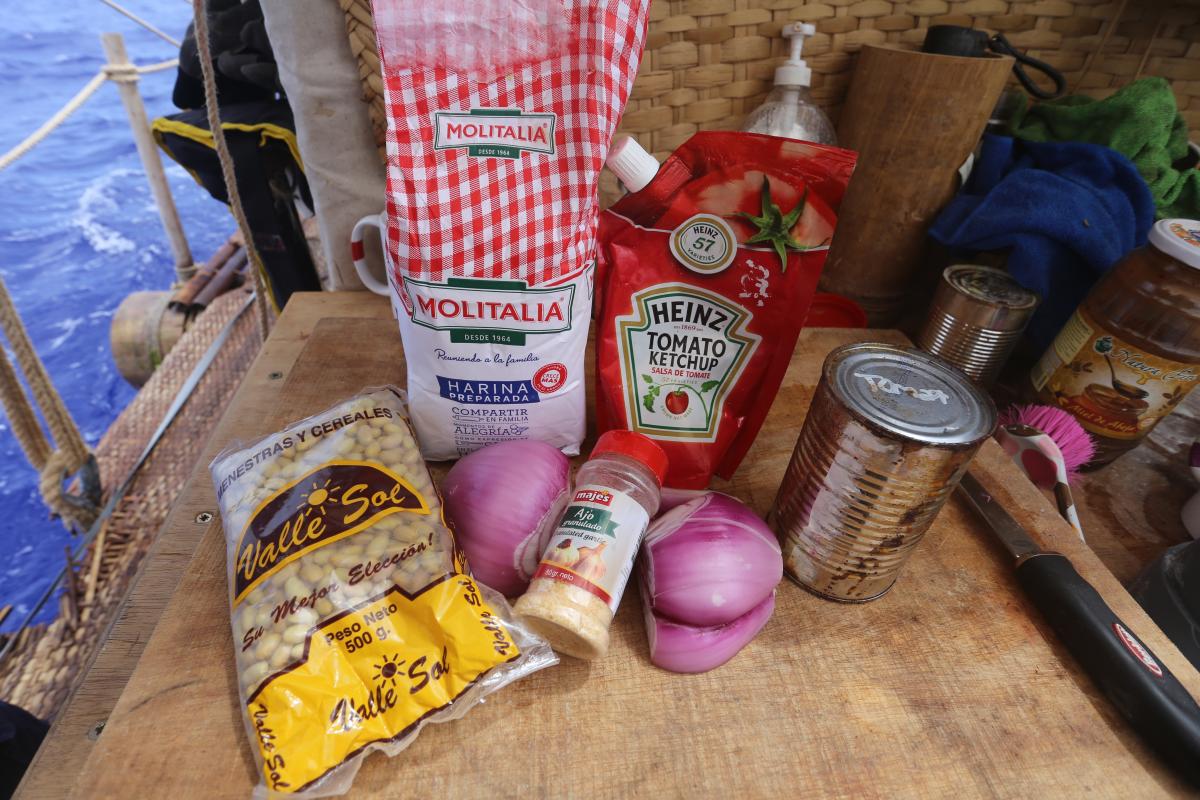
Real food



How I was alone in the Pacific ocean

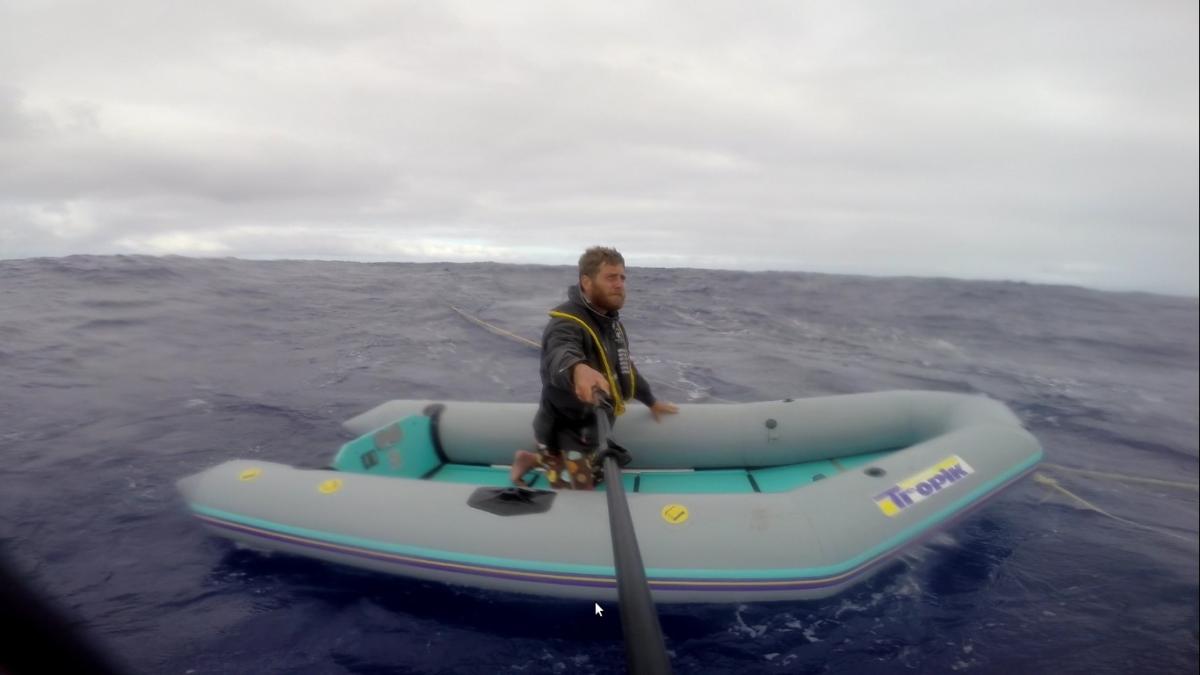
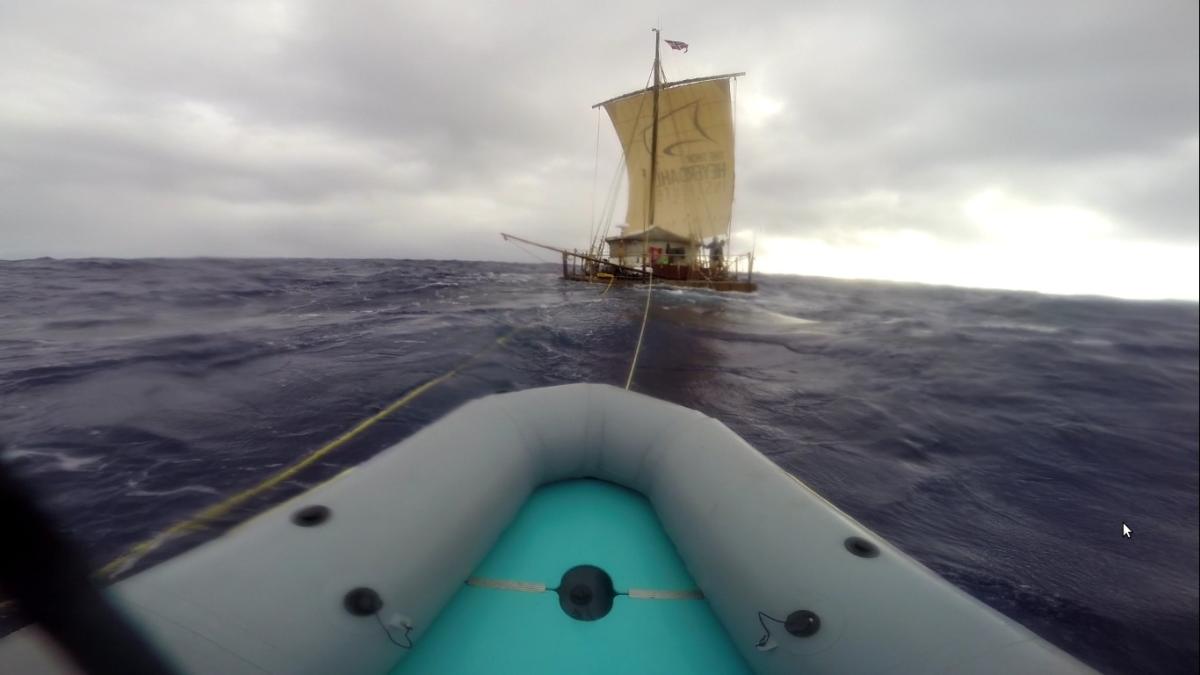

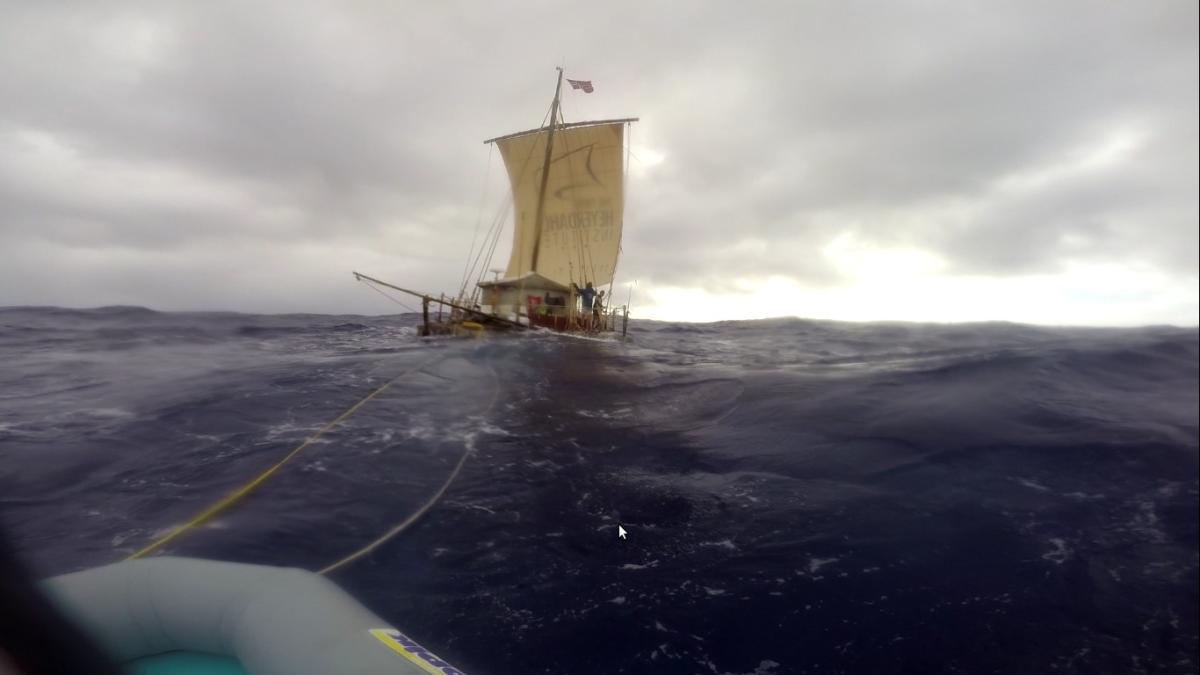
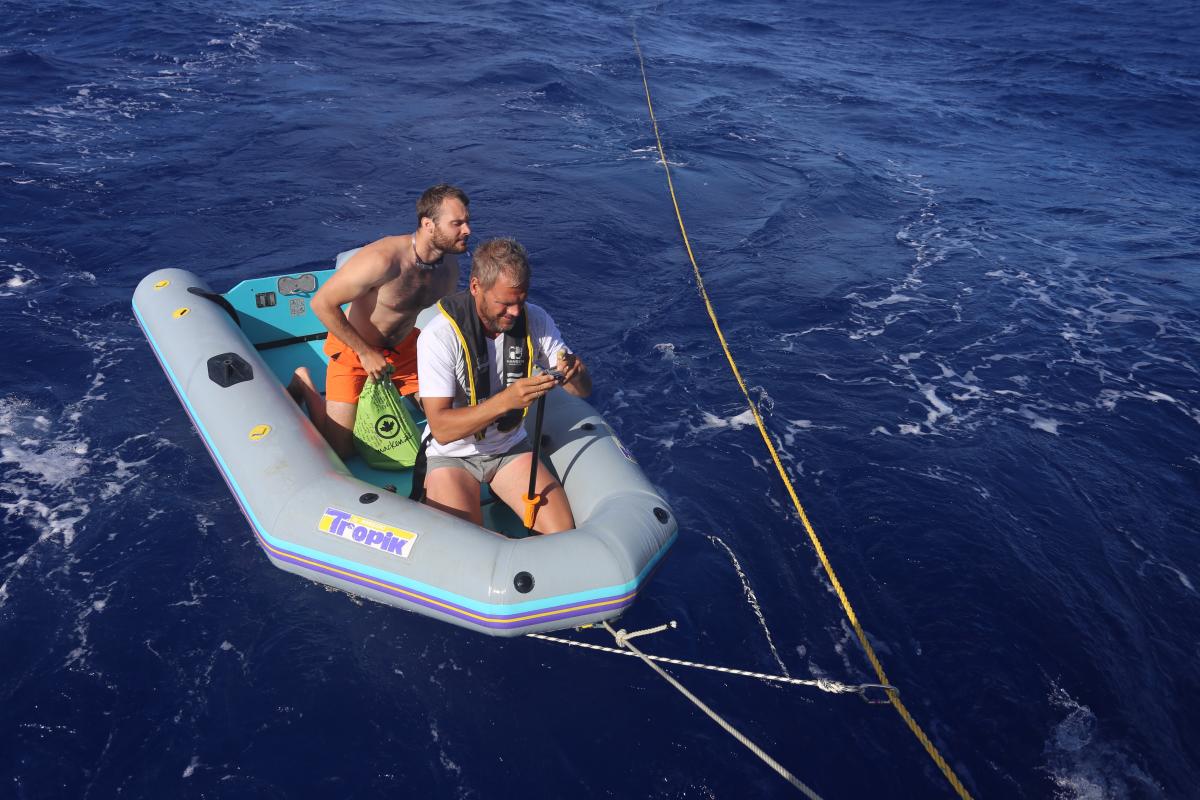
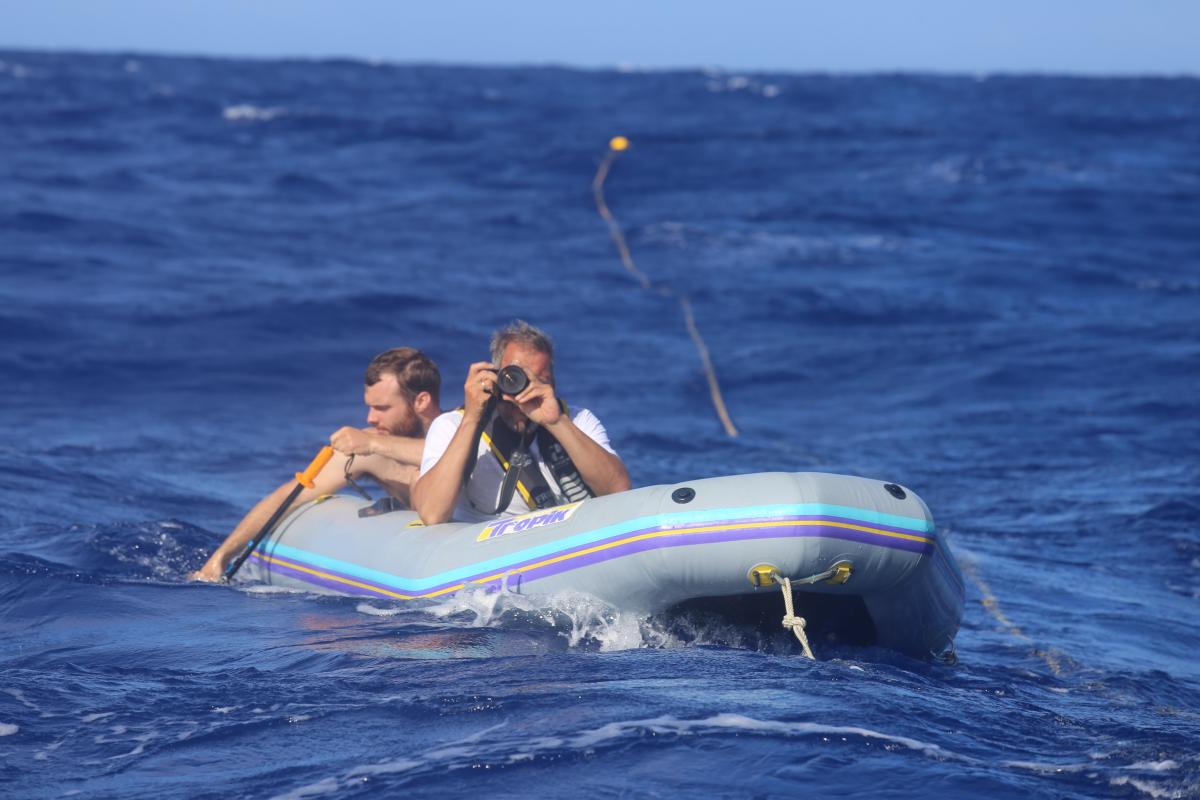
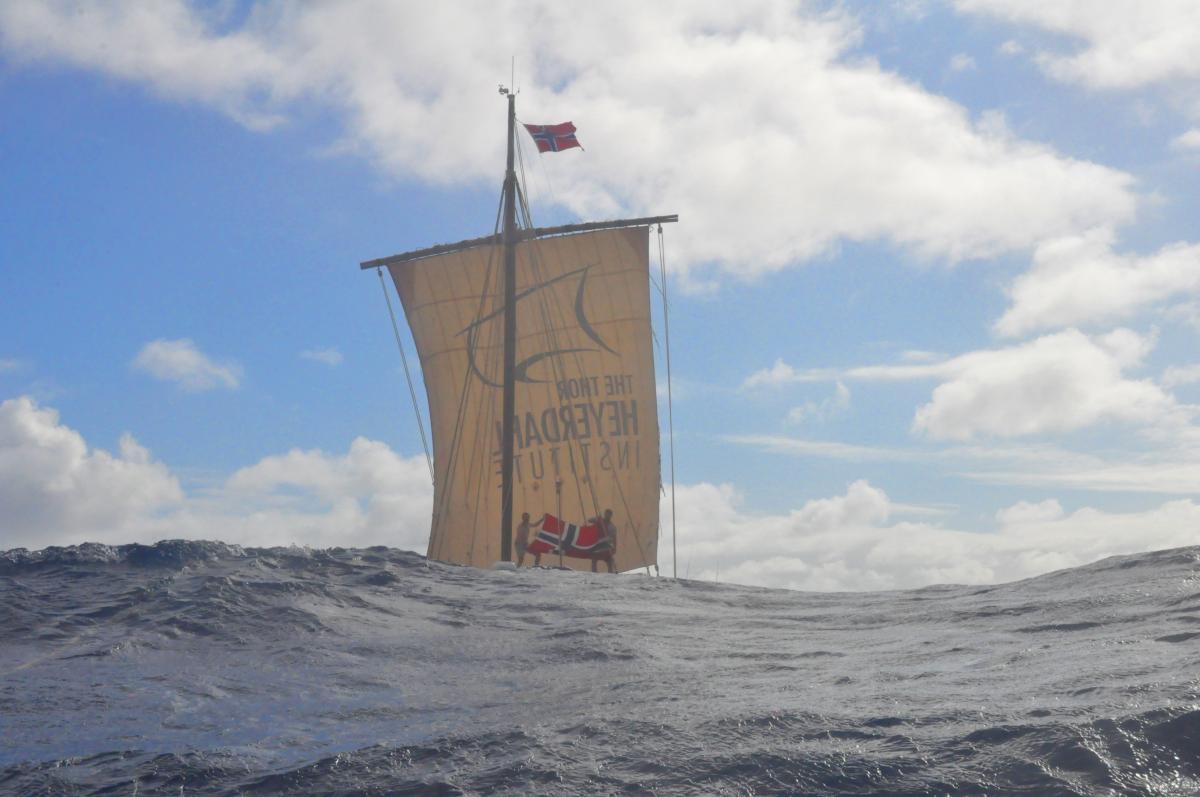
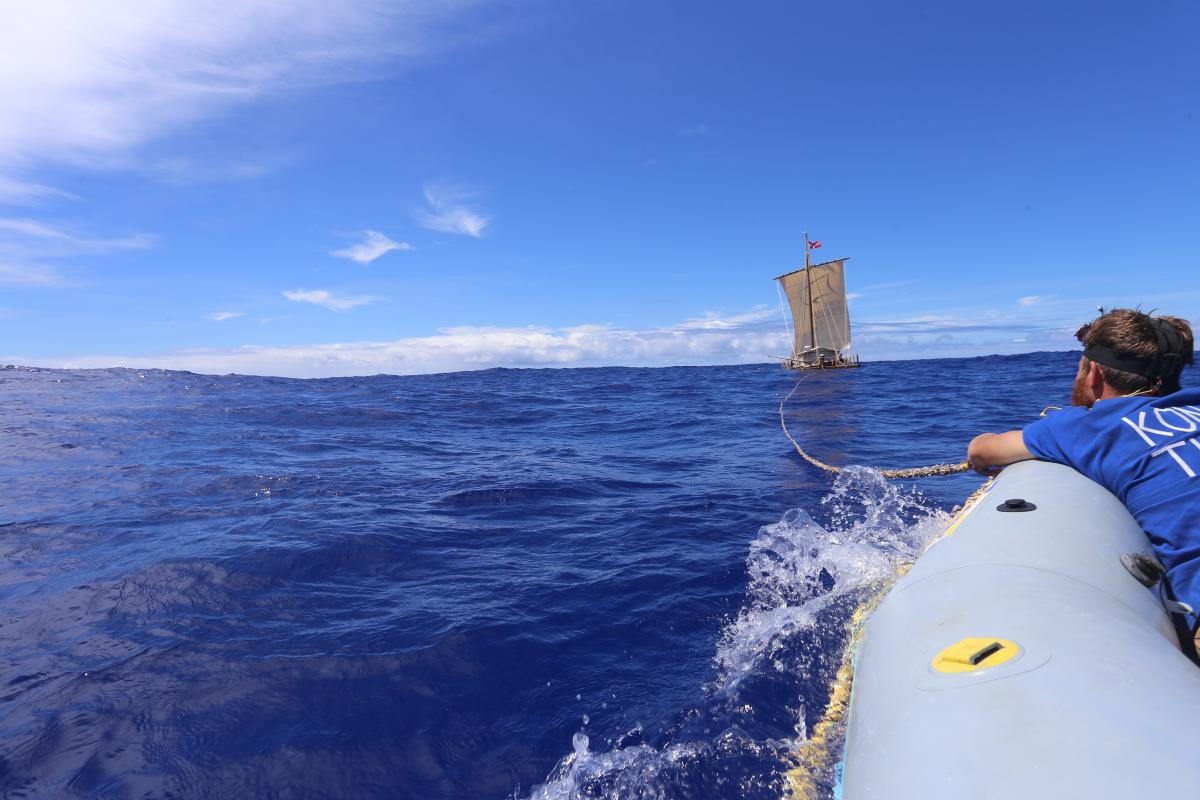
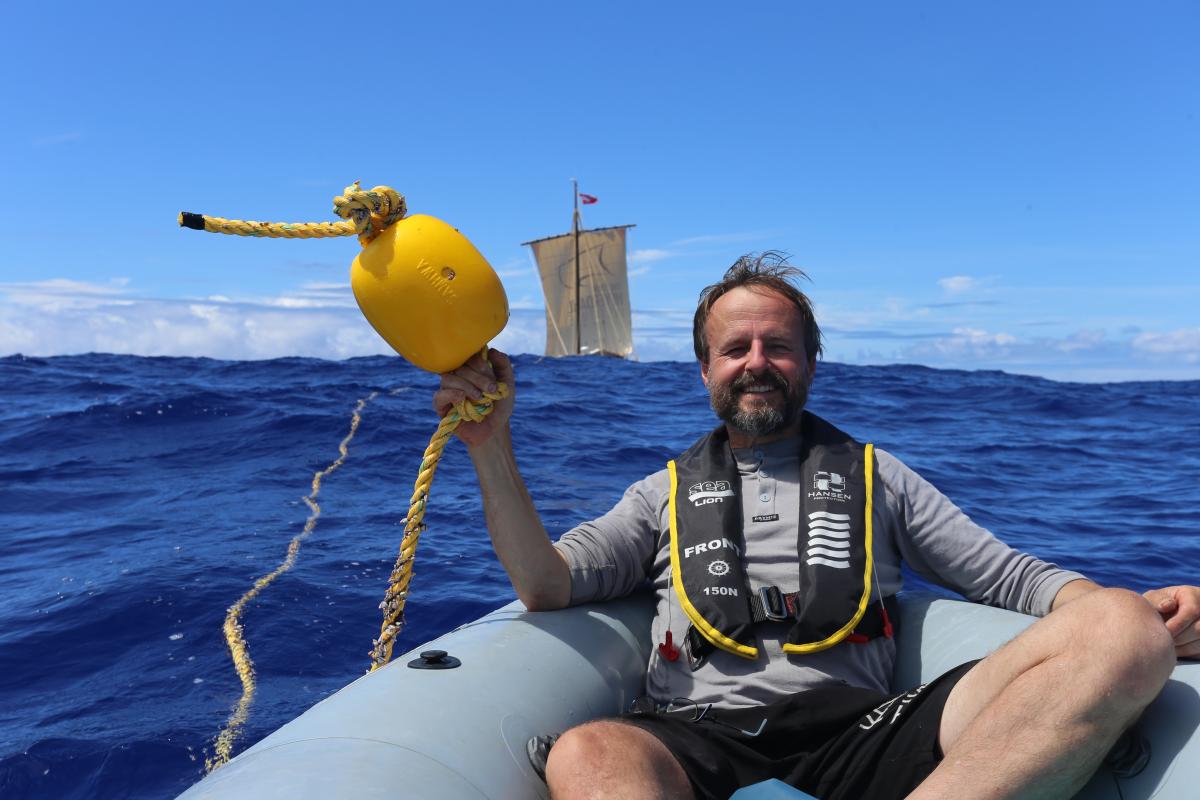
(2015-12-01) Yesteday, Torgeir decided to put on the water our rubber boat to take pictures of Tupac from other point. In Russia we call such boat "Tuzik". It means something, looking very stupid and undependable. We clipped the boat with a carabine to our yellow safety-rope and David and Torgeir floated separately from the raft for fifteen minutes. I was cooking spaghetti that moment. I'm not sure, will we have a possibility to put the Tuzik on the water one more time until Easter Island, and will I have a passion for such floating? So, I decided that it is my last chance to be "alone in the Pacific". I asked Ola to take over for me in the kitchen and went to the aft. There I put on my lifejacket, took a camera and got into the Tuzik. When I was jumping on the waves which were much more sensible than on the raft, I realised two things. First: I'm on the toy-boat above 4000 meters of abyss. Second: it looks absolutely stupid, but very fun, exciting and cool! I've made some pictures of Tupac, wich was grandly and self-reliantly climbing on the waves, some photos of Tupac's green beard and some selfies. Then I asked Jostein to bring me back on the stable raft. And than Jostein tried this attraction. When I pulled him back, i jokingly thought that there is not so much spaghetti for seven people. We laughed at this joke and went to have a dinner. Achievement unlock "alone in the Pacific". Next achievment is "slap the shark's fin"!
Small joys

(2015-12-01) On Rahiti Tane, we are quite good at enjoying the small things. Finding a tiny 5cm flying fish on deck in the morning, dry socks, changing to a clean and dry pillowcase, pineapplerings for dessert, clean underwear, dry underwear (dry anything at all really), realising that we have larger amounts of flour than we thought and so can bake more bread, chocolate on wednesdays and saturdays, red nail polish, finishing a book and immediately starting a new one, not being sleepy on night watch for once, starry skies, dry shoes (lasts about 15 minutes). Seeing schools of flying fish, the sun breaking through the clouds. Receiving an e-mail from friends. And last but not least: when someone cleans your dinner bowl for you.
What the Ocean would have said.
On oxygen @ cop21
Video in native Norwegian: Why are we doing this?
Something bigger than ourselves?


Kon-Tiki2 in 35 seconds
Request from our readers:
Pictures of Bora!


Our raft doctor, Bora, is a favorite. Several of our readers have requested more pictures of the man, and an army of volunteers have been hard at work to fulfill demand. The rare pictures seen here have passed not once, but twice, through the Iridium satellite systems. Some bits got lost up there somewhere, but we can still recognize Bora and other crew members. Bora wisely keeps his medicine chest locked, but is otherwise a most generous crew member.
Raft fashion week


Pål Børresen catches giant octopus

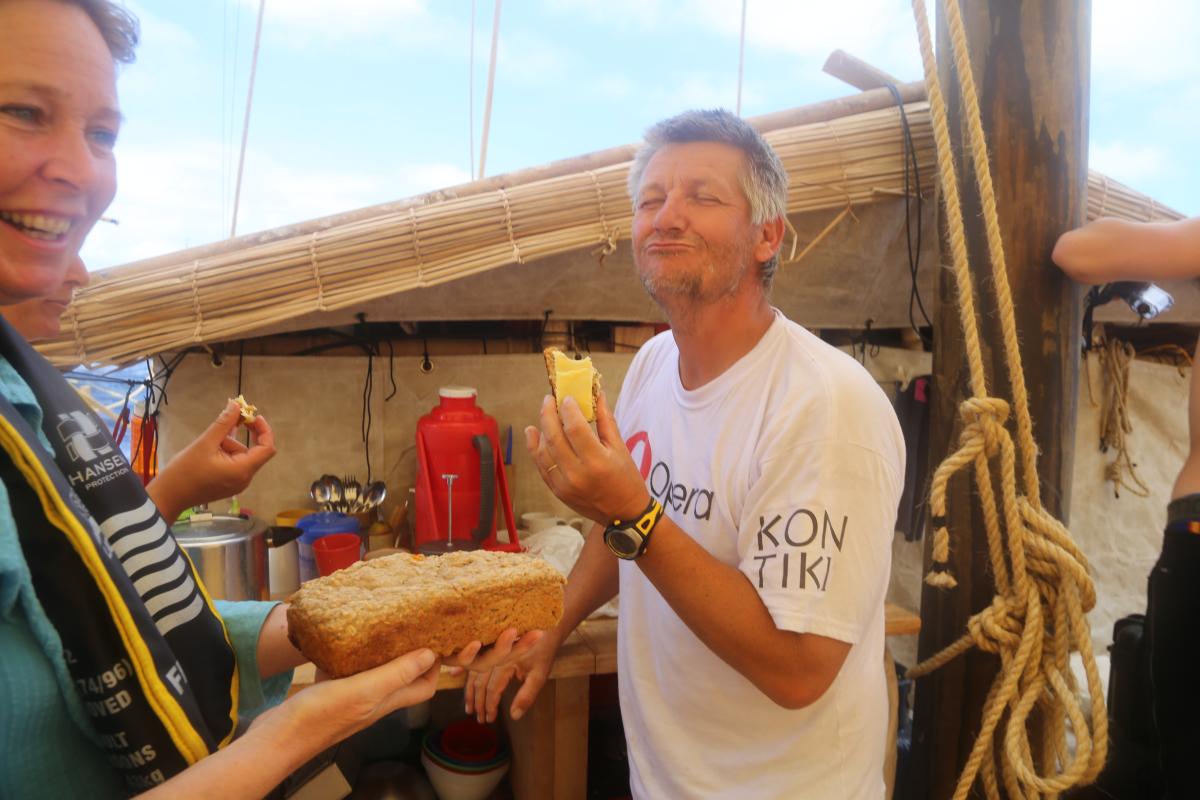


In the pictures above, we can see that Pål likes good food and good company. He has a boyish smile which never leaves him, one that he generously shares with others – just like he did with the octopus.
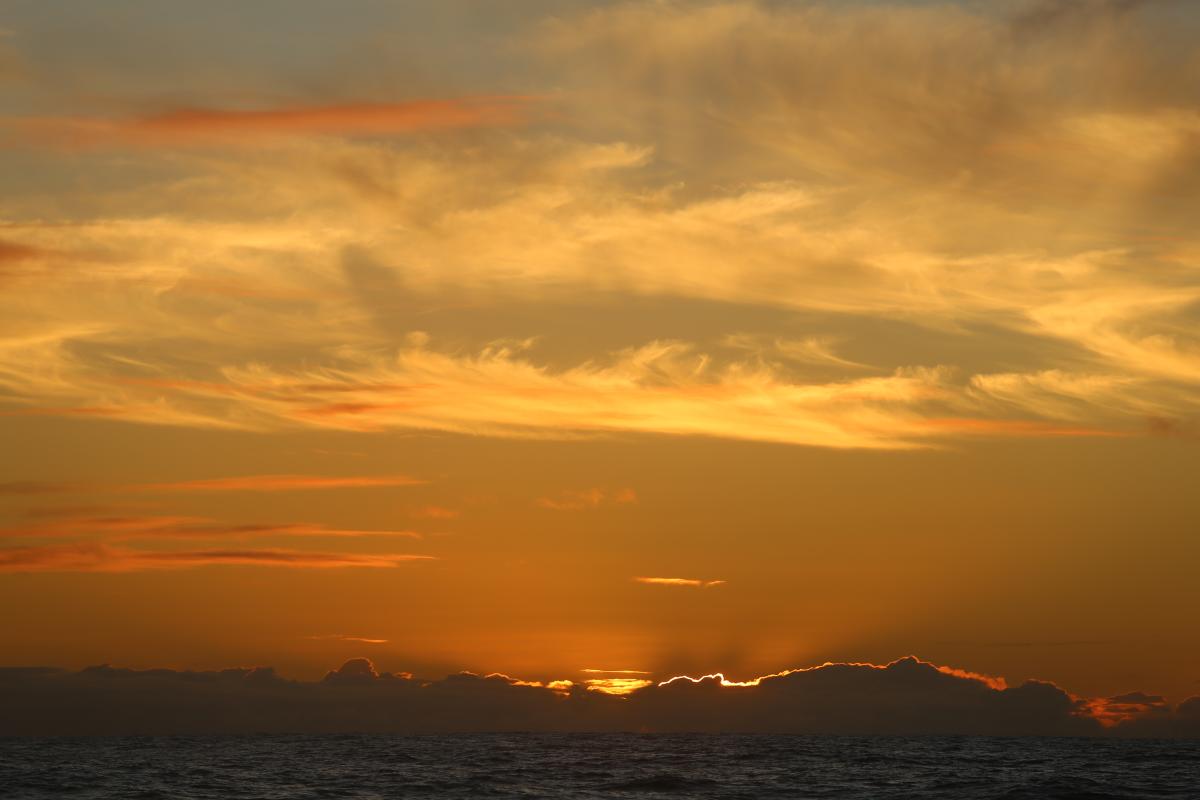
As a bonus picture, we show tonight's sunset in the South Pacific.
Tupac from afar
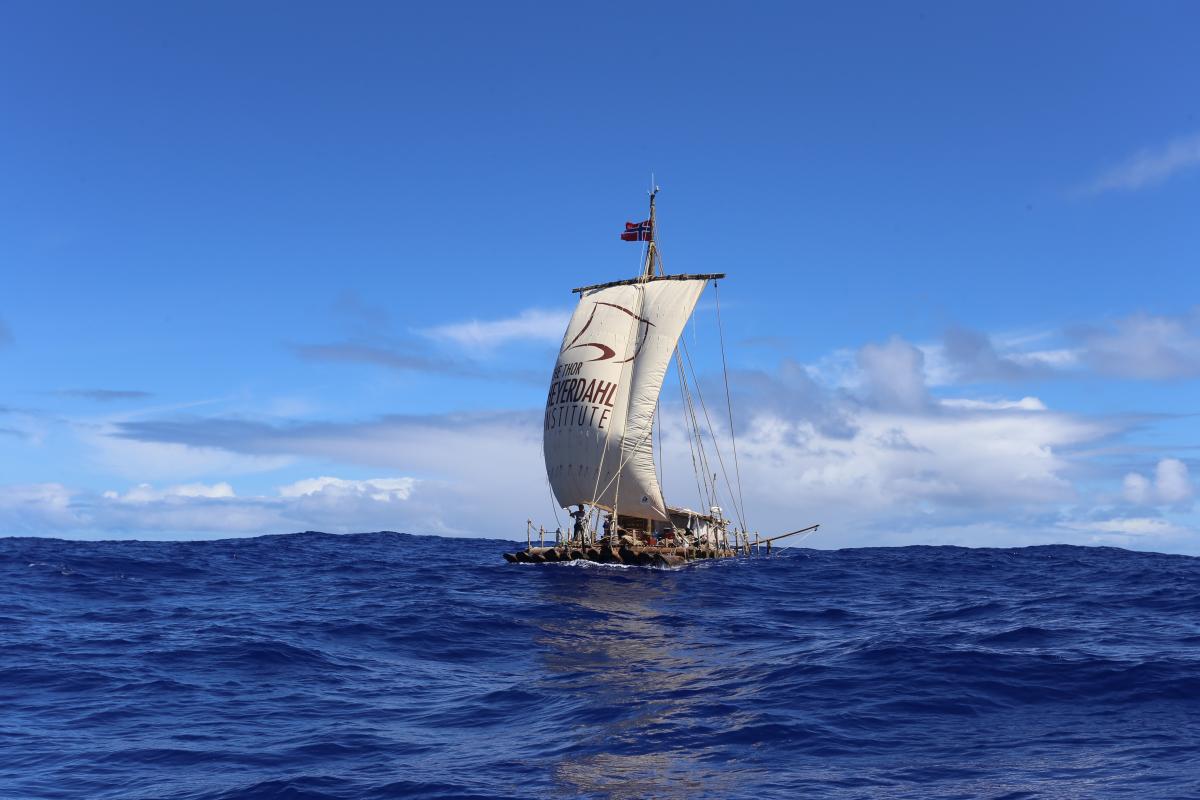
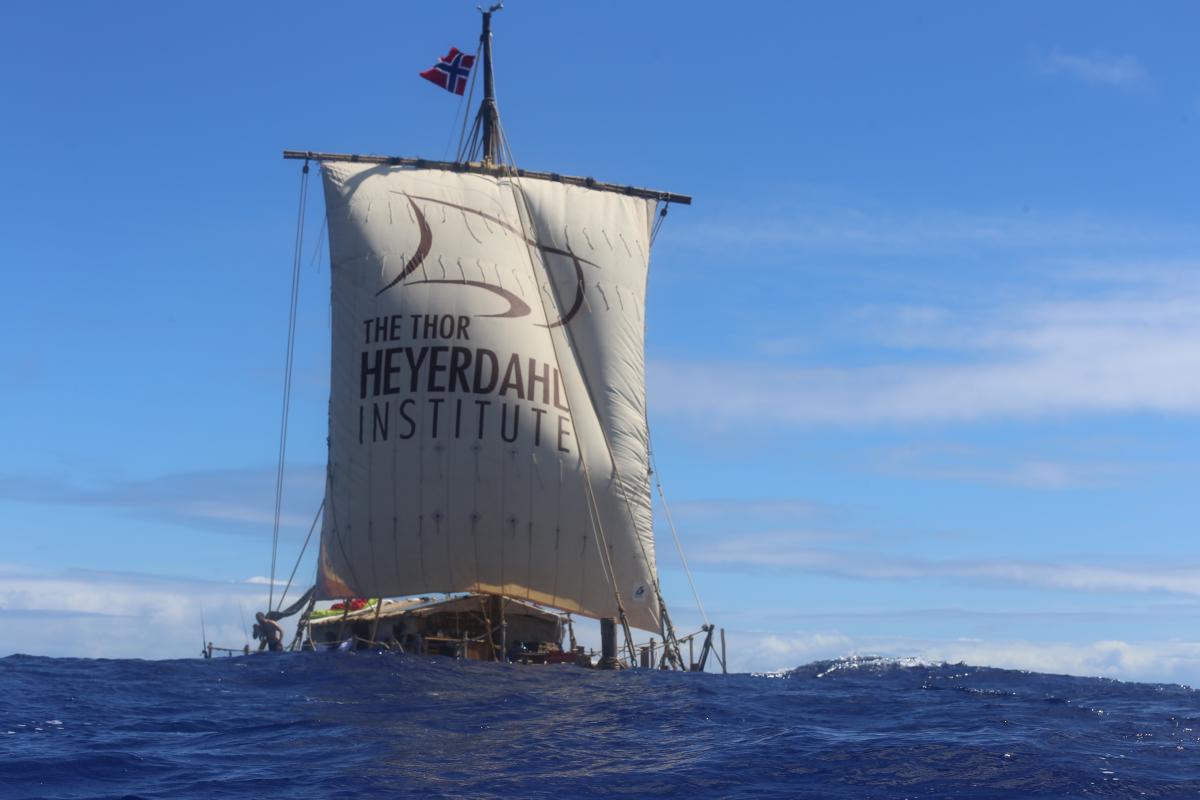

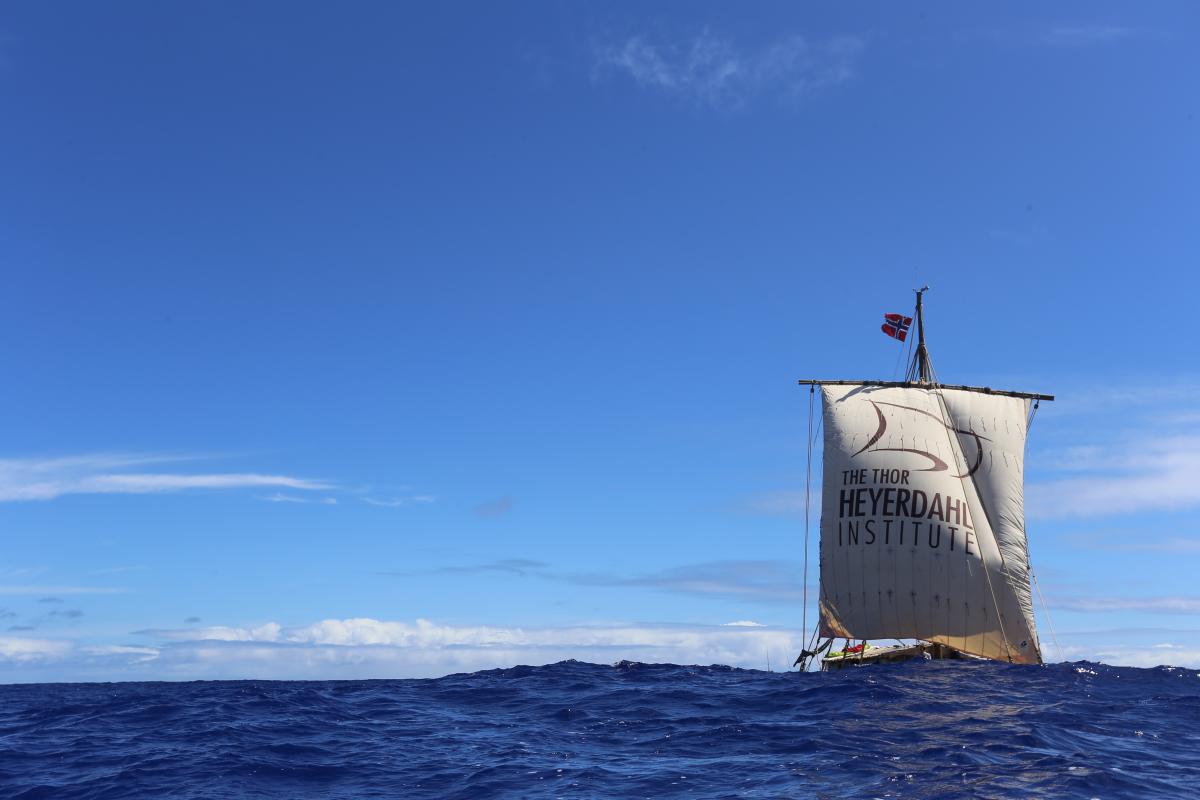


The new pictures also allowed us to replace the picture of Tangaroa, which has been our masthead until now. An even better day will allow us to photograph both rafts, in the sun, with sails, and Easter island in the background. Just you wait.
End of the line


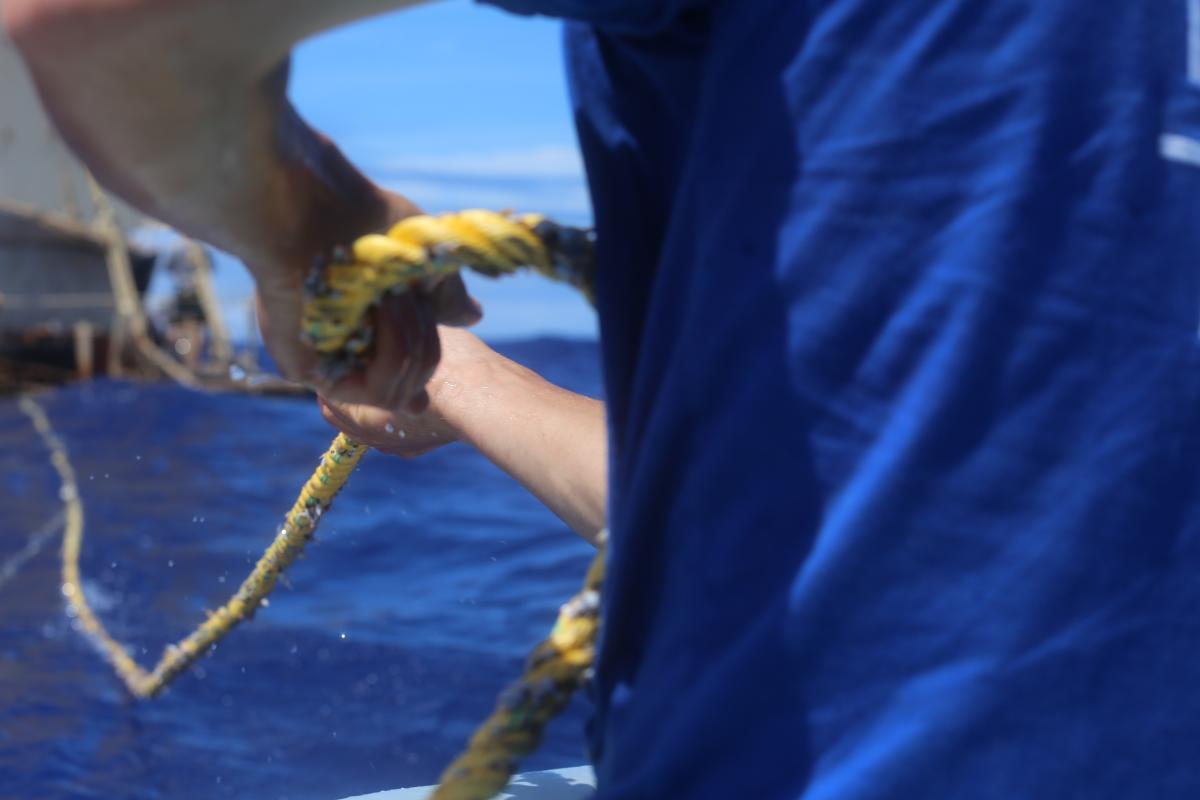

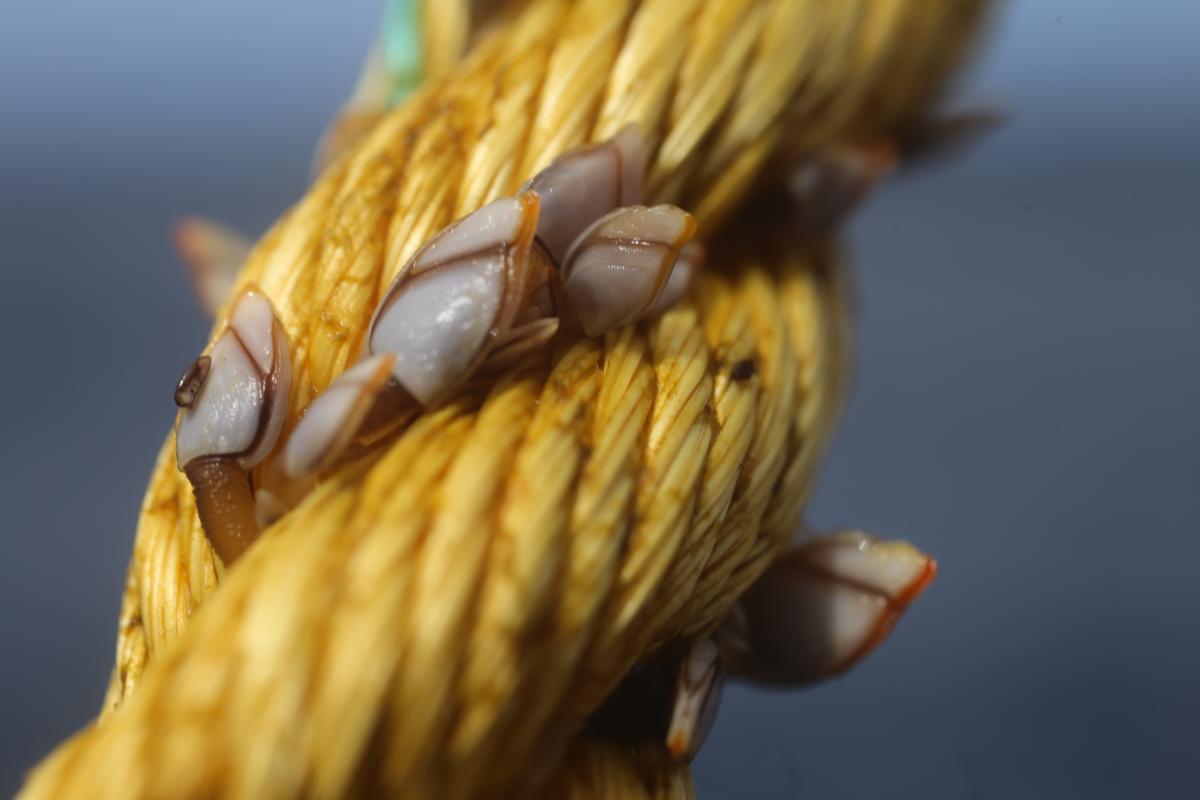
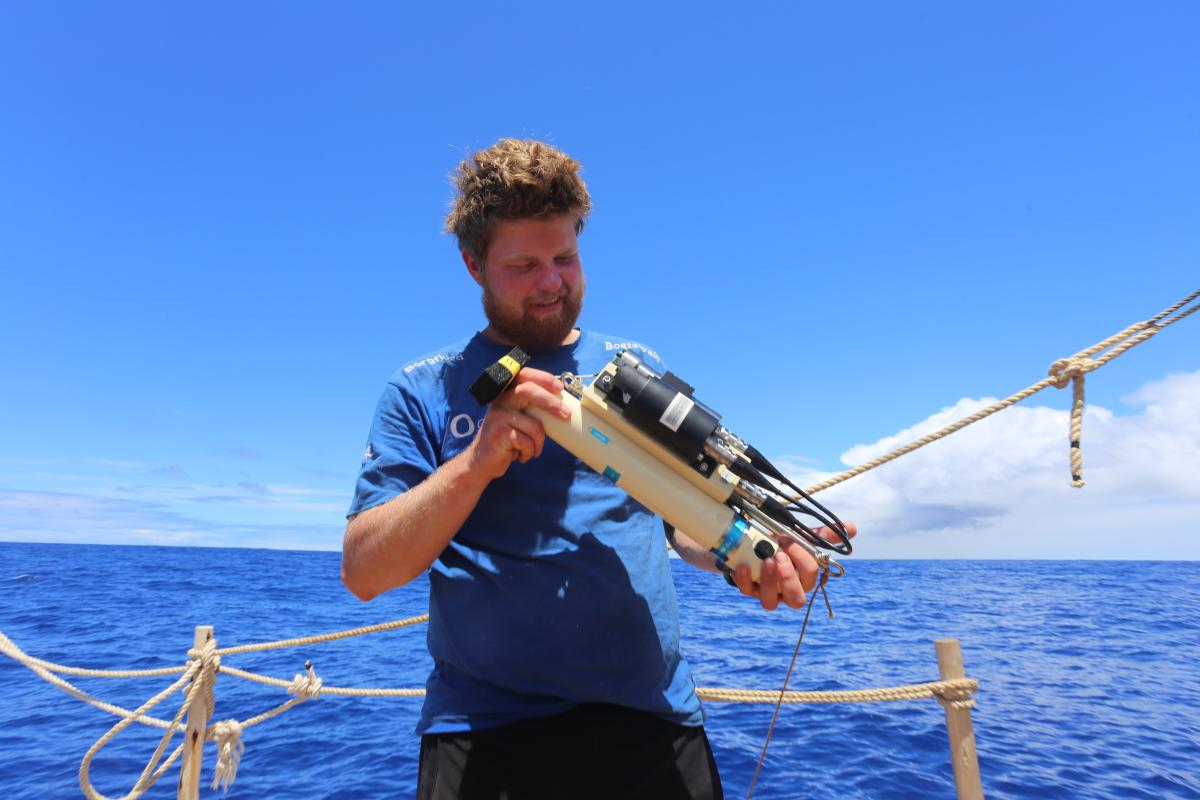
Deep-water CTD launched – and recovered!


Yet another Laugardag
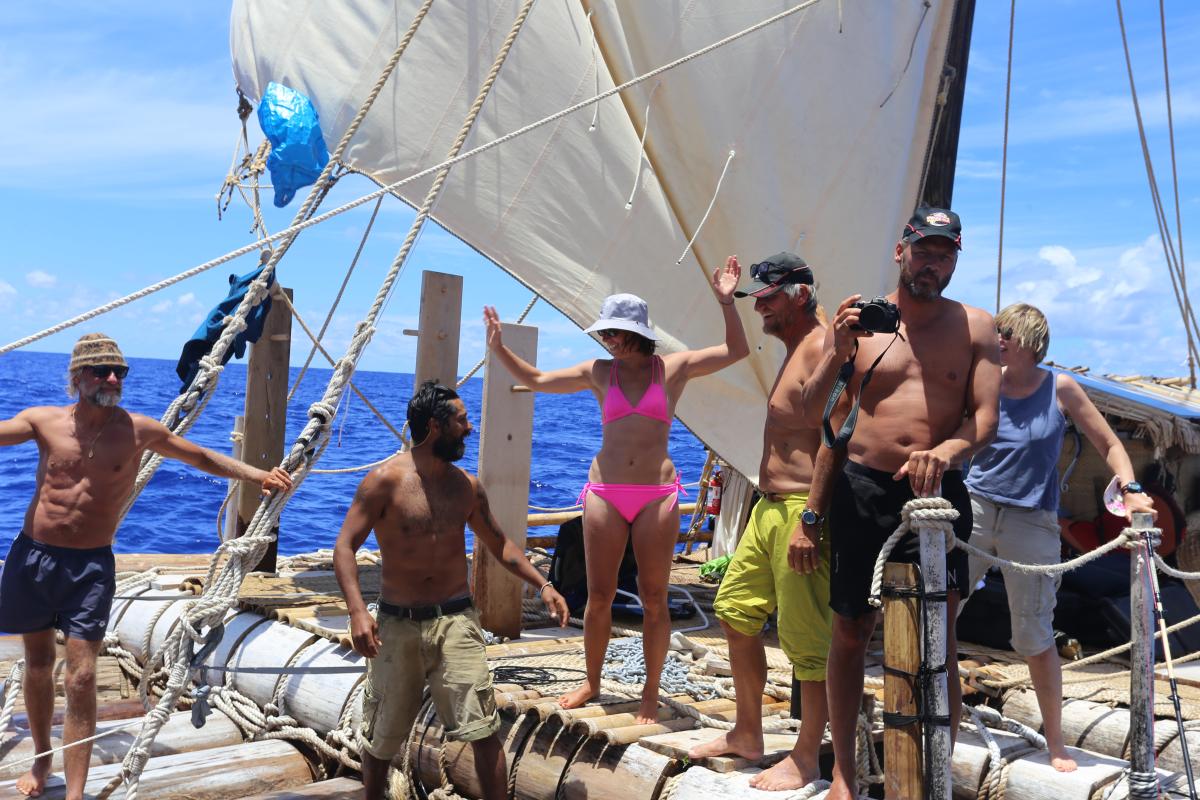
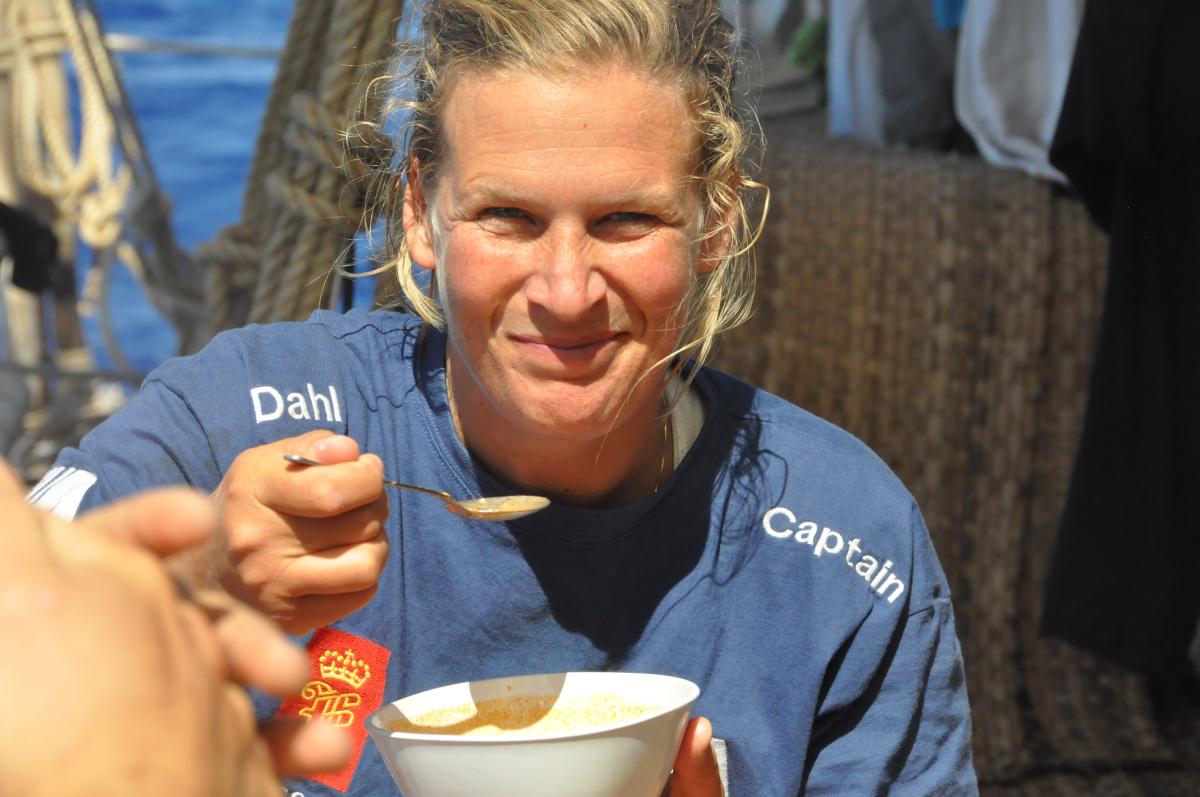
(2015-12-05) Saturday has become the favorite day of many of the crew of Rahiti Tane. In the daytime we take our bedclothes, PJs, blankets and towels out to dry. This day was especially nice because the sun is shining. The women of the raft had their weekly bath up front, while the men were hunting a dorado with a harpoon in the back. The hunt ended with an empty pan, and the skipper made an attempt to make Tom Ka Gai, her favorite soup. But with only coconut milk as ordinary ingredient, the result was named "as-close-as-we-get-to-Thailand-on-this-trip". The head of provision, Signe always has something especially delicious for us to eat and drink on Wednesdays and Saturdays. Tonight we are having popcorn, and maybe a movie? (When I say this out loud, Boris says "movie" and points to the horizon)
Gonzalo Figueroa and the Norwegian Expedition

Many people participated in the Norwegian Expedition 60 years ago, among them Gonzalo Figueroa, an archaeologist and authority on the conservation of the archaeological heritage of Rapa Nui. Figueroa was only a 24-year-old graduate student in archaeology when he joined Heyerdahl's expedition, with four professional archaeologists: Arne Skjolsvold, William Mulloy, Edwin Ferndon, and Carlyle Smith. Without Heyerdahl's initiative and brave investment, talents like Figueroa might have had less interesting careers. Figueroa got a flying start as an assistant and then spent over four decades to conserve and restore the archaeological monuments of Rapa Nui for future generations. We are looking forward to seeing with our own eyes the results of Figueroa's work!
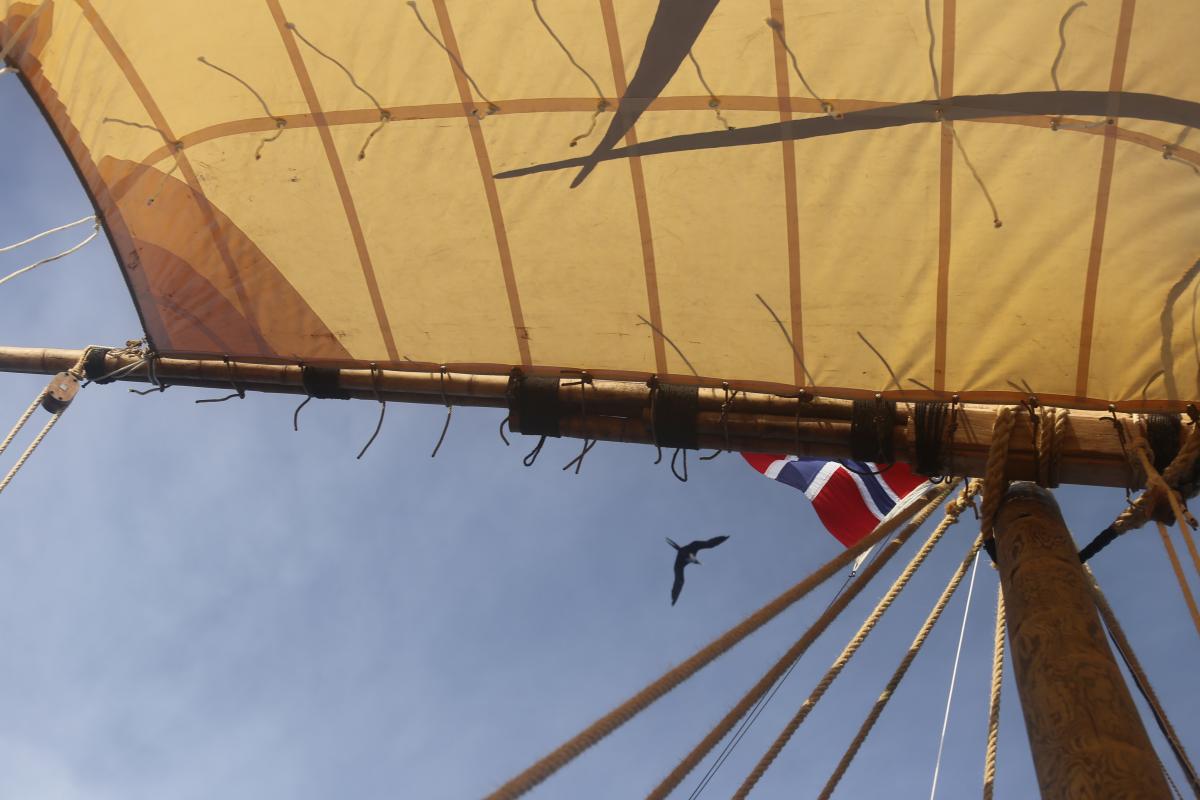
How far from land can frigatebirds be found?


Sailing Rahiti

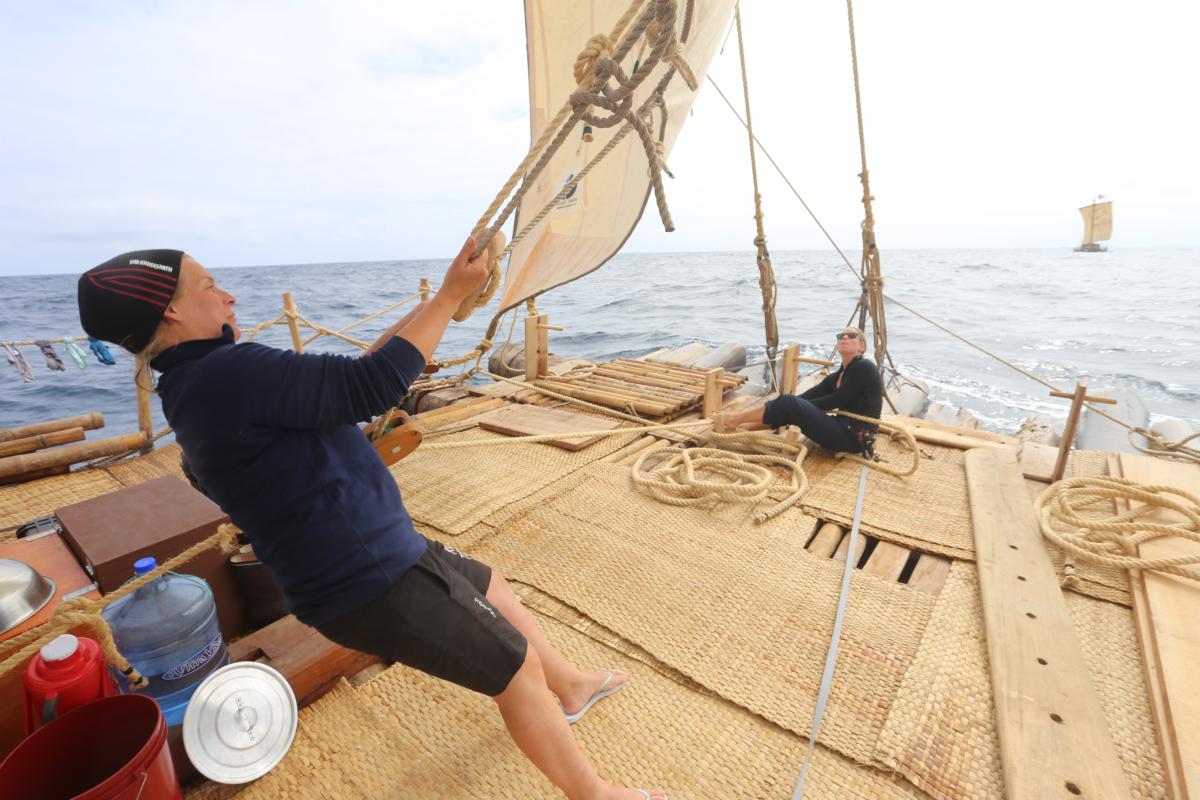

(2015-12-06) So far on this voyage, Tupac has been the sharpest sailing balsa of the two rafts. But something has changed. The last week or so, the distance between us has increased, little by little. We were 12nm miles apart at eight o clock last night. Rahiti Tane have been sailing as slow as she can, not gaining height, the crew hardly working at the helm all night. And still we gained another 2,5 nm and some height.
As we have been struggling for a month to keep up with Tupac, we have all become good and fokused helmsmen. Even the fresh sailors have been reading the squalls, trying to get most out of each shift of wind. And we have to continue to work hard if we are going to get to the little island ahead of us with the winds that are predicted in the forecasts we receive. They will continue to be easterly the next week, increasing a little in strength.
Today we used the time when we waited for Tupac to become even better at sailing balsas. We have been sailing on one tack, port tack, the whole way. At mid-day, when we were all well rested after night watches, we made some different maneuvers. We turned downwind a few times (kuvending). It was as some had expected, when we lifted all guaras in front and lowered in the back she came about real easy. Stopped when she had the wind astern. There we tested the new sheet and compared the sides of the sail. When we lowered guaras in front and pulled them up in the back, she continued around ontothe starboard tack. We also wanted to practice the coolest maneuver of all – going over stay, tacking (stagvending). None of us have done it on a balsa raft before, and the sailors are excited to test the maneuverability of the raft. We decided not to do it today, but we will take our time and get in some more guara-maneuvers before we reach Rapa Nui.
Coffee habits
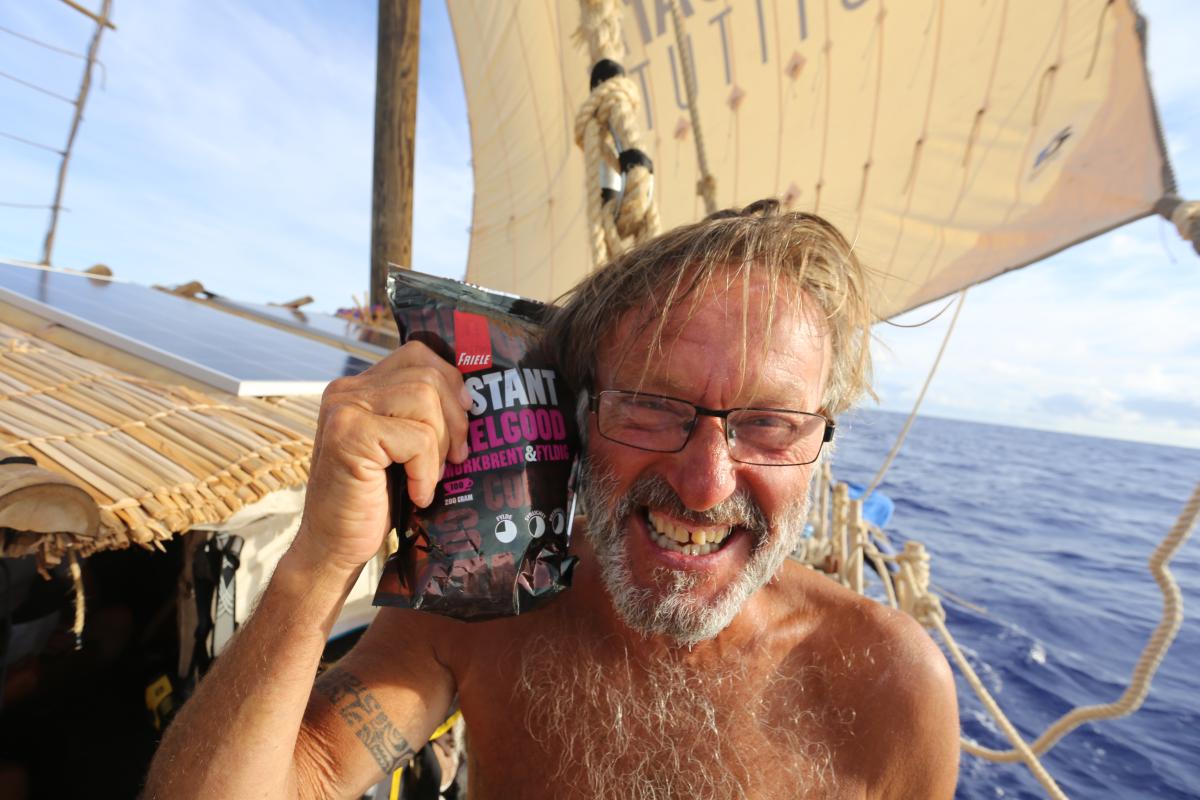
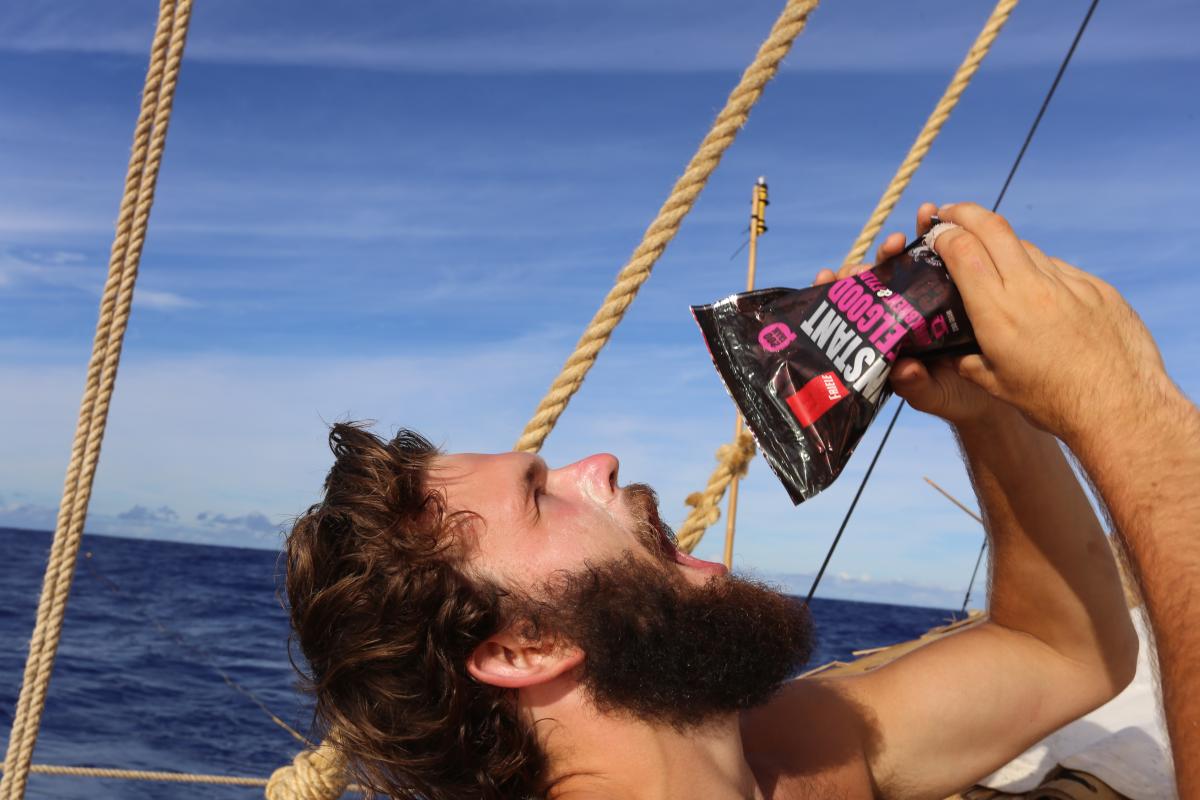


Pacific cuisine on Rahiti Tane, week 4
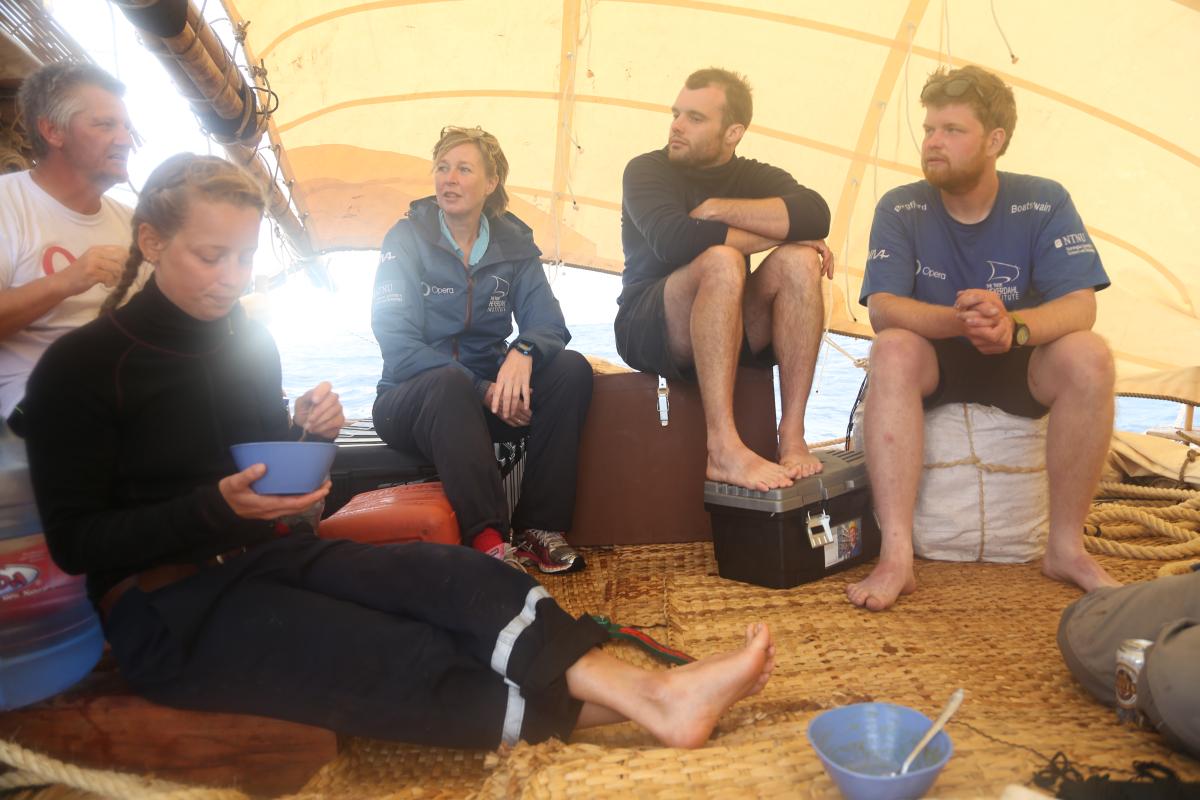
(2015-12-07) Another week has passed, and we still have some vegetables left! Seeing as we don't have any means of keeping food refrigerated, we could only bring so much of certain food types. The air temperature is around 20 degrees Celsius in the shade, so we have had our fruits and vegetables hanging from the ceiling of the cabin in crates, mesh bags and hammocks. The onions are now five and a half weeks old and most look almost new, same goes for the garlic. We also still have oranges and lime. So if you think your food gets old after a few days, think again. Most foods keep well long after their sell-by date and often also the consume-by date.
We got some food-tips from kind readers, thanks a lot! Olga, your tip about mashing chick peas in a bag with a rolling pin has been duly tested, only we used a large rubber hammer instead. I believed it worked for squid-meat as well. Thank you.
So the menu:
- Sunday: Rice with a newly invented peanut/red wine/coconut sauce, Rahiti-special
- Monday: Chili sin carne, and chocolate cake for Estebans birthday
- Tuesday: Dorado, caught with much bravado the day before
- Wednesday: Pancakes and Slovak garlic soup (thank you Katarina!)
- Thursday: Falafel with hummus and rice
- Friday: Spaghetti with creamed mushroom sauce, fried squid (followed by warm buns!)
- Saturday: Kari's "the closest we'll get to Thailand on this trip", a future Pacific classic
We're on the brink of breaking into our secret storage of dried vegetables that Gunvor brought with her from home. She has a dehydrator and spent some time before departure drying broccoli, chives, carrots, red beets, onions, blueberries, mushrooms and more. These are to be soaked overnight and then you have vegetables! Perfect for long voyages, not only at sea but in the mountains where weight is an issue. And they don't go bad. Perfect!
The coming week has been kickstarted already as this is written a bit late, and if it continues in the same style it will be another great food week in the Pacific!
The importance of deep-water measurements
Pictures from the deep-water cast
(2015-12-07) Now that we have managed to make a deep-water cast, thanks to the hard, dedicated work by the crew on Tupac, it is time to reflect a bit on the importance of such deep-water measurements. There are many ways to make measurements at the sea surface: you can place sensors on satellites and they can measure anything from sea surface height to chlorophyll and salinity. You can put sensors on instruments you bring out to sea, and you simply tie the instrument to the side of the ship. We have many such sensors tied to our raft. And you can analyze the water directly, using a variety of chemicals, alternatively bring the samples back to shore for further analysis as we will do.
Three frigatebirds

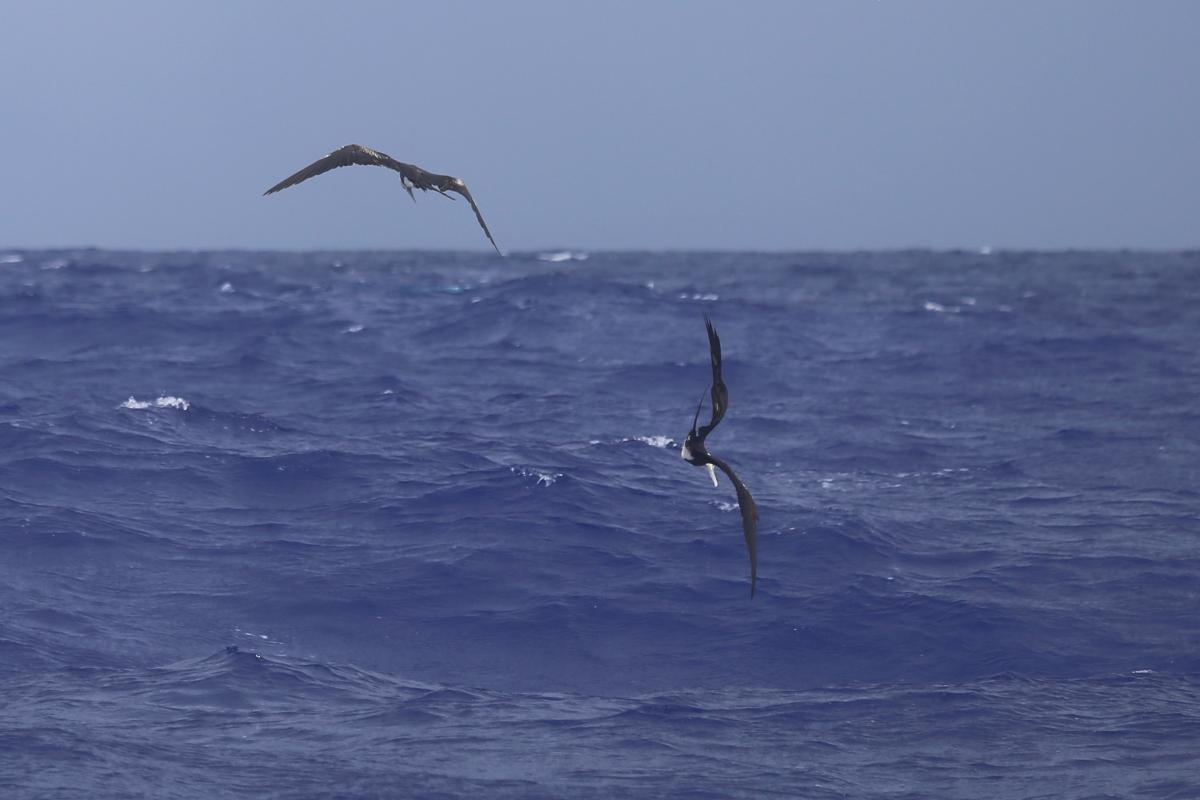
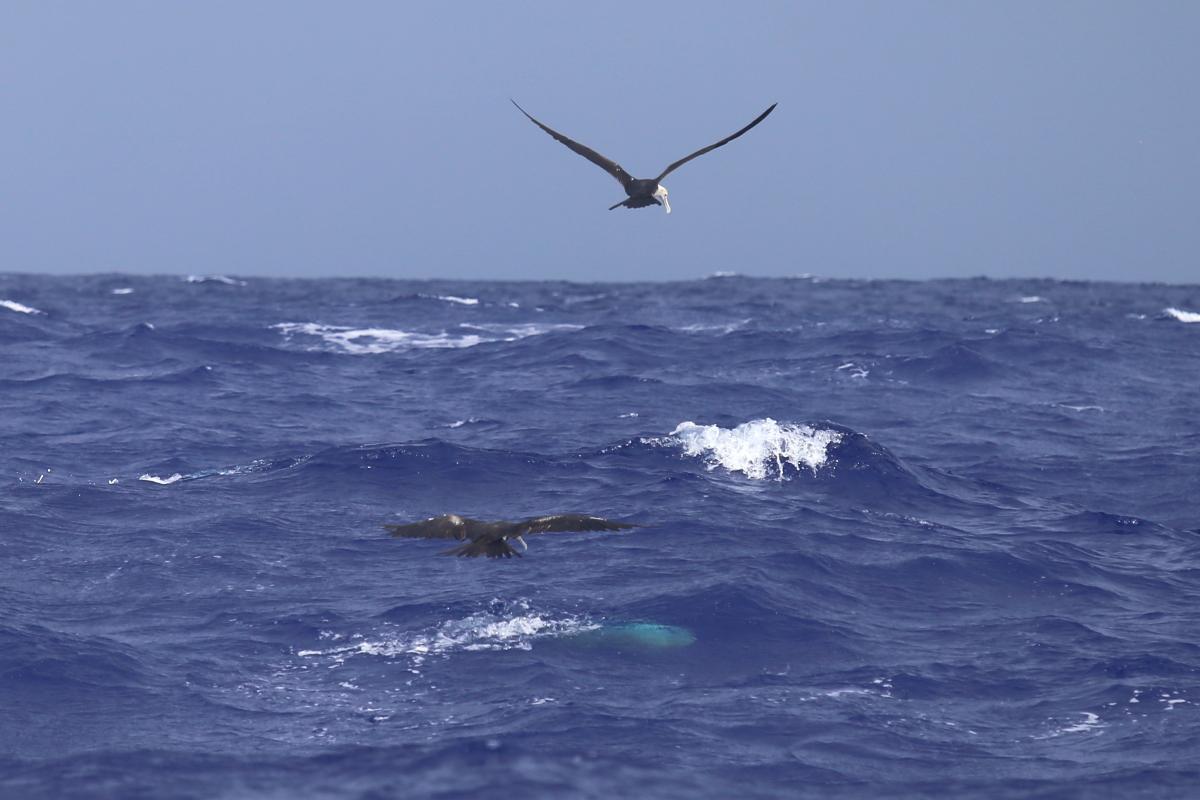

We have had some questions about our camera: most images on this site are taken with Håkon's Canon EOS 6D, the bird pictures use a Canon 70-200mm 1:4 IS lens, most pictures with people use a Canon 17-40mm 1:4 lens, the macro images use a Sigma 1:2.8 DG Macro lens.
Happy Birthday, Tupac & Rahiti!
by Andrey
(2015-12-08) Today is exactly one month of our independent sailing! No towboat and no land on horizon. I don't know about other crewmembers, but for me this date is very important! So, let's sum up!
- to catch ocean fish - done!
- to swim in the open ocean - done!
- to reach the shore of the Easter Island - almost done.
The crew has a good mood, the wind is bringing us to our goal, the ocean is calm and kind to us. And we sailing. I think, it's enough. My congratulations for all crewmembers of both rafts, Keep on sailing!
Film photographer wanted


(2015-12-08) Do you have experience from documentary filmmaking? Do you want to take part in a unique epic voyage and document dramatic events, scientific exploration, and social life onboard digitally for future viewers on web and television? Can you free yourself from other commitments from the end of December until the beginning of March? If so, send us an email. No email attachments, please.
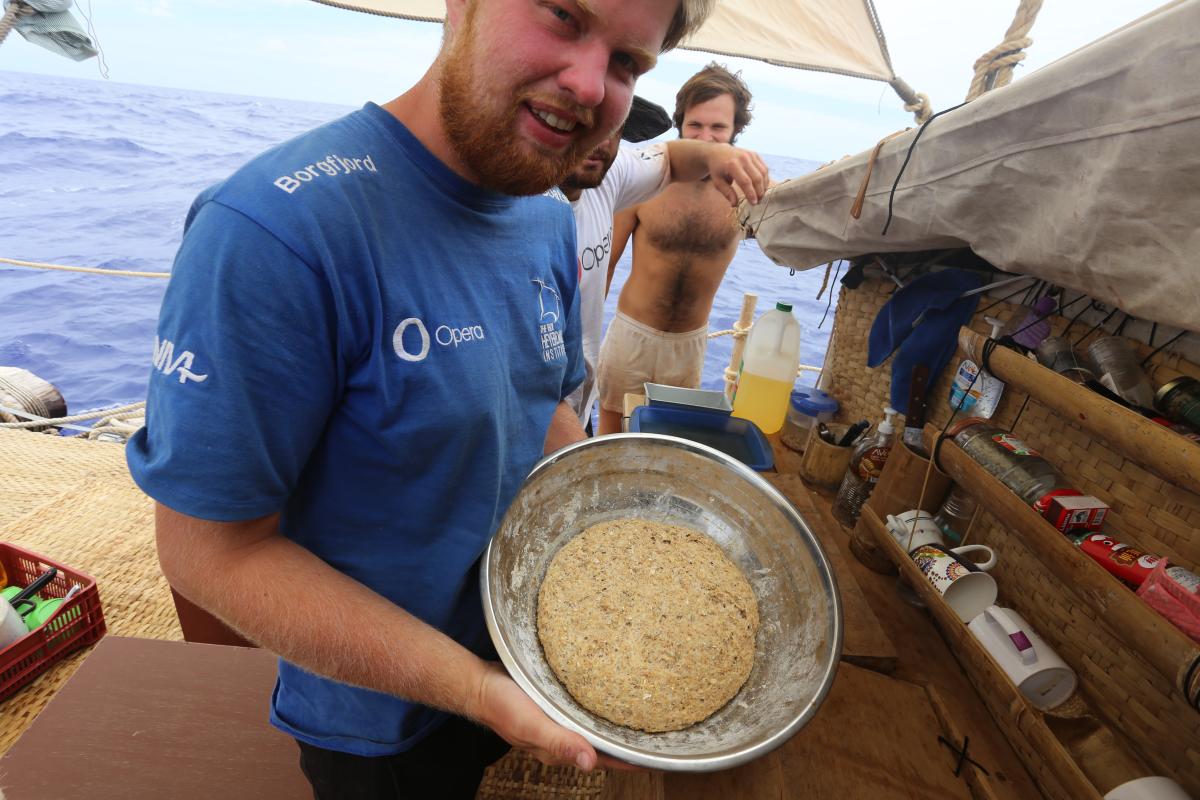
Bread beats rice on this raft


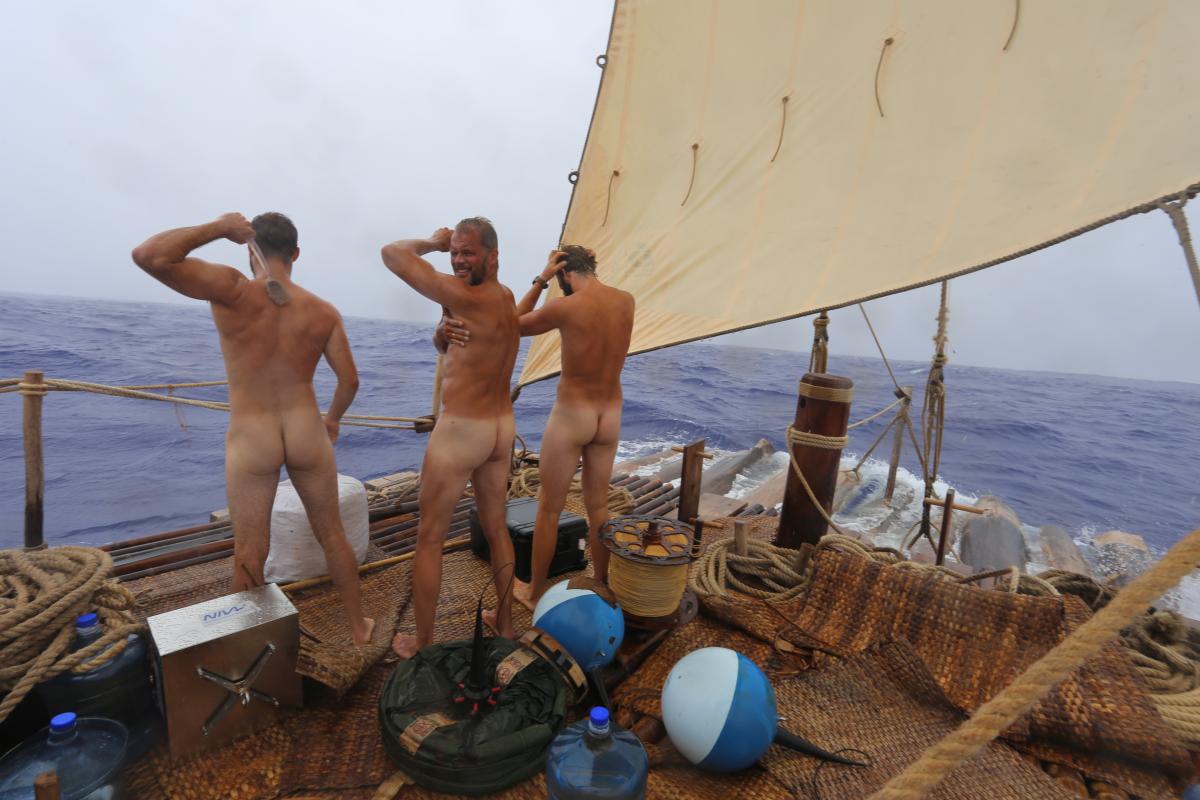
Keeping clean


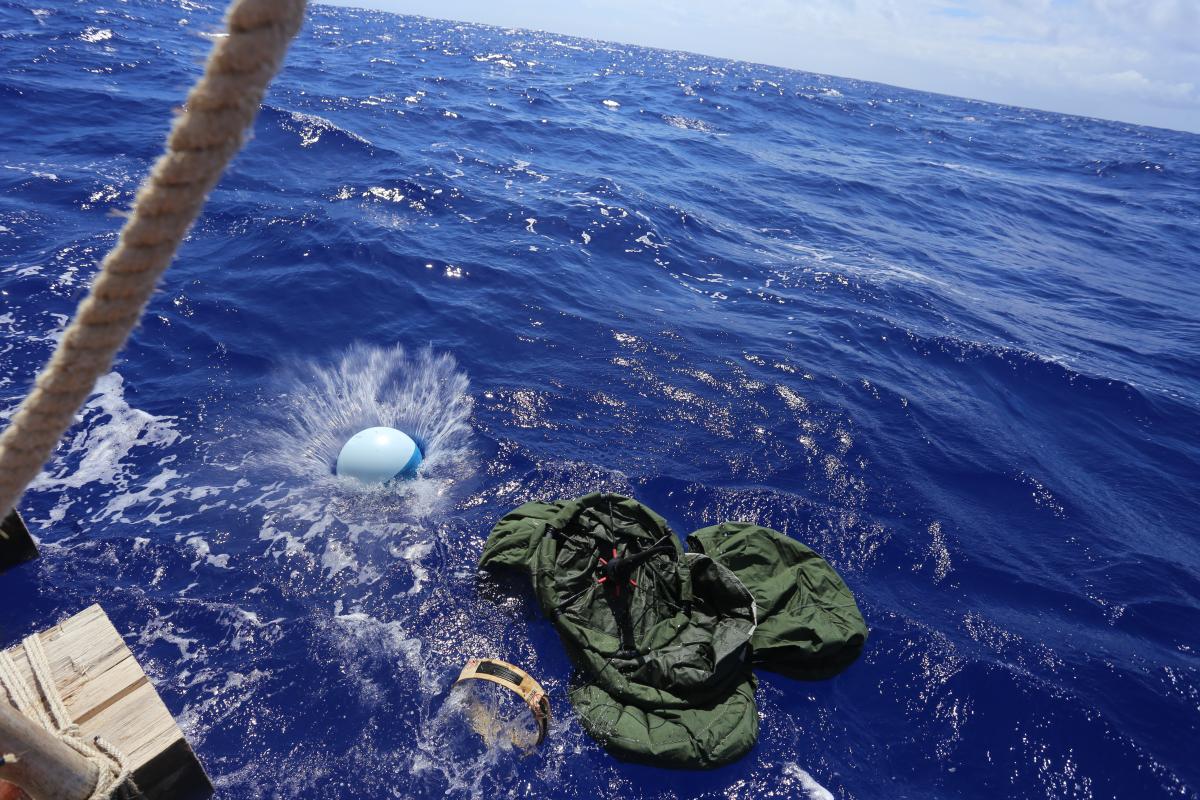
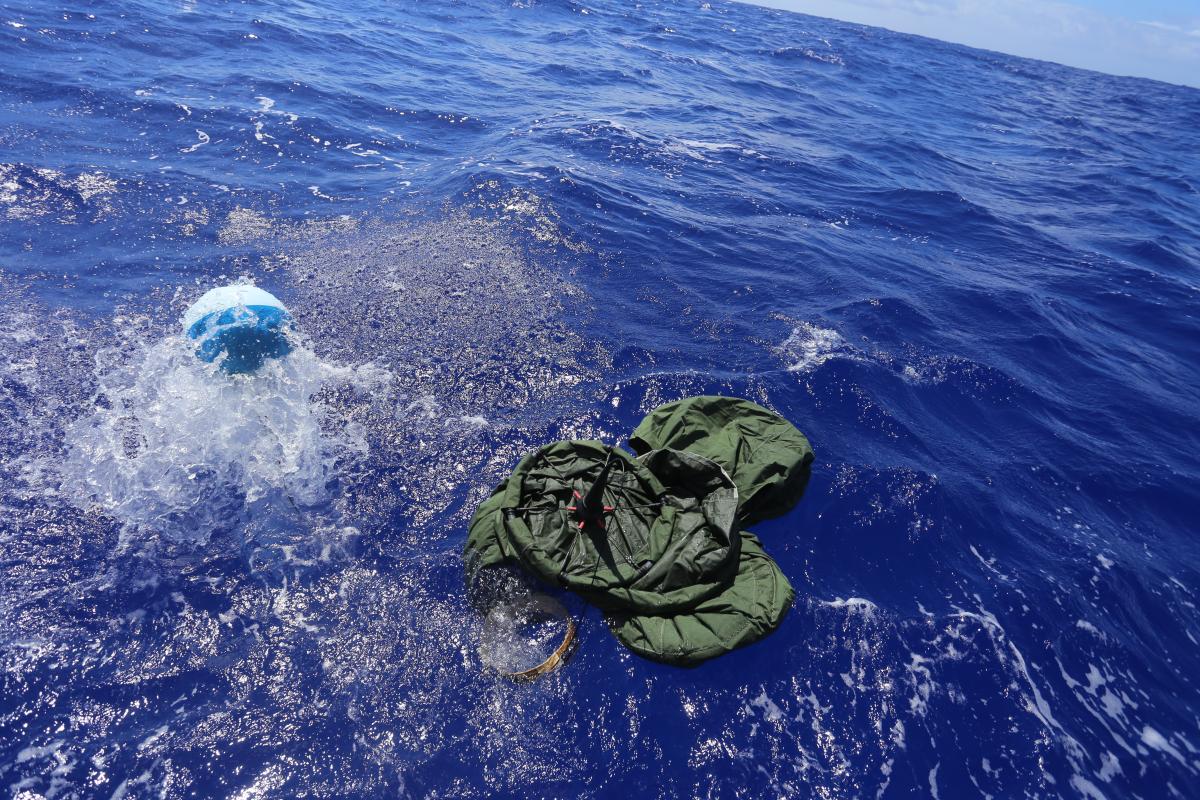
Two more drifters released



Signe Siglar

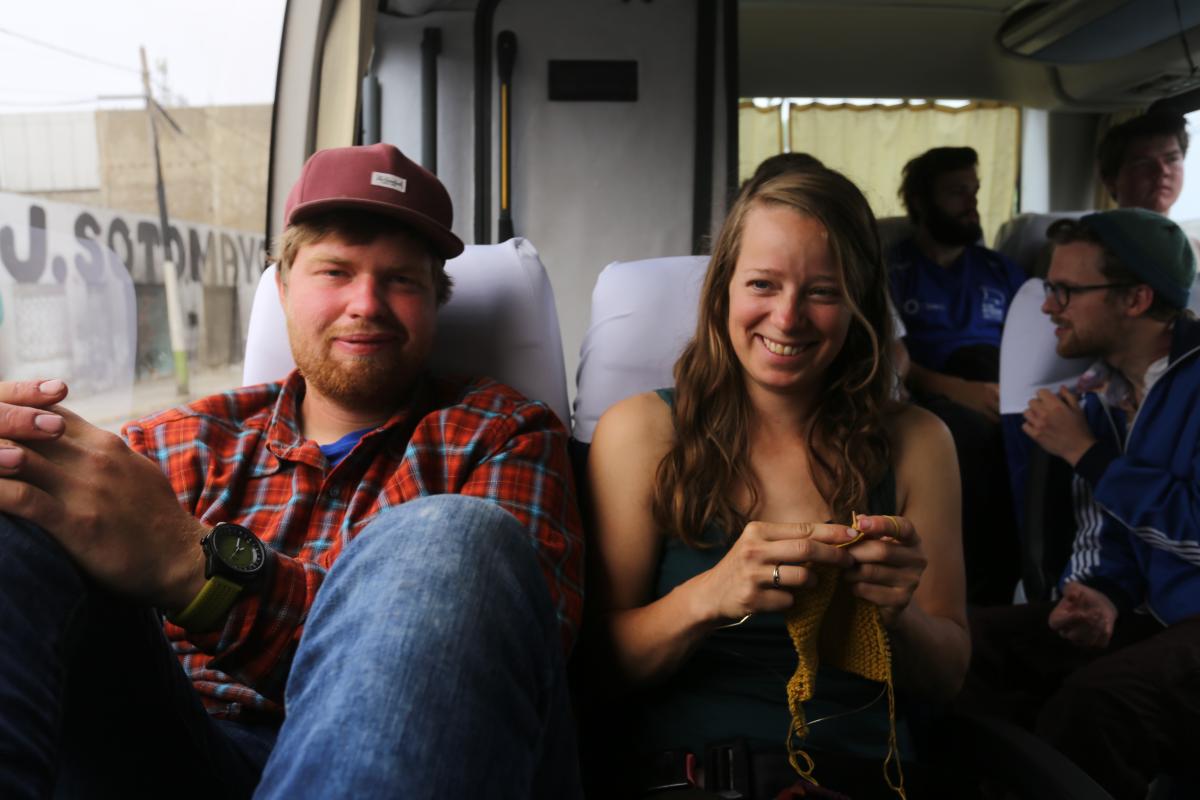

In the pictures above, Signe is first shown wearing proper protection gear at the SIMA yard. The second picture gives us an indication that she never wastes a minute; even the bus rides to and from SIMA were productive. The next three pictures are taken on Rahiti Tane, where Signe shows good her good humor, a smiling face, and an attentive look to the rigging. The final picture is from 2009 when the photographer first met Signe on the Christian Radich — the attentive look to the rigging was already there.
In translation: kontiki2.ru

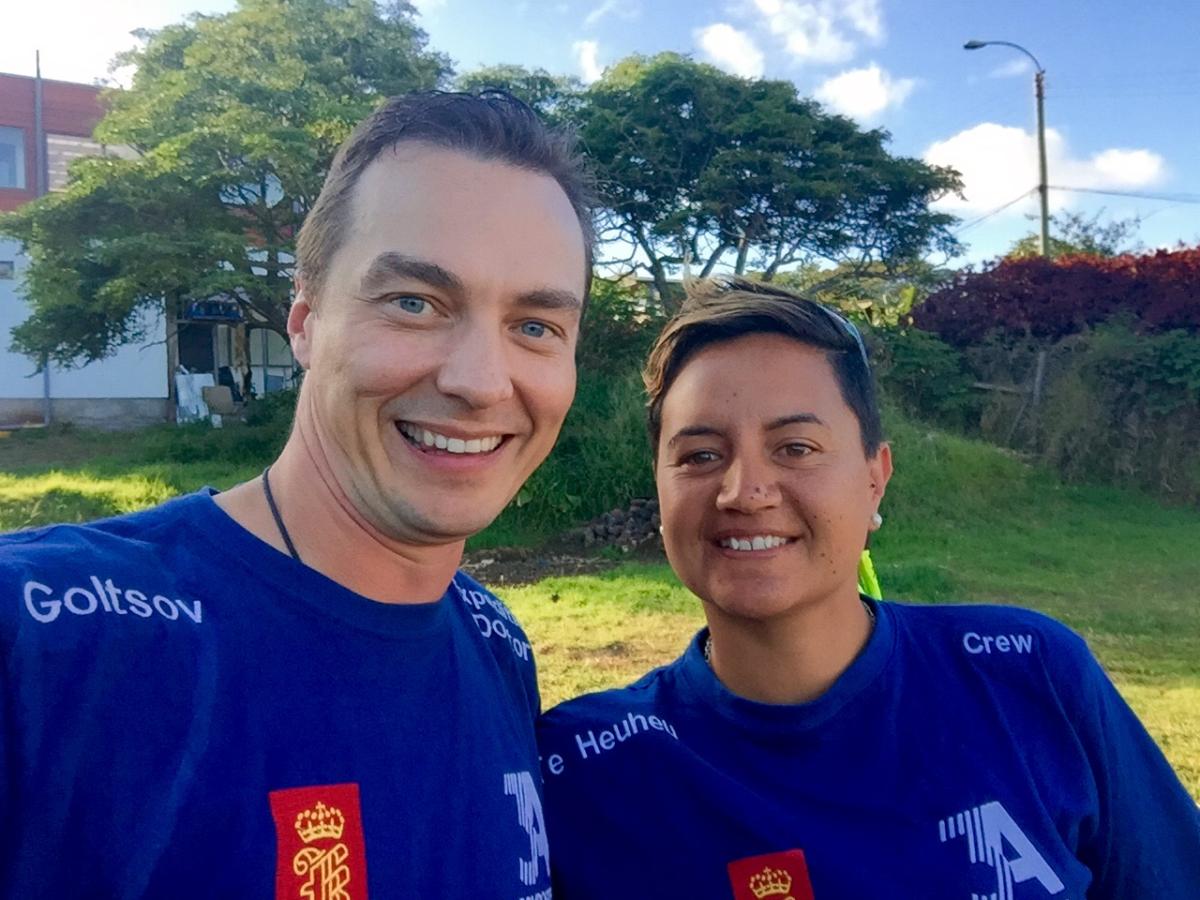
(2015-12-09) Readers may have noticed a small Russian flag in the upper right corner of our homepage. Try clicking on it, and you will be take to our site, in Russian translation! Thanks to the initiative of Anna Turchaninova and Alexey Danilov, news from our rafts reach Russians — many of whom grew up with tales of Thor Heyerdahl and his expeditions, as told by Yuri Senkevich. Among the volunteer translators are Tatyana Chesnokova, Dmitry Chesnikov, Anna Turchaninova, Tatyana Gluhareva, Andrey Kuznetsov, Danila Oleolenko, Anastasia Petrova and many expedition fans in Russia. The three Russians on our Expedition — Boris Romanov, Andrey Chesnokov, and Sergey Goltsov — warmly appreciate having the backing from their own country, in their own language.
Lifelong dream fulfilled

Scientists unite! No more assessment without action!
Based on the earlier blog What the ocean would have said at COP21 I just received an interesting challenge from Heidi and Heikki Niskanen in Finland. This wonderful couple were part of the raft building team in Peru. And now, from their warm house in winter Finland they ask: What would Cecilie have said at COP21?
Read Cecilie's response in the Science page
Beautiful, beautiful rafts




What the critics need to understand about these voyages is that it's not the crew that is fantastic, but the reed boat they're sitting on. When I set off on Kon-Tiki, I had no form of training in maritime affairs. Yet, I came back and I was applauded by the admiralities for my seamanship! It was ... ridiculous!
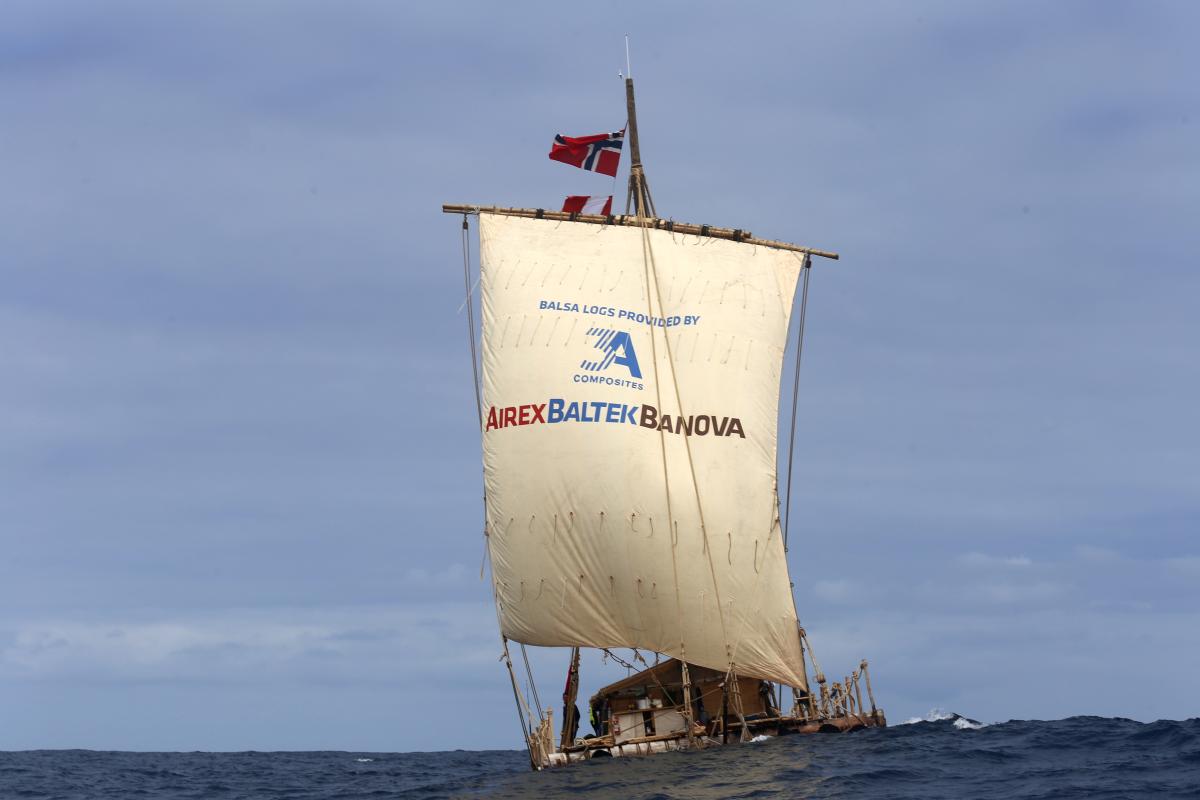
We must hasten to say that the crew on the Kon-Tiki2 rafts are fantastic, and that they show strong seamanship — unlike Kon-Tiki we are actually sailing our balsa rafts. Still, the balsa rafts are truly magnificent vessels which we would like to celebrate with some beautiful pictures. The first three show Tupac Yupanqui, the last three show Rahiti Tane. The final sunset picture may be the most beautiful view of any raft, ever. Until we see Rapa Nui in the background, that is.
The inner life of Rahiti


A quick note on towing: all recent expeditions, including Kon-Tiki in 1947, have been towed from port. We do not have access to unlimited numbers of Inca rowers, and we have modern shipping lanes to worry about.
The food situation


Team-building on Rahiti Tane


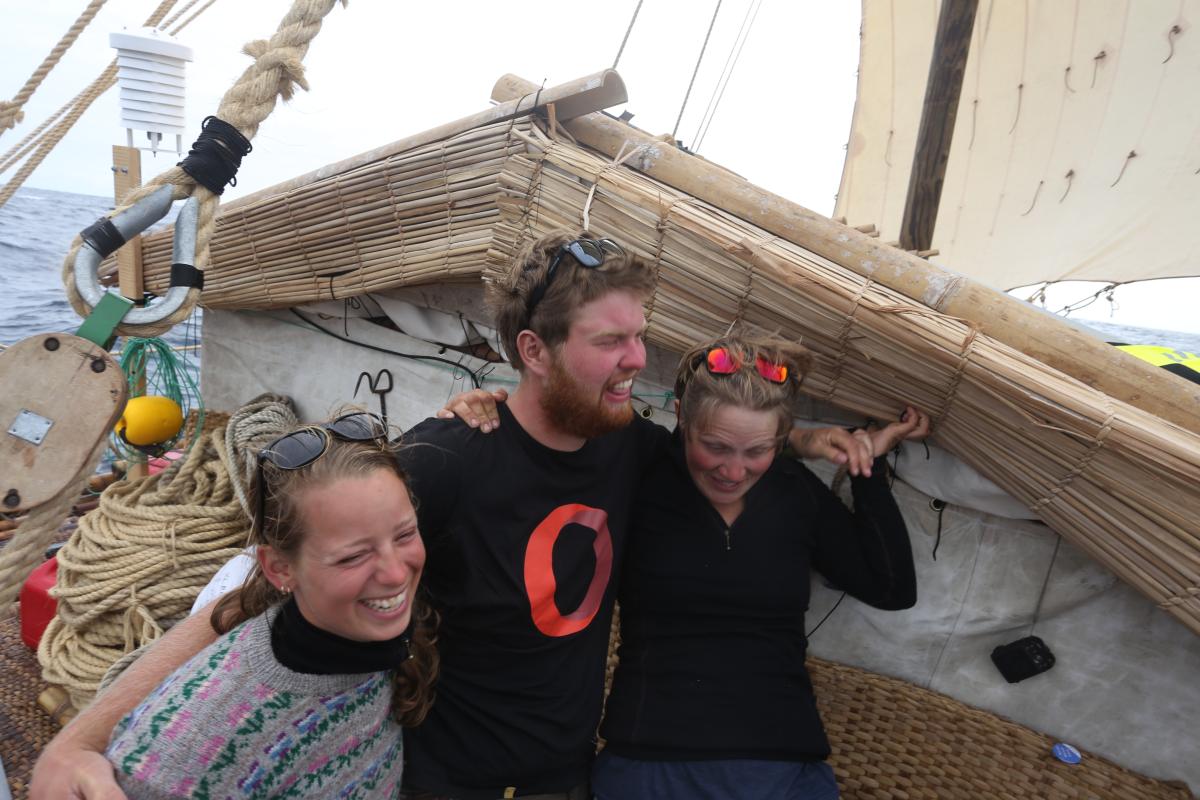
(2015-12-12) Setting off in two small balsa rafts in the Pacific Ocean to sail over 2.000 nautical miles, with 7 people on each raft without knowing each other — this is close to CRAZY, or at least a social experiment. To lower the risk of a sosial disaster at sea we agreed to have a team-building session before we left Peru for Easter Island. Four out of seven went to Machu Picchu, two blue (explanation will follow) did not want to prioritize this and one got ill. The team-building session was postponed. Not a good start on building a super team. During our second week at sea we finally made some room for a second try. We all were curious about each other and needed to learn and understand more about our dreams, different backgrounds, cultures and "secrets". On board Rahiti Tane we have a Russian, Chilean, Norwegian/Canadian and four Norwegians, three males and four females, seven different occupations: a doctor, a scientist, a teacher, a martial art trainer, a rescue officer, a professional sailor and an HR manager.
The aim of the session was to use the concept of Red, Blue and Green (a so-called Diversity Icebreaker) to contribute to a mutual recognition of differences, providing positive and useful learning process, by using humor and self-irony. Diversity Icebreaker is an unique concept for communication preferences, to identify your preferred behavior: Blue is task-oriented, Red is relational, and Green is change oriented. Most of us have one dominant color, but we all have some of all tree colors. There is no right or wrong.
Rahiti Tane ended up with two significant Blue, two Red and tree Green. We became curious about each other, and some stated that they developed a new knowledge about themselves and others through humorous dialogue and direct involvement. One stated: now it's easier to understand and forgive others of their "strange" behavior or communication. By investing less than two hours on this, I believe we achieved fewer conflicts, more trust and forgivenesses for each other, more positive cooperation and a more constructive team dynamics — thanks to Diversity Icebreaker!
[The pictures show the facilitator, participants at work, and the Red button carried by two members of the crew]
Double fisherman David Short


In these pictures we can see a handsome man with expedition clothing, a fishing pro with his impressive catch, and a man caring deeply for his next meal. David has a musical side, and he often performs raft-side with Andrey. In card games, he's a shark, but would never leave a sinking ship without his comrades. In Short: a good man to bring along on your next rafting adventure.
2046 meters!

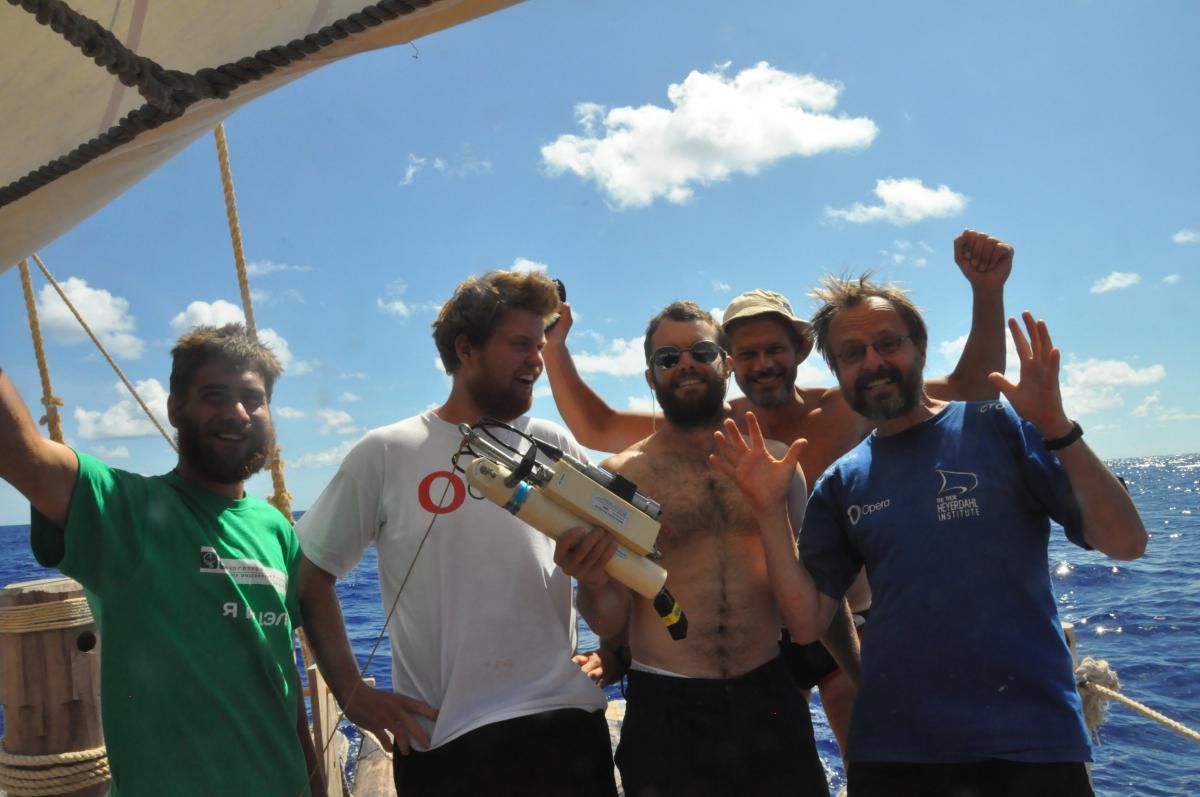
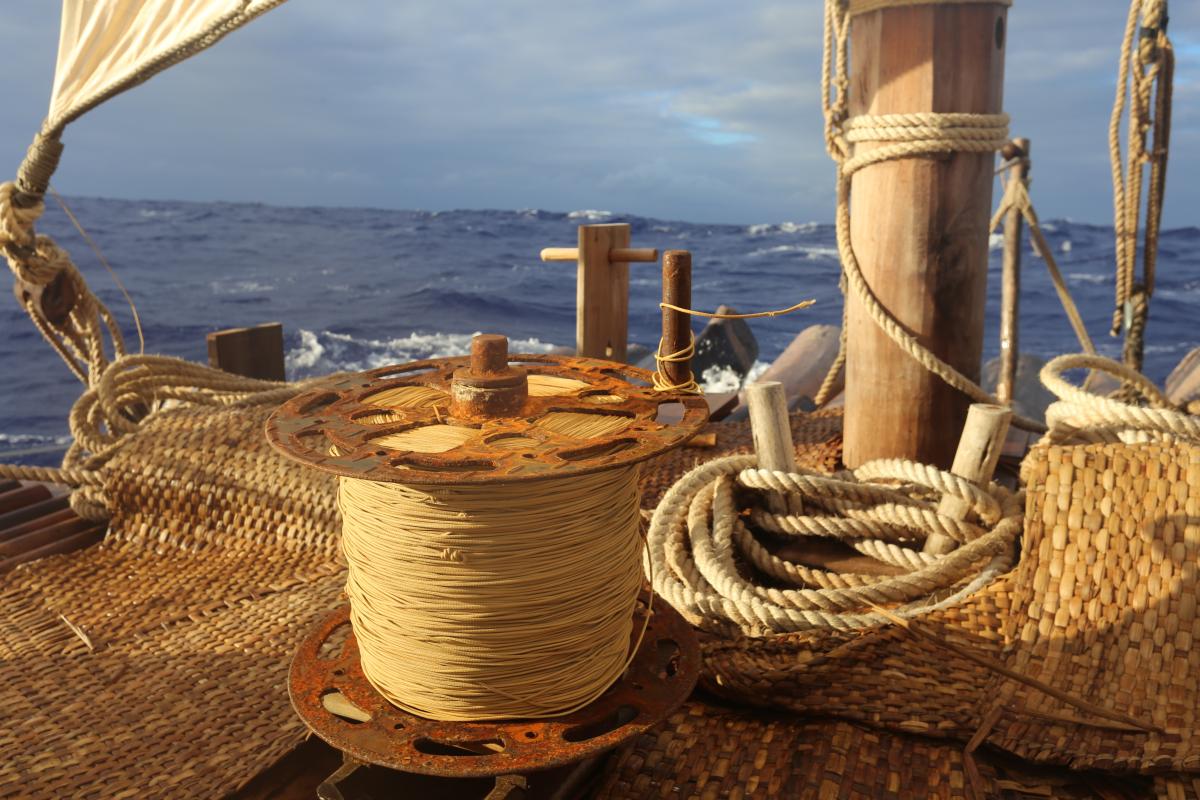
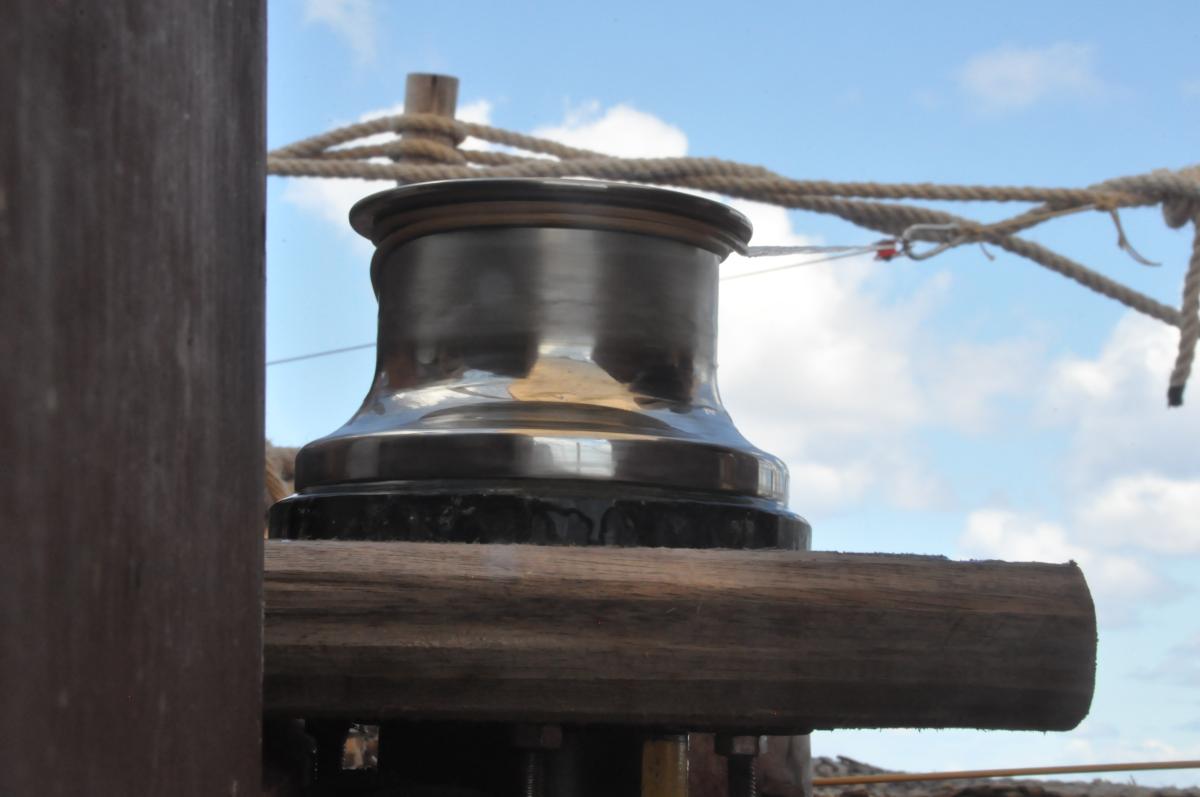



Today the Tupac crew lifted the quality of the expedition dataset up many many levels, with their deep water CTD cast to 2000 meters. Who would have thought it would be possible to perform that sort of operation on a little, open-deck raft, with a sail-winch run on solar power and some kevlar rope thinner than the knitting yarn on Rahiti Tane? Well, its time to eat some hats — Tupac did it :). Proud of science, proud of dedication, proud of the Kon Tiki 2 Expedition!
Pacific cuisine on Rahiti Tane, week 5
(2015-12-14) Our fifth week has passed and it's been somewhat of an international food week. We've had a taste of India, Italy, Indonesia, USA and a few places in between. We've also invented some new dishes and we have started sprouting lentils! So now we have fresh vegetables in the form of sprouted lentils, we have rehydrated vegetables from the dried ones Gunvor brought and we also still have some onions and garlic. Who would've thought we'd be eating fresh vegetables in the middle of the ocean? The menu:
- Sunday: Quinoa balls with rice and sauce
- Monday: Chick peas in curry sauce
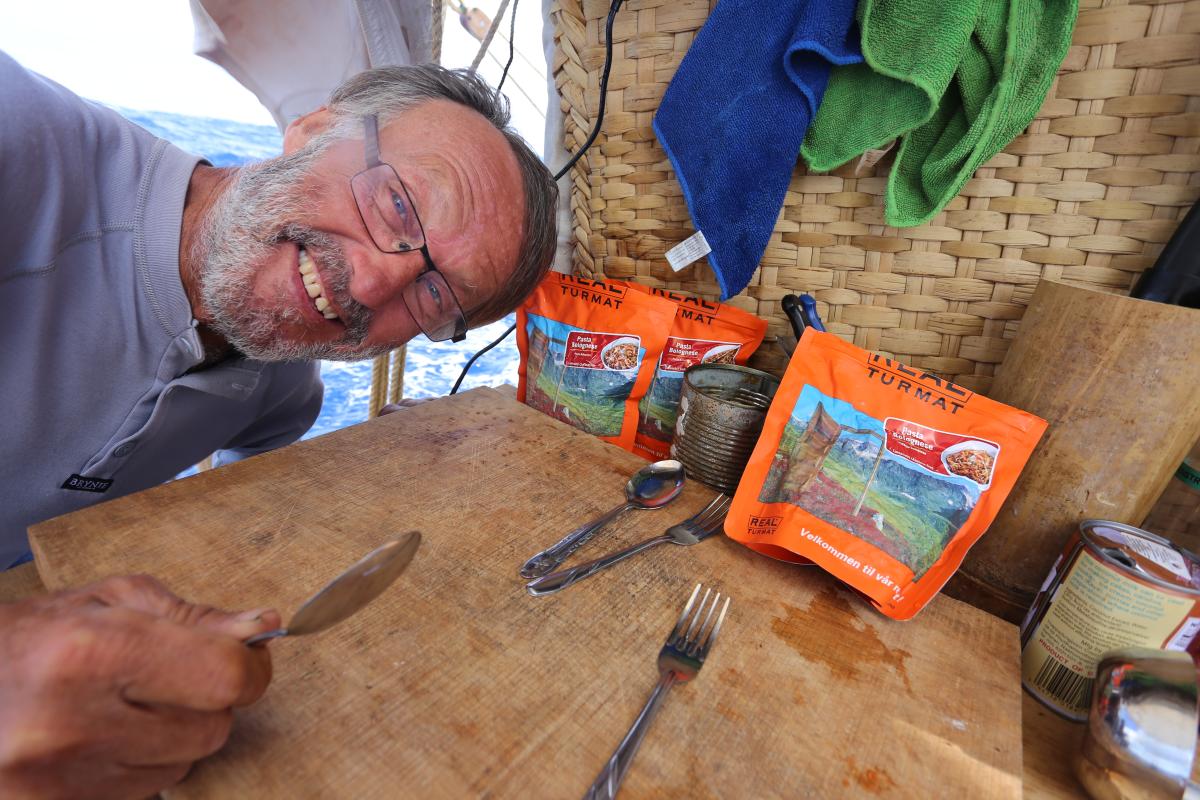
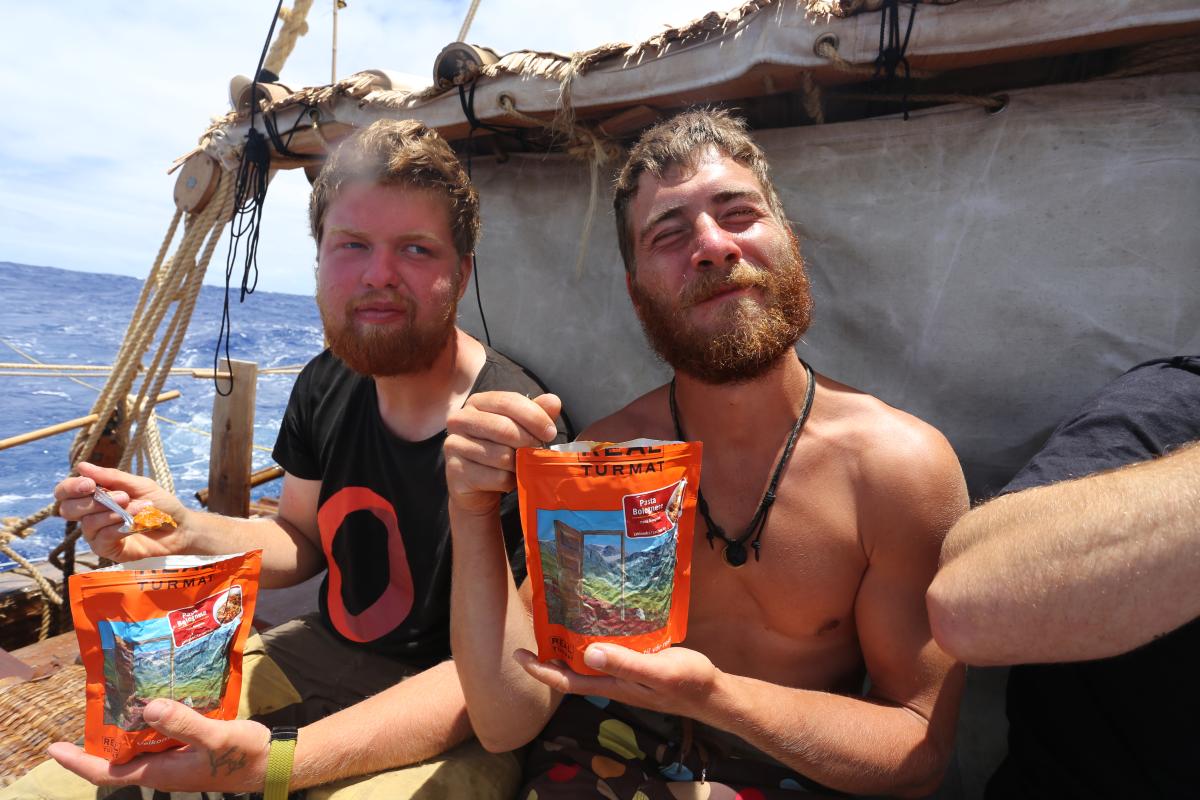
- Tuesday: Dehydrated foods from our sponsor Real Turmat
- Wednesday: Spaghetti with tomato sauce
- Thursday: Lentils in a thick peanut/coconut sauce with rice
- Friday: Tomato/pea soup with an Asian twist
- Saturday: Burgers (lentils and quinoa) with burger bread and yucca-fries
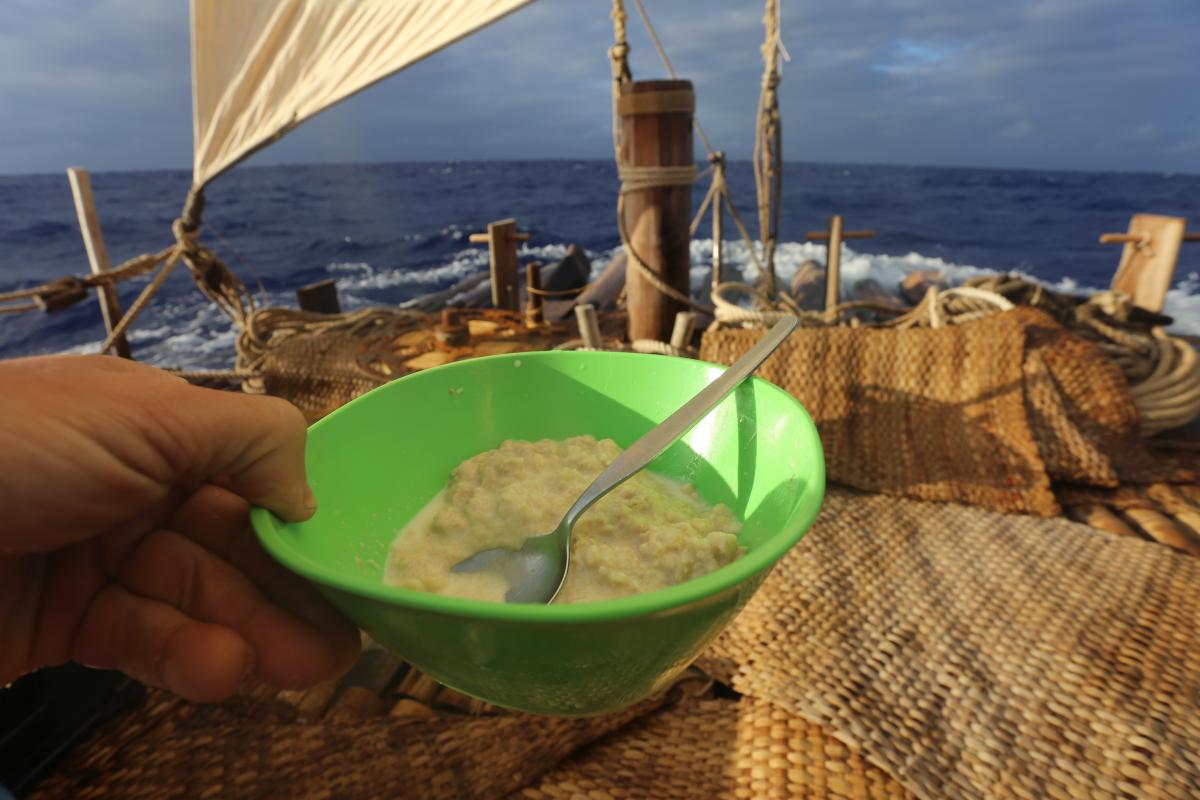
We never throw any food overboard, and so breakfast and lunch are good opportunities to use leftovers. We always have oatmeal for breakfast, and very often this porridge consists of more than just oats and water. Leftover rice and quinoa are good additions to the porridge. Our expedition doctor Boris tells me that a mixed porridge of oats and rice is called friendship in Russia — we have friendship for breakfast several times a week and it tastes much better than just plain oatmeal! Whatever porridge is left over is used as a base for baking bread or making pancakes. Whenever we finish another pot of peanut butter we put water into it and shake to get the last bits out, and use this in a sauce. This way we make sure that we never waste any food.
Now we've entered what will probably be our last week at sea and since Sunday was Lucia-day we baked lussekatter!
Andrey Chesnokov, roundtrip sailor
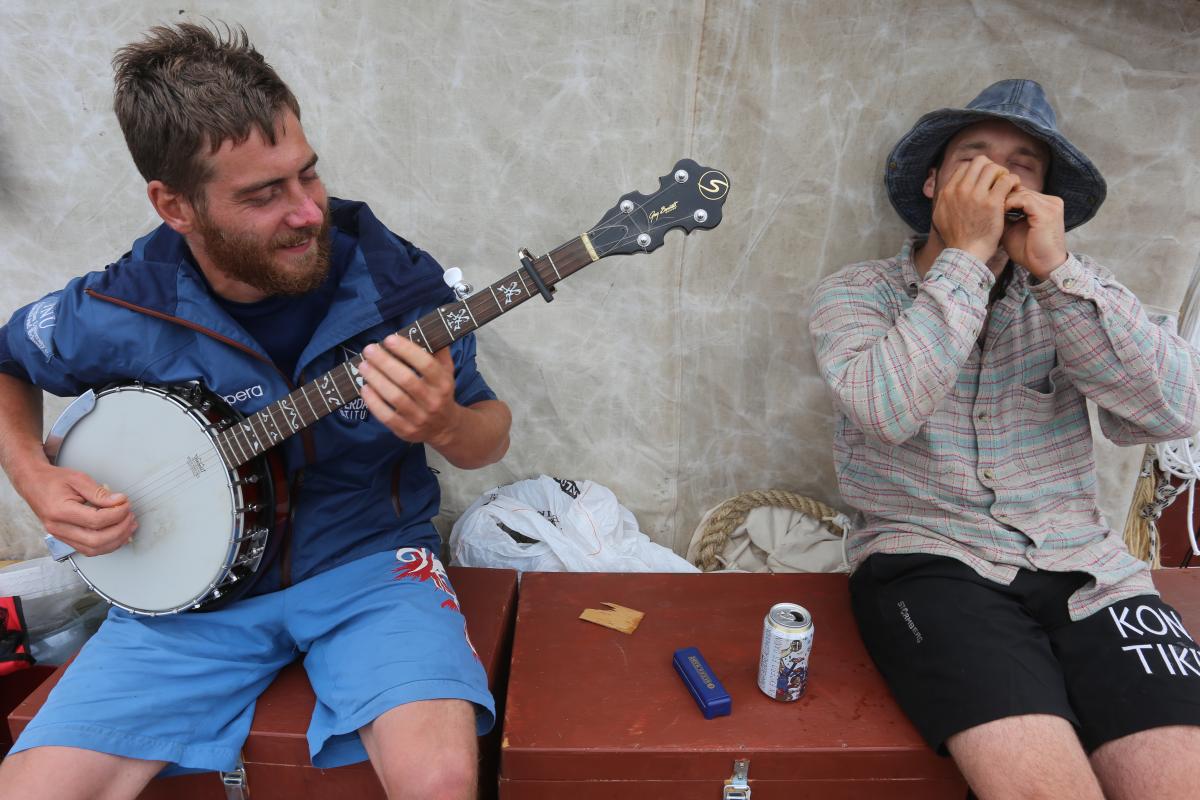


In the pictures, Andrey is seen with his signature bandana, and his signature musical instrument (a banjo!). Andrey appreciates many means of transport, including buses in Callao and rubber dinghys in the Pacific. He likes looking over a sunny and blue ocean, and quickly learnt the ropes on the raft. Given a few more months, there would have been been seven blue-eyed Norwegian speakers onboard Tupac Yupanqui!
Roca Minnehaha


(2015-12-15) On our voyage across the Pacific ocean, the Kon-Tiki2 Expedition does not find many rocks, islands, or reefs to stay clear of. In that way, navigation has been very easy. Tonight we will be heading over a hidden island (in Spanish: isla fantasma) called Roca Minnehaha. This island was first spotted by a ship called Victoria in 1879. It has not been seen for many years, but is kept in the nautical charts — just in case it is there. There are many wonders below and around us and Roca Minnehaha could be one of them. So tonight, we keep sharp look-out.
[The editor was awoken by a cheerful crew on Rahiti Tane on VHF this morning. They reported that no isla fantasma had been spotted overnight, even if the island is real enough to have its own page in Wikipedia. The first picture shows how the island appears on printed nautical charts (with captain Øyvin Lauten's authentic markings), and the second picture shows the Pacific ocean as we see it just now. No islas — fantasma or real — only the beautiful Rahiti Tane on the horizon.]
Epic meeting at sea
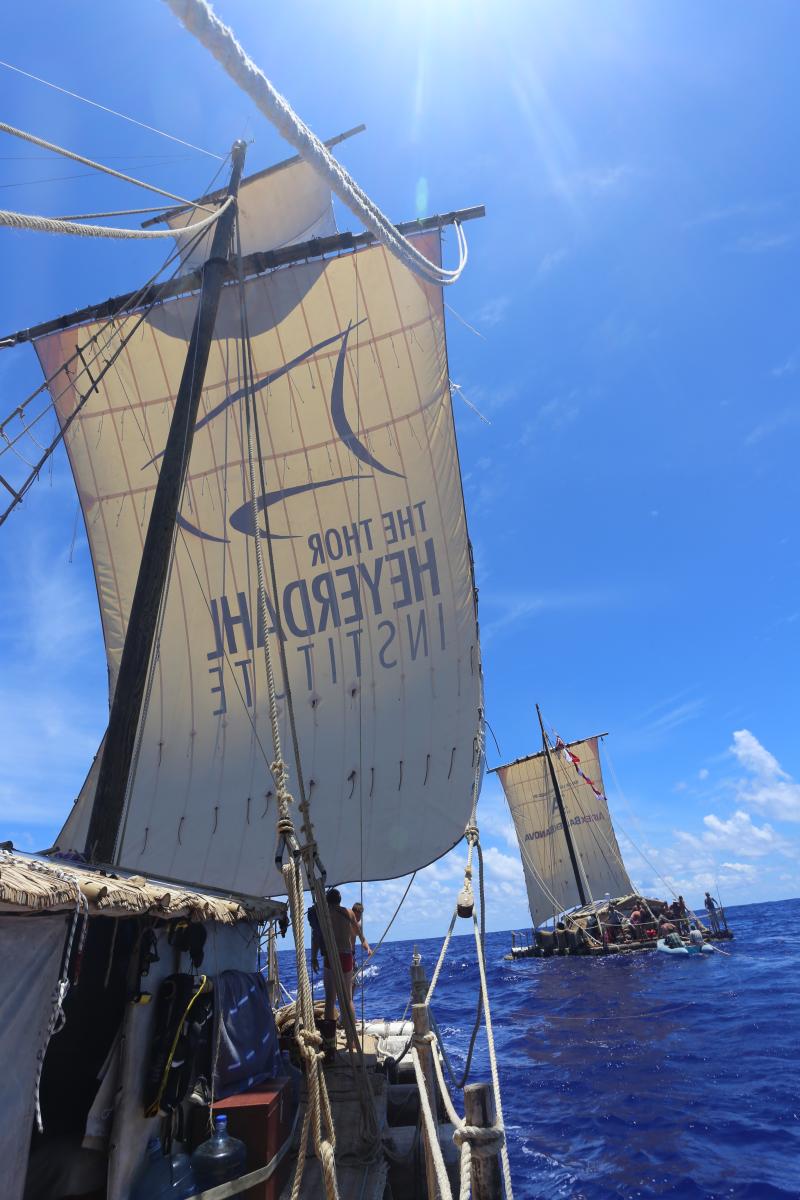

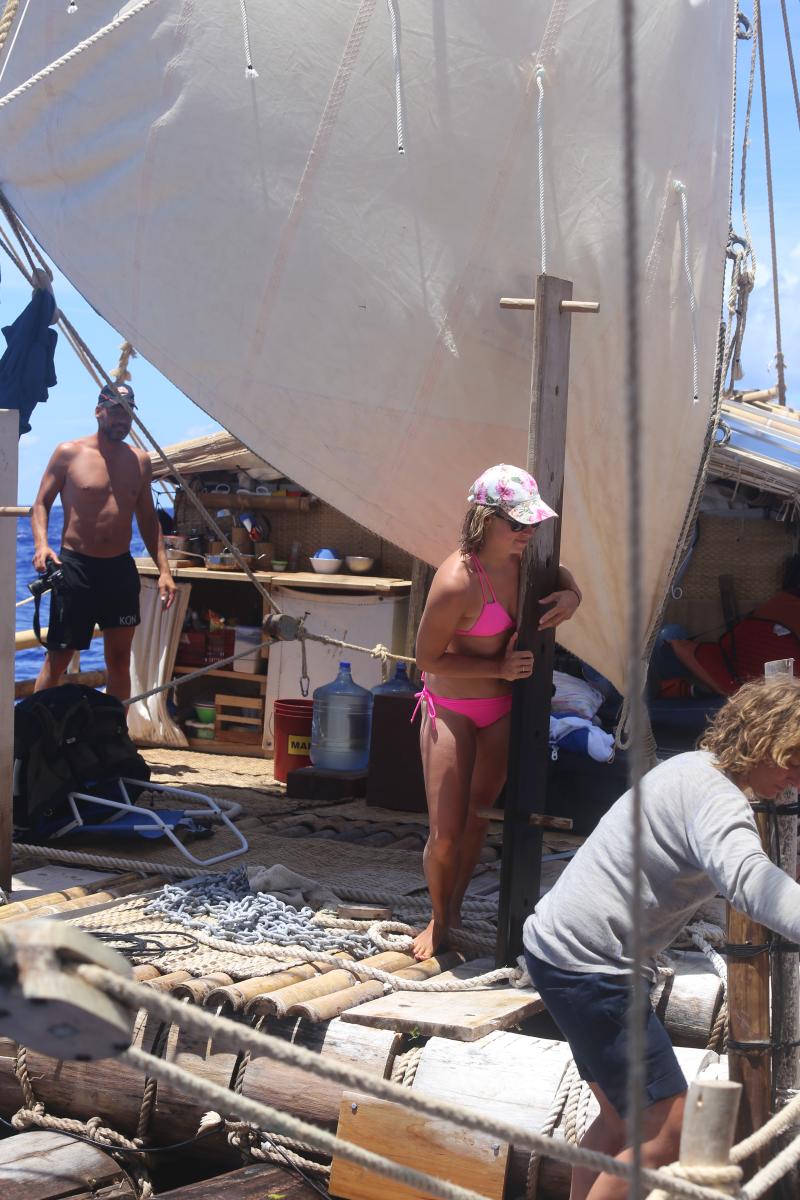


Hansen protect our sailors


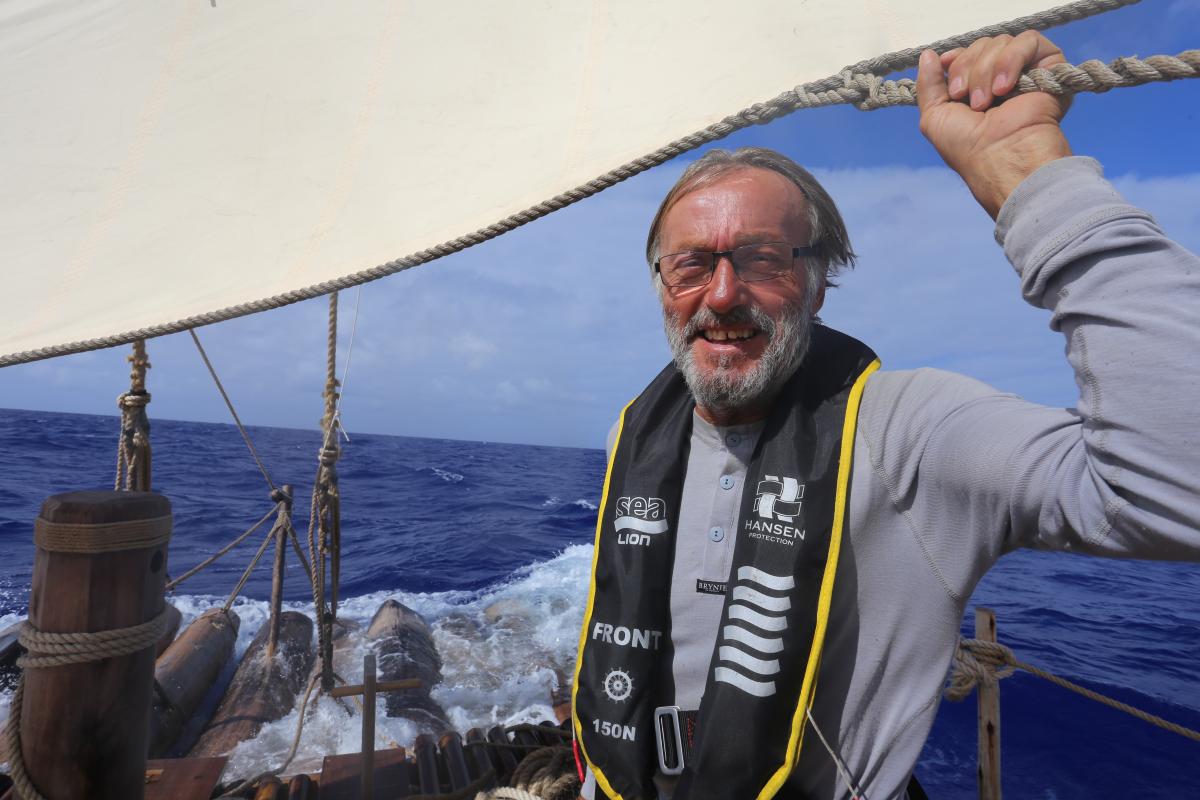
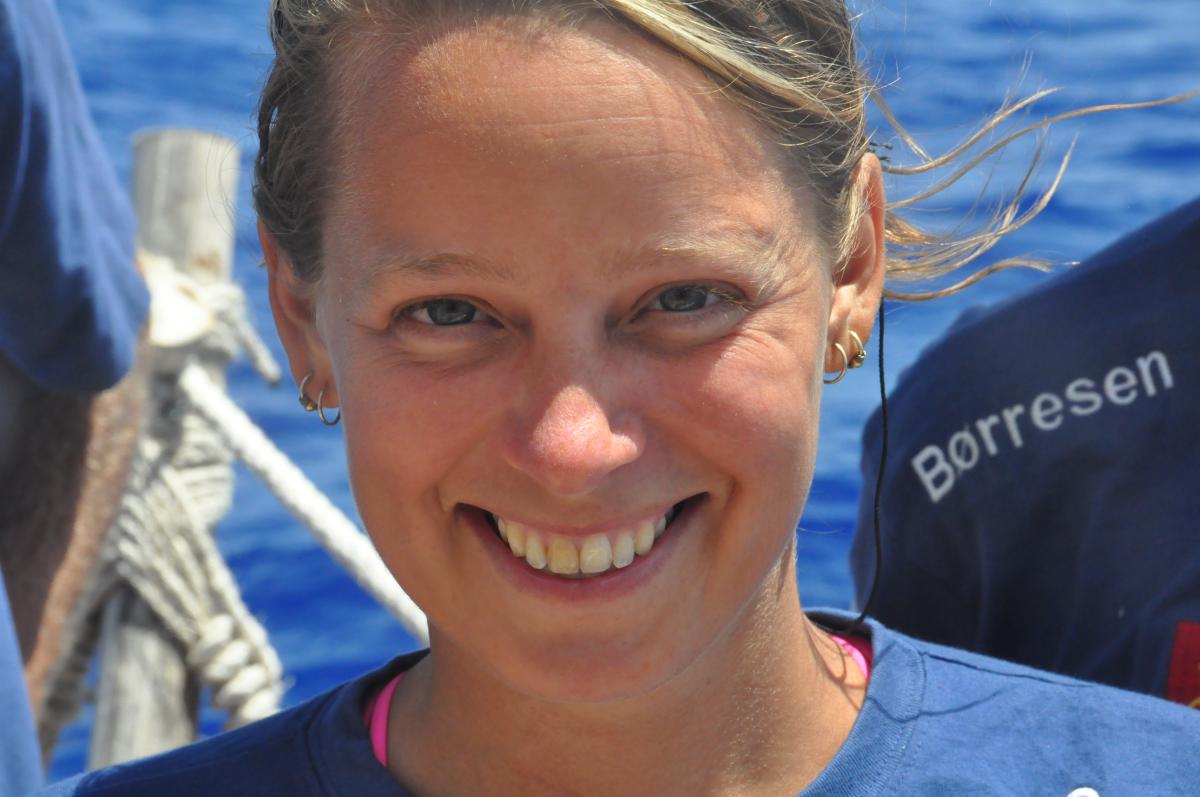
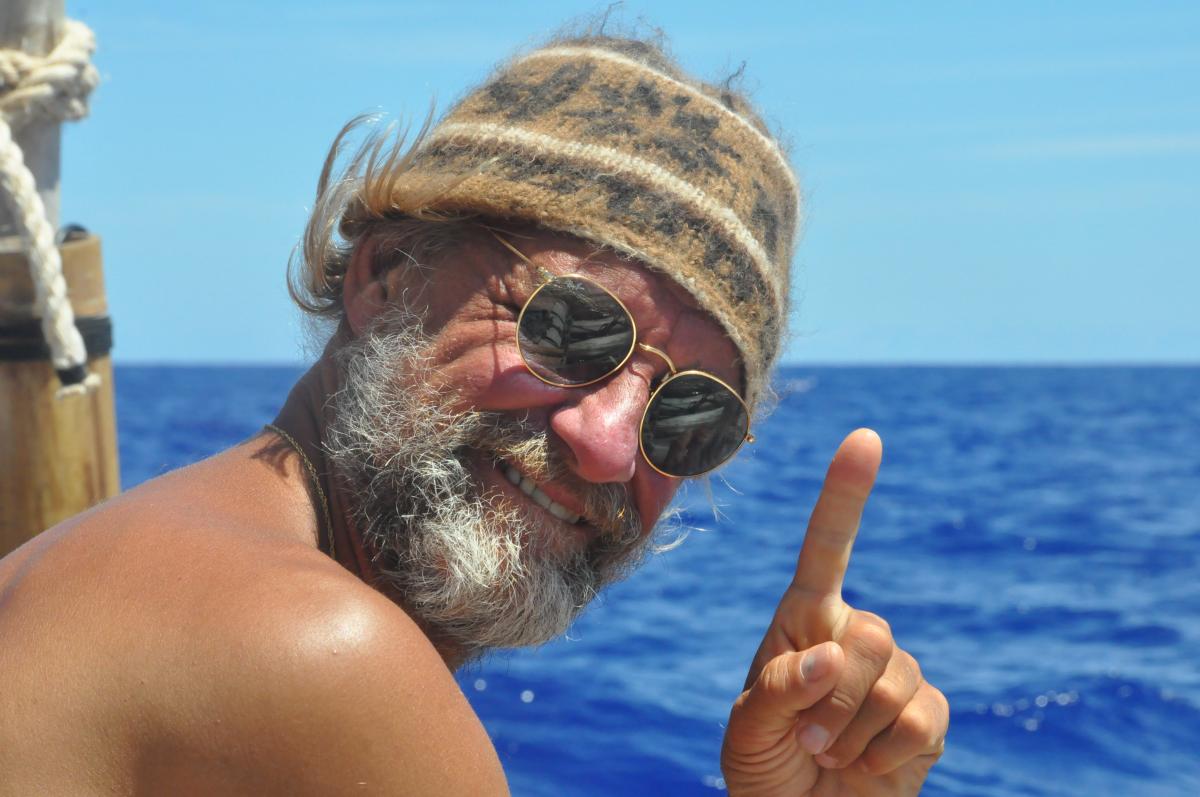
Portraits from Rahiti





What amazing morning!
Signe woke me up carefully saying I think you want to bring out your sextant this morning. And she was so right! I am listing up our sights, and you can use them for navigation training purposes. A special greetings to SOCIEDAD ASTRONOMICA Y GEOGRAFICA DE CIUDAD REAL. Un saludo desde nuestra balsa.
We are in position S 31,72 W 106 3,9
The sights were:
Betelgeuse approx 06:22, angle 23
Riegel 06:30:57 angle 23
X (planet/star over Betelgeuse) 06:32:10 angle 45:50
Rigil Kent 06:29:52
X (probably Sirius, compass 300) 06:34:15 angle 42:50
Venus 06:36:18 angle 24:33 (bearing:165)
X (probably Sirius) 06:41:17 angle 42 (compass:275)
06:44:23 angle 42
Mars 06:50:25 angle:55
Venus
06:45:30 angle 26:37
06:51:45.angle 37:15
06:54:40 angle 28:58
06:55:46 angle 28:03
06:56:34 angle 28:05
06:57:34 angle 28
06:59:09 angle 29:42
07:00:15 angle 29:56
07:01:17 angle 30:04
07:02:22 angle 30:27
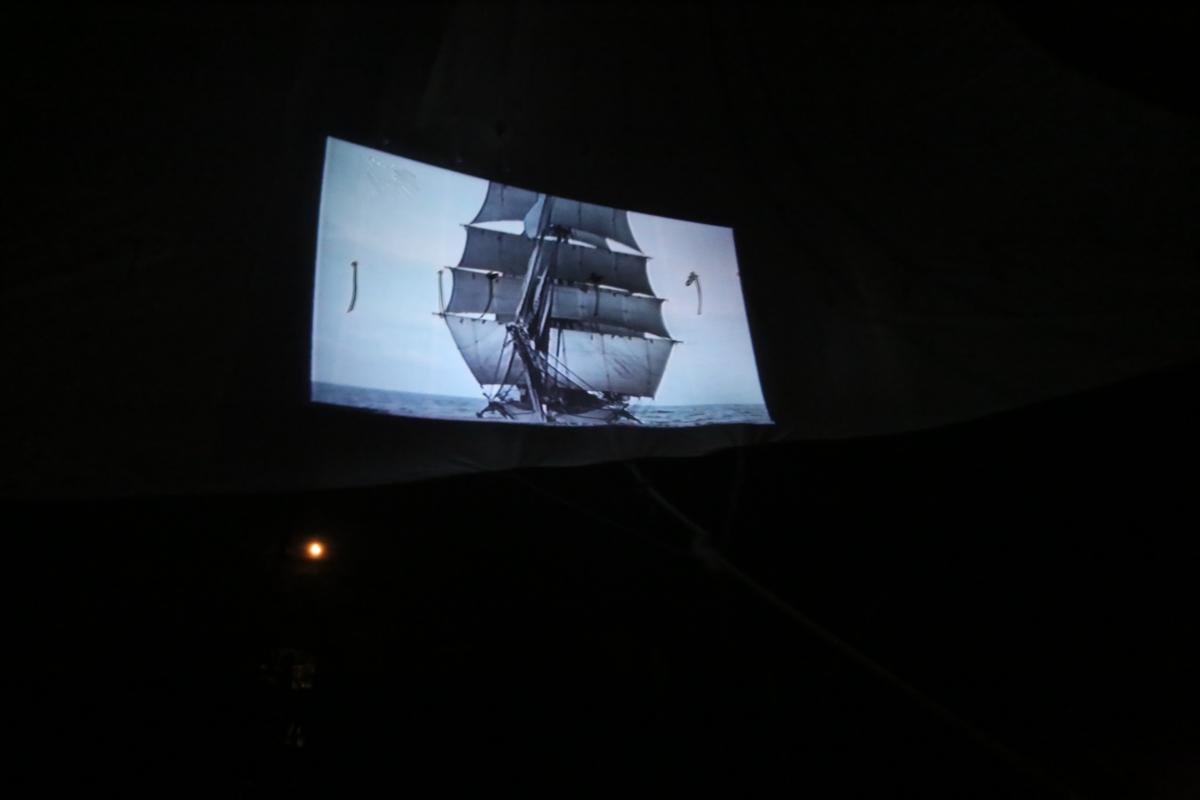
Movie nights in the South pacific



About climbing the mast

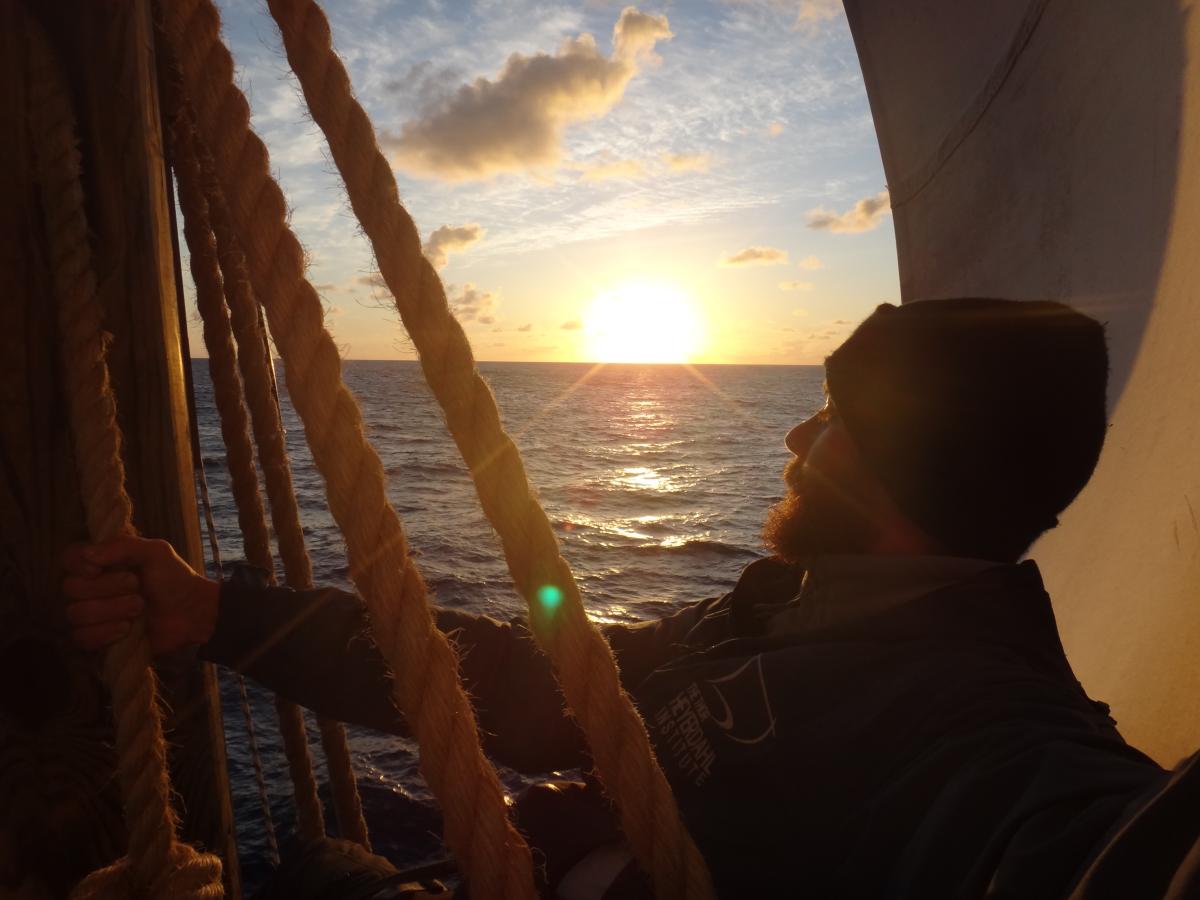

(2015-12-18) The 1st place of the most exciting feelings and sensations of this journey gets climbing on the mast. first time it was a little scary, because of unstable and twisting and trembling ladder, but in couple of times i've used for it. and that sense, when you are standing on the soar (top of the sail) and watching the horizon espesially in the time of sunrise... it is more than freedom or inspiration or beauty. it is happiness. and this happiness is so real and concentrate, that it seems, you can touch it with your hands. "amazing" is too light word to describe it.
The meteorologists dream


(2015-12-18) We have been out here in the southeast Pacific for more than a month, and we never tire of the changing skies. We may not have seen as many stars as we expected, but on the other hand we have overdosed on beautiful clouds. You can seen some of our favorites in these picures.
How to sail a raft

I want to try to give a picture on how it is to sail a raft and how it is to steer with guaraboards, or daggerboards. Now we have been out sailing for over four weeks. Mostly we have had southeasterly and easterly winds. They have been from a light breeze to what we in Norway call a frisk bris, about 10 m/s, maybe up to a small gale in some showers. Even tough we have sailed and steered this vessel for a month now, we experience new things every day.
Continue reading here...
Land A-hoy! Iorana!
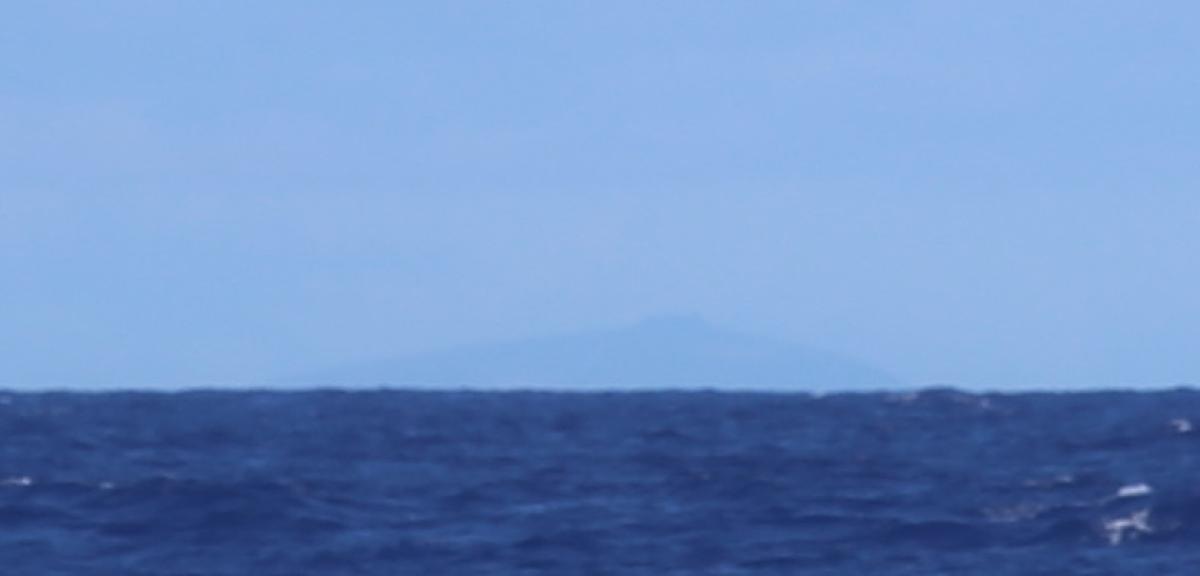
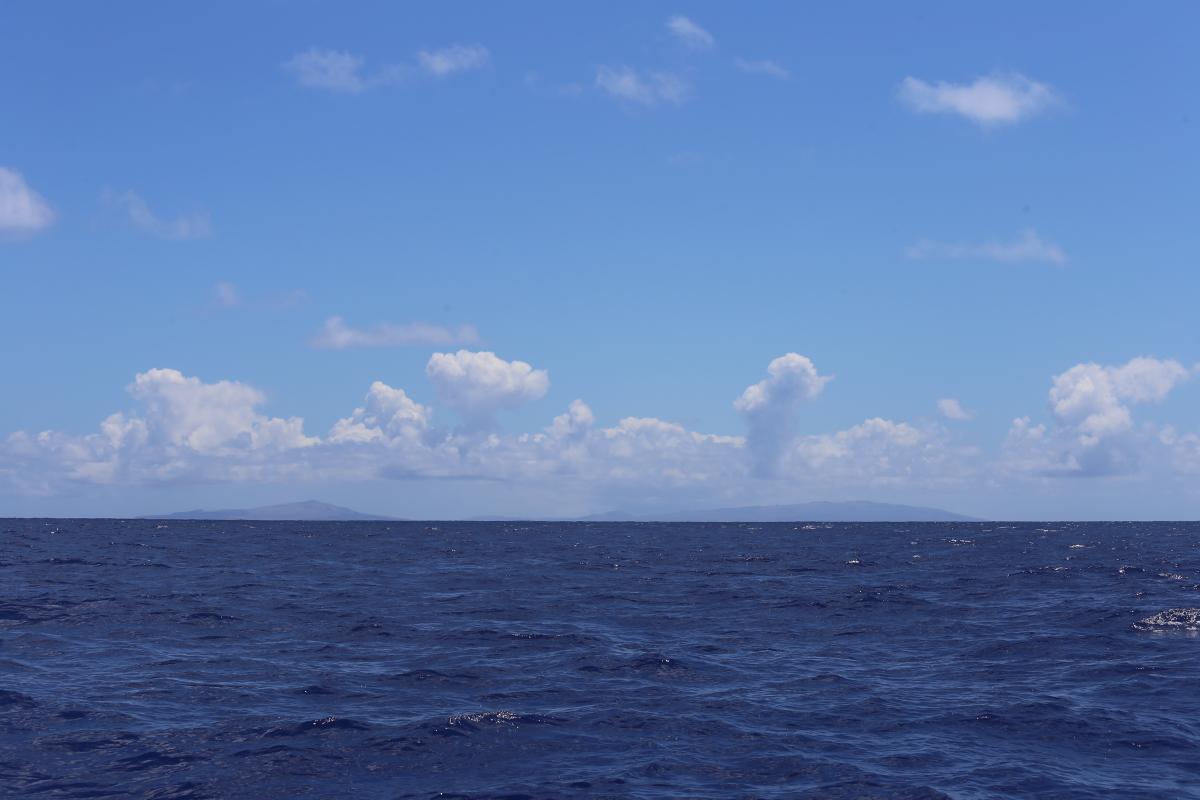


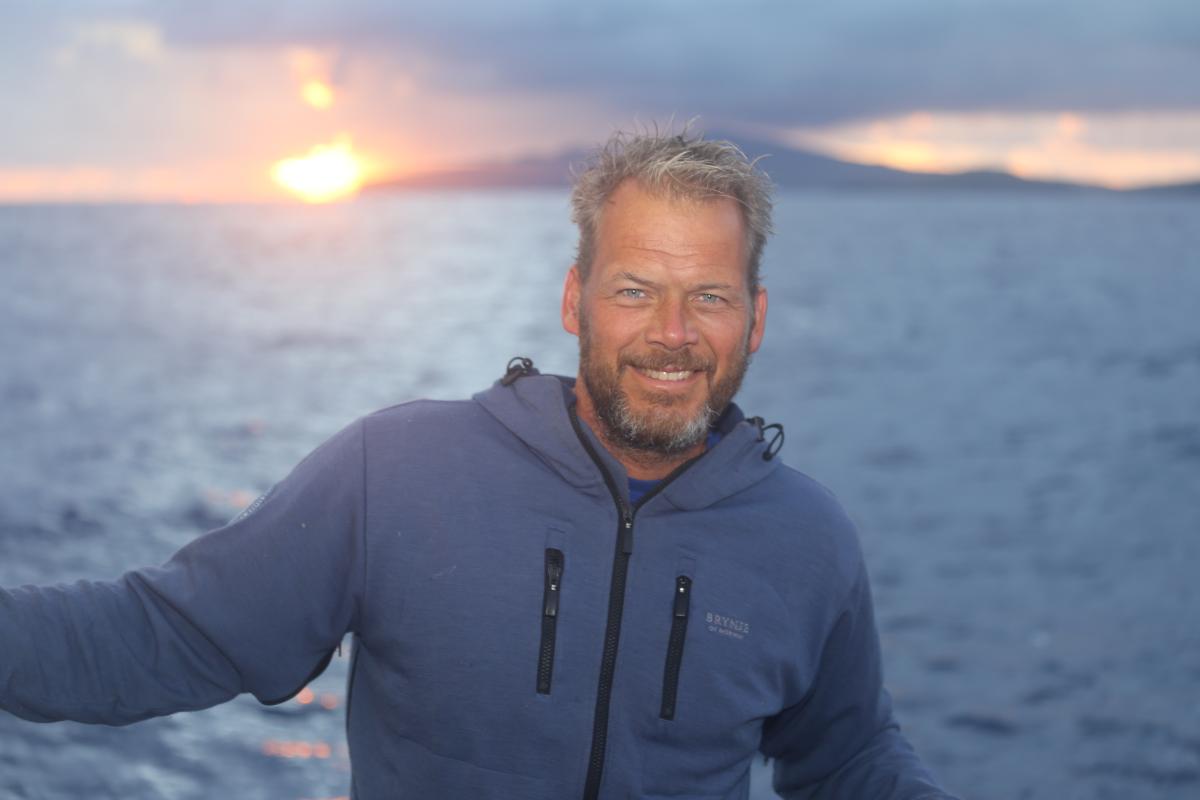

Picture 5 is on Dec 19; a proud Expedition leader Torgeir Higraff can be seen at sunrise with the northern tip of Rapa Nui behind him. In the last picture, Tupac Yupanqui is seen sailing towards Hangaroa with Easter Island on port side.
Some first reactions from the crew:
- Bora: I'm very very happy to see Rapa Nui!
- Øyvin: We did it, by refining guara board techniques!
- Torgeir: Epic, not to be taken for granted!
- Håkon: it was amazing to see land, and then shout land!
- Esteban: I have always dreamt of visiting Easter Island, but not on a balsa raft!
- Pål: To finally see Rapa Nui after 42 days is a relief, we made it!
- Gunvor: It's crazy to find this island!
- Andrey: Half-way done, congratulations!
- Kari: I was on watch, looking out, wondering when we would see the island. All of a sudden, there it was -- I was with Bora and we hugged!
- Cecilie: Lovely to reach Rapa Nui, it looks lovely in the distance. An adventure is sadly over but it is a fantastic bonus to get to see this famous island!
We made it!


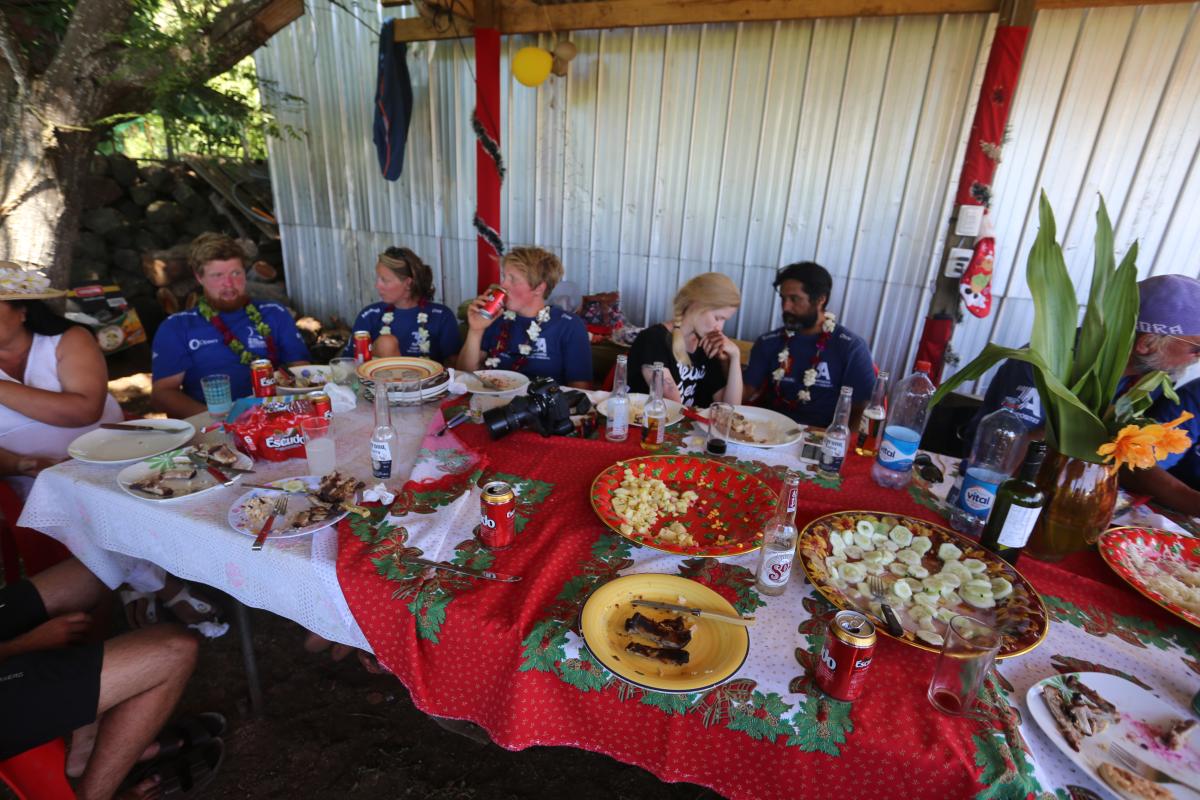
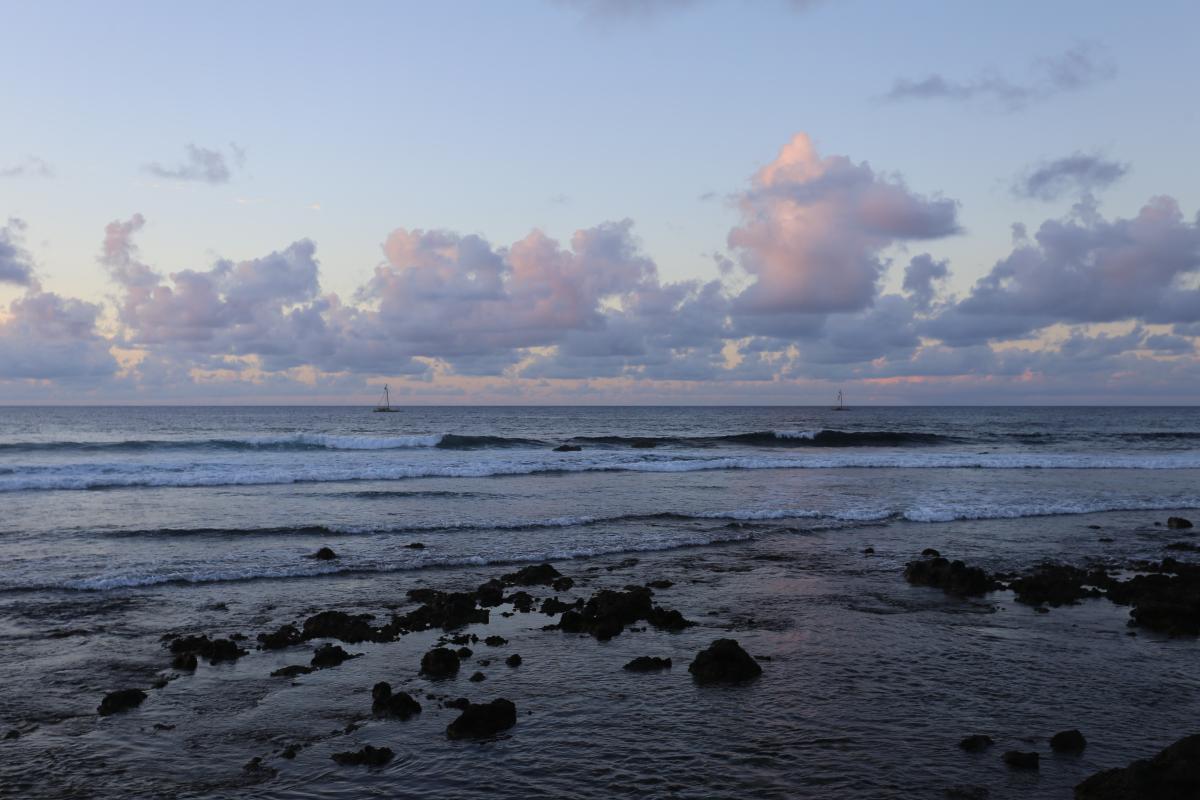
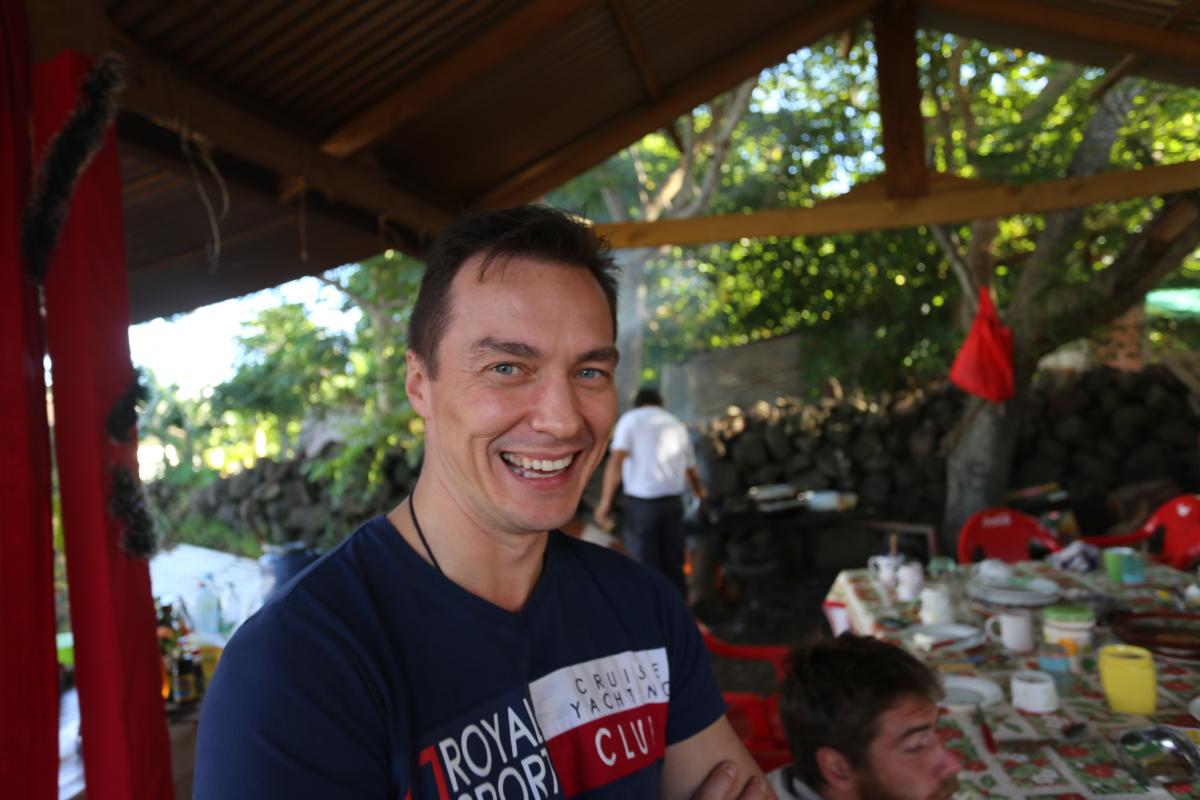
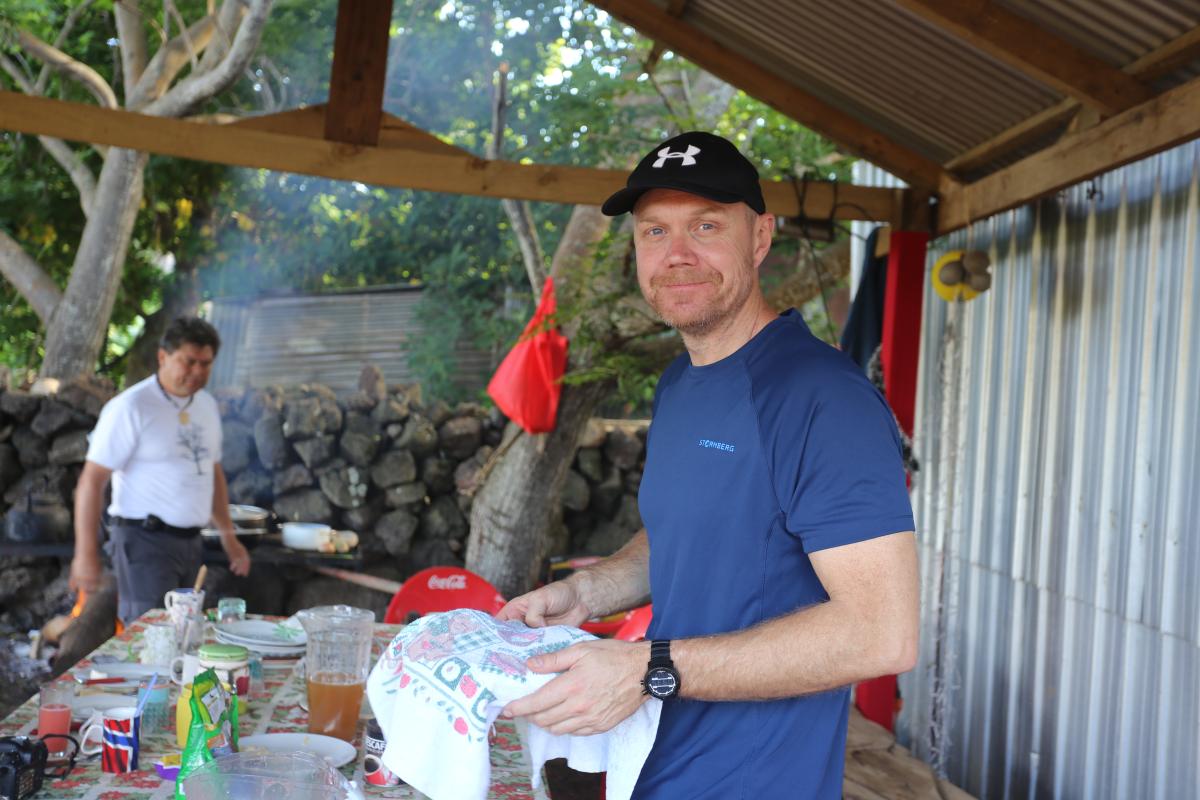
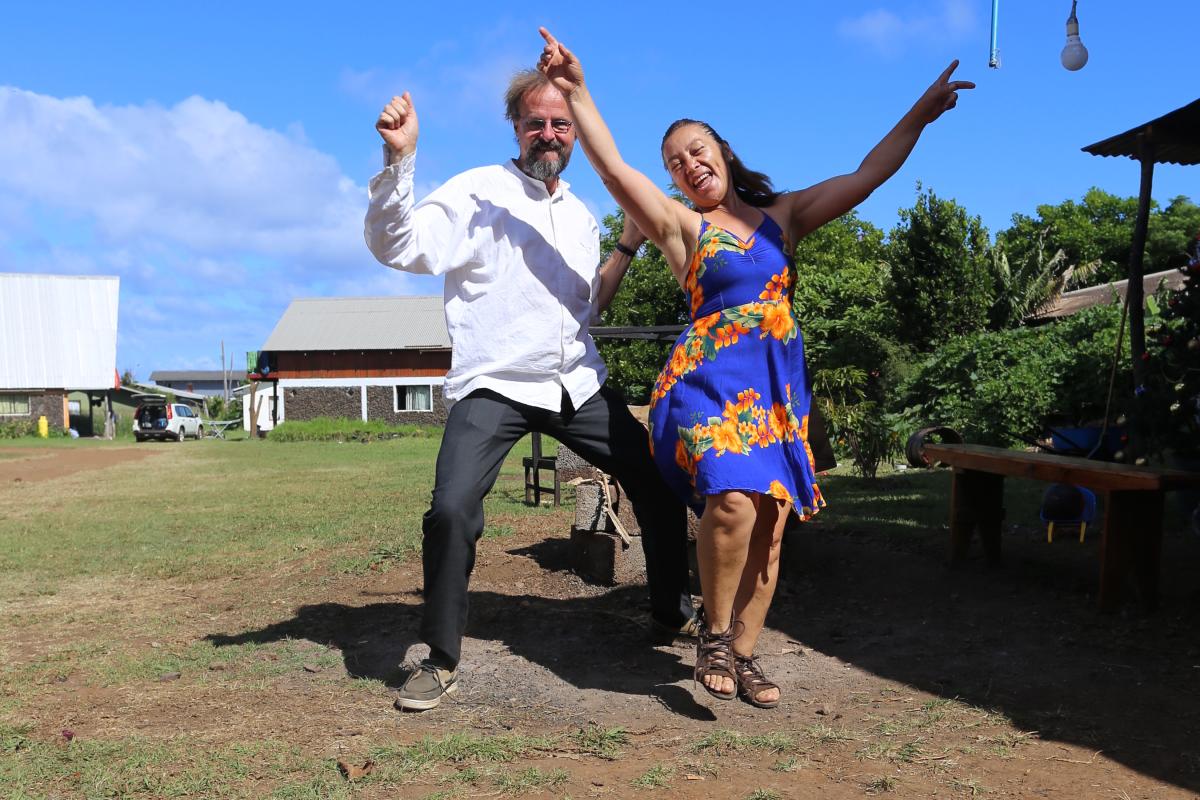
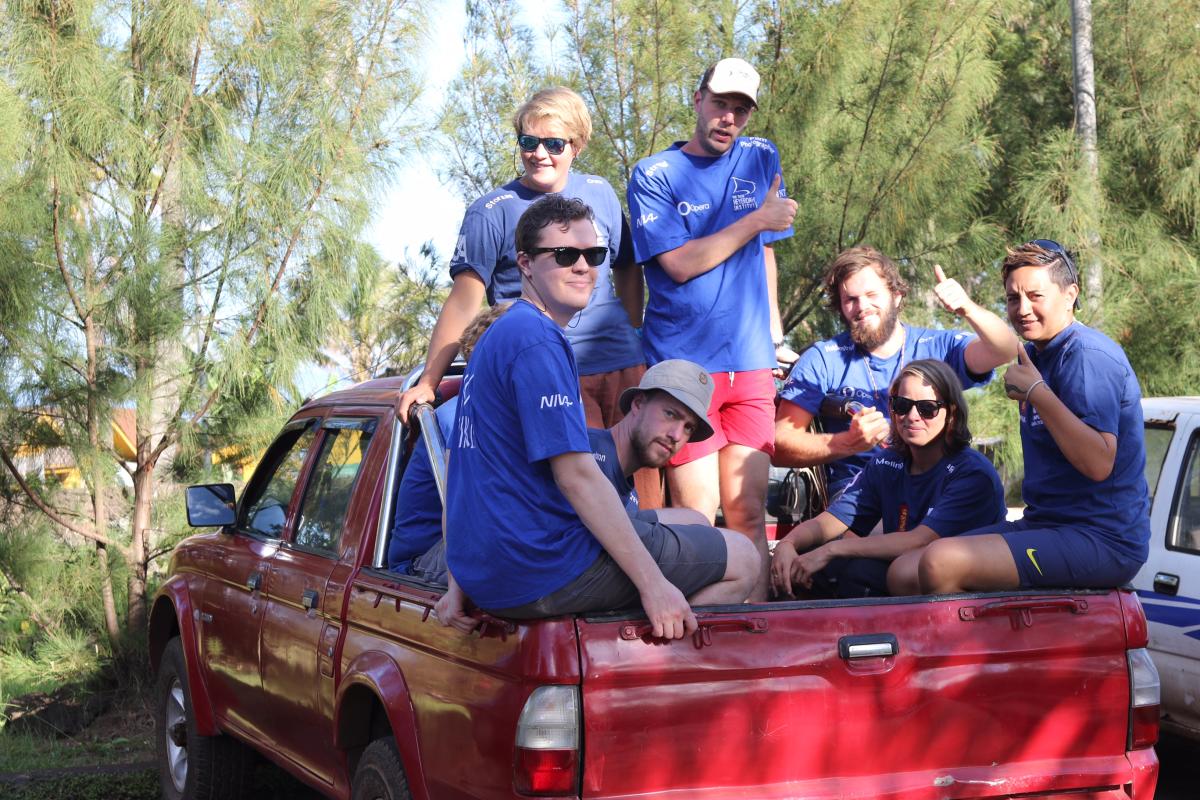
[Update: some hours later, all crew members are onshore enjoying a fantastic welcome — food and drinks included — organized by our friends on Rapa Nui! The pictures below shows how wonderful grass feels, how good it is to be at Jacqueline's party, and how the two rafts are anchored by Hangaroa.]



Changing of guards








Liv Arnesen brings goodie-bag

New crew shaping up




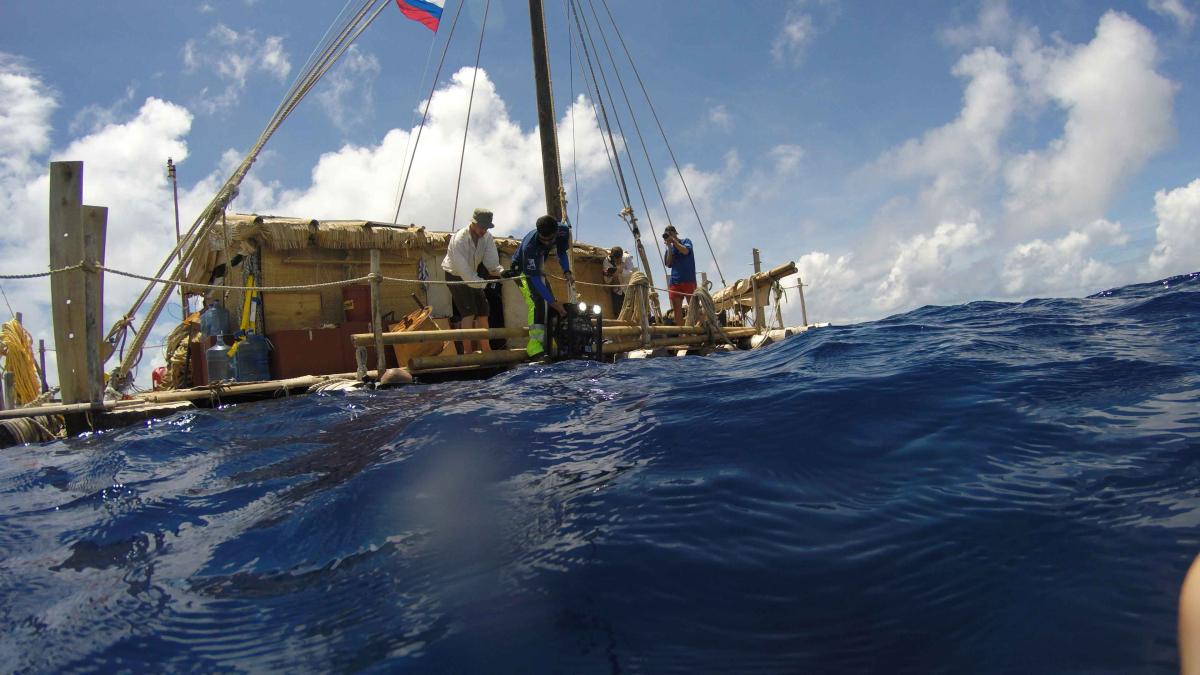
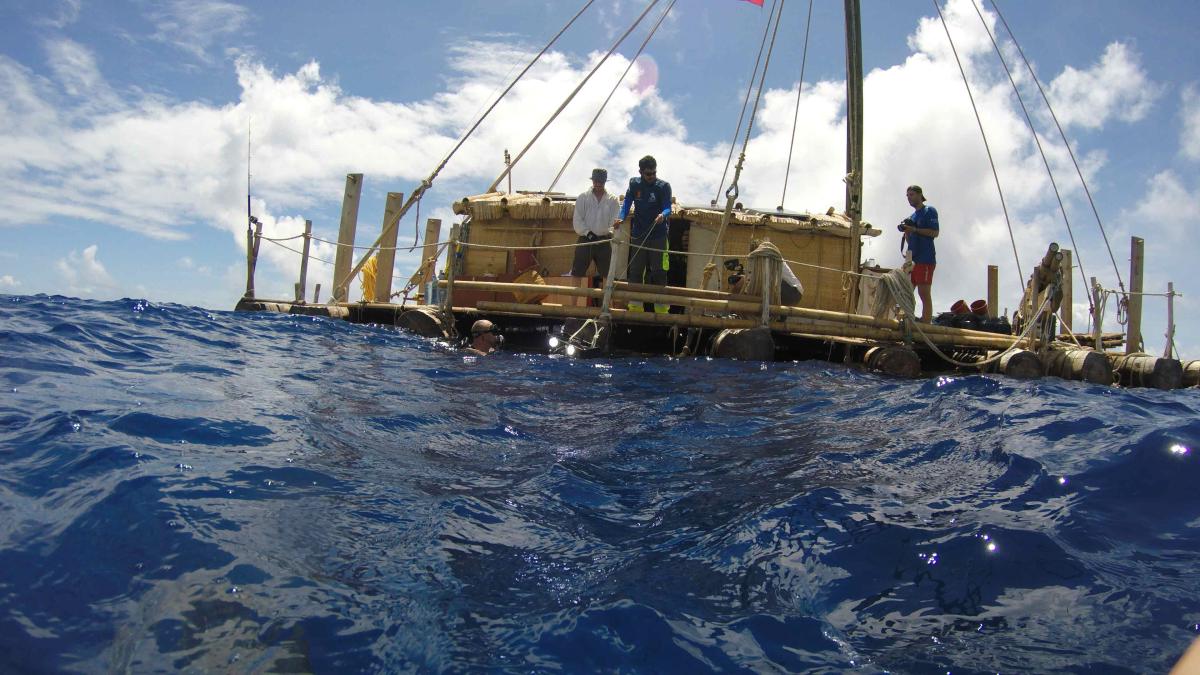
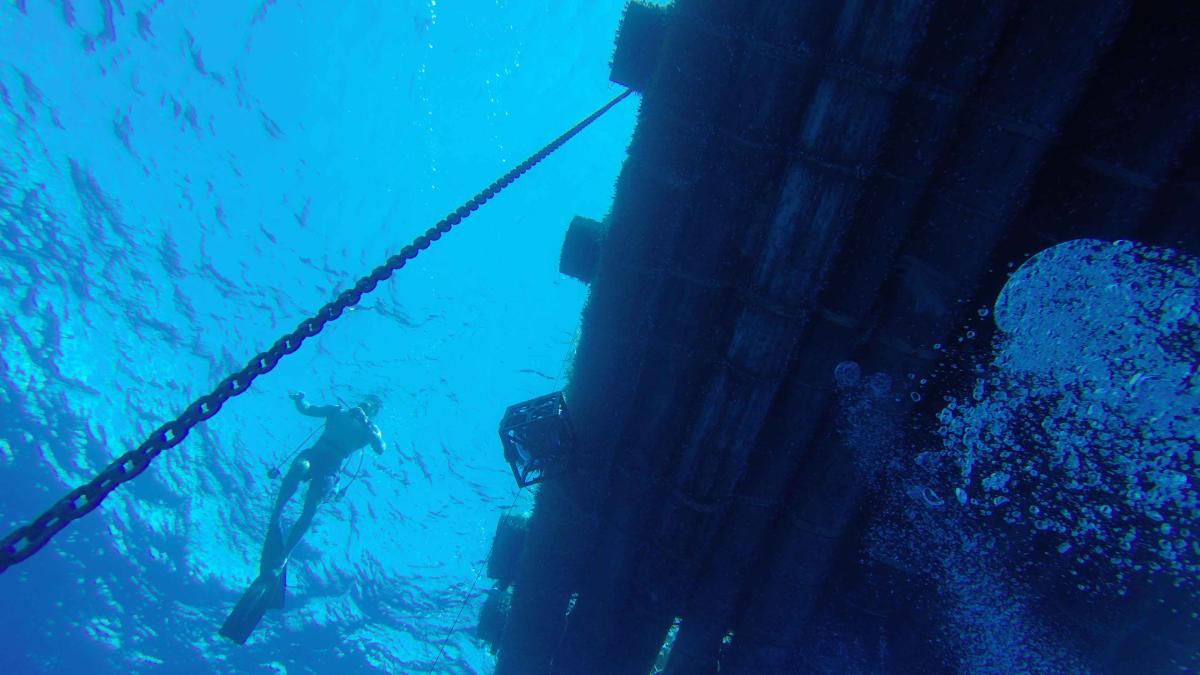
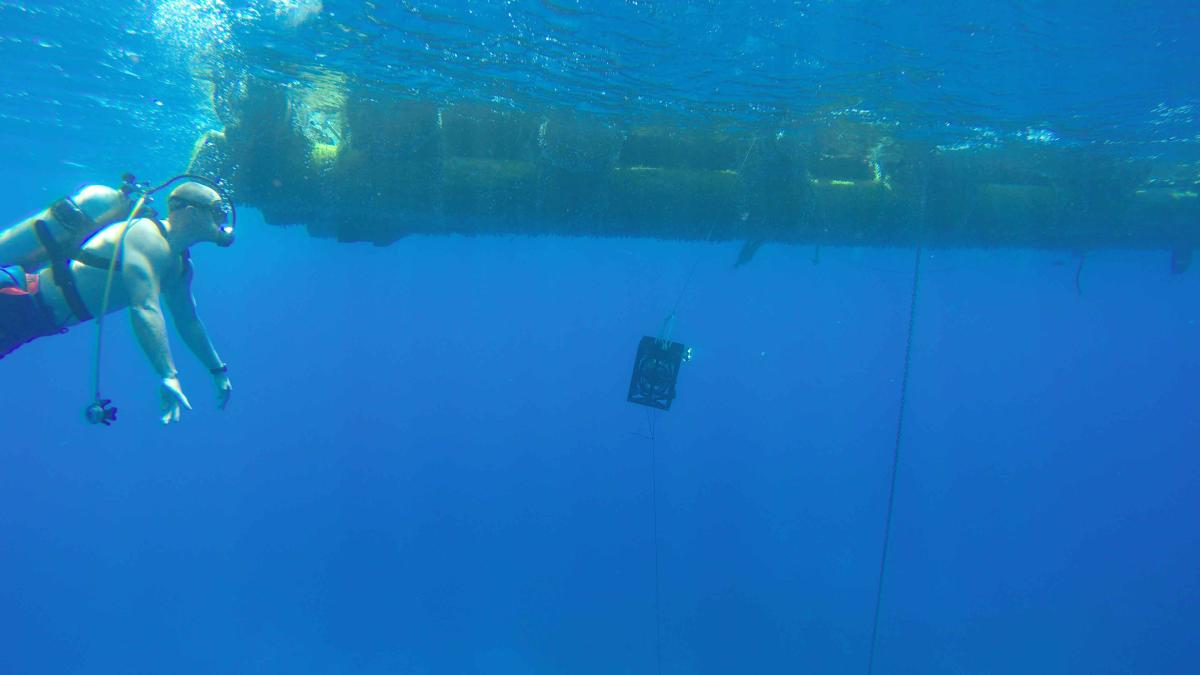
Sperre camera goes under
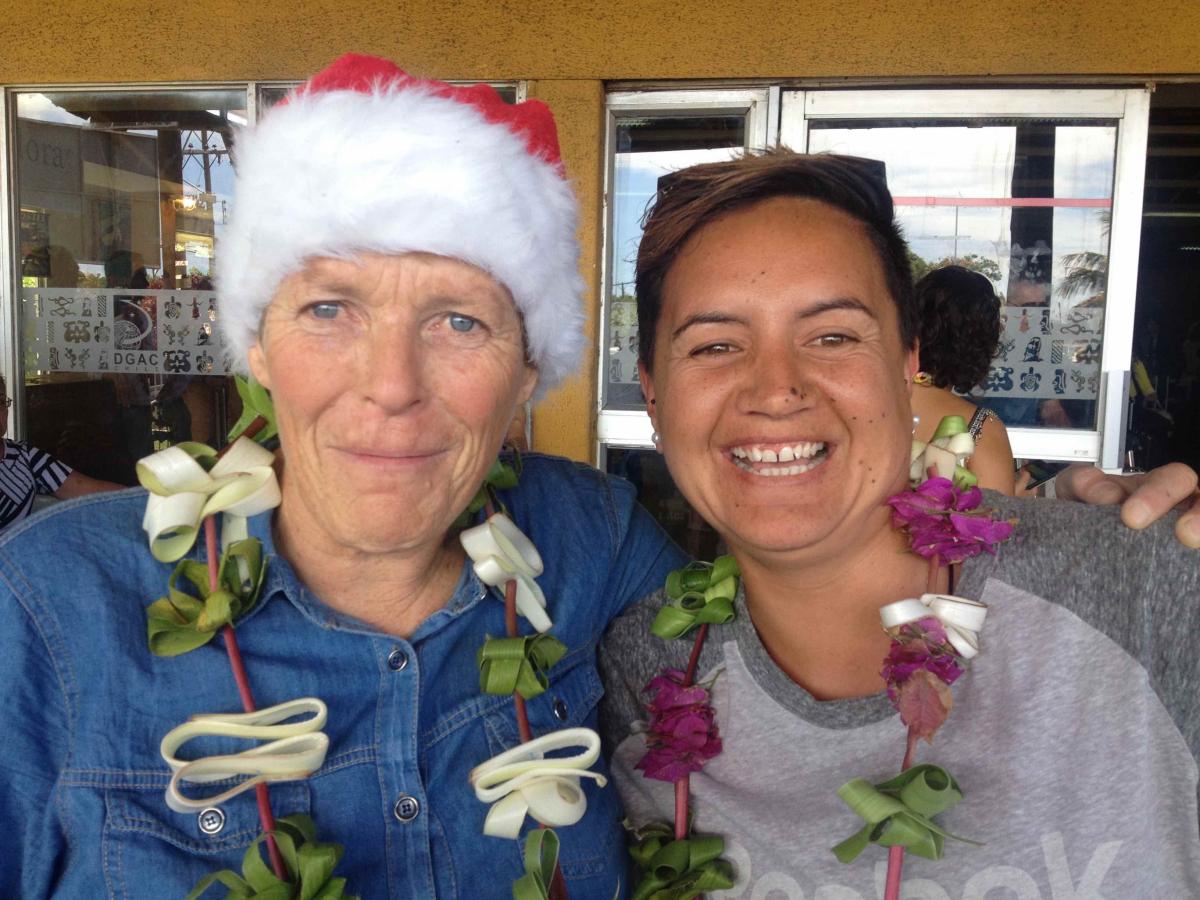
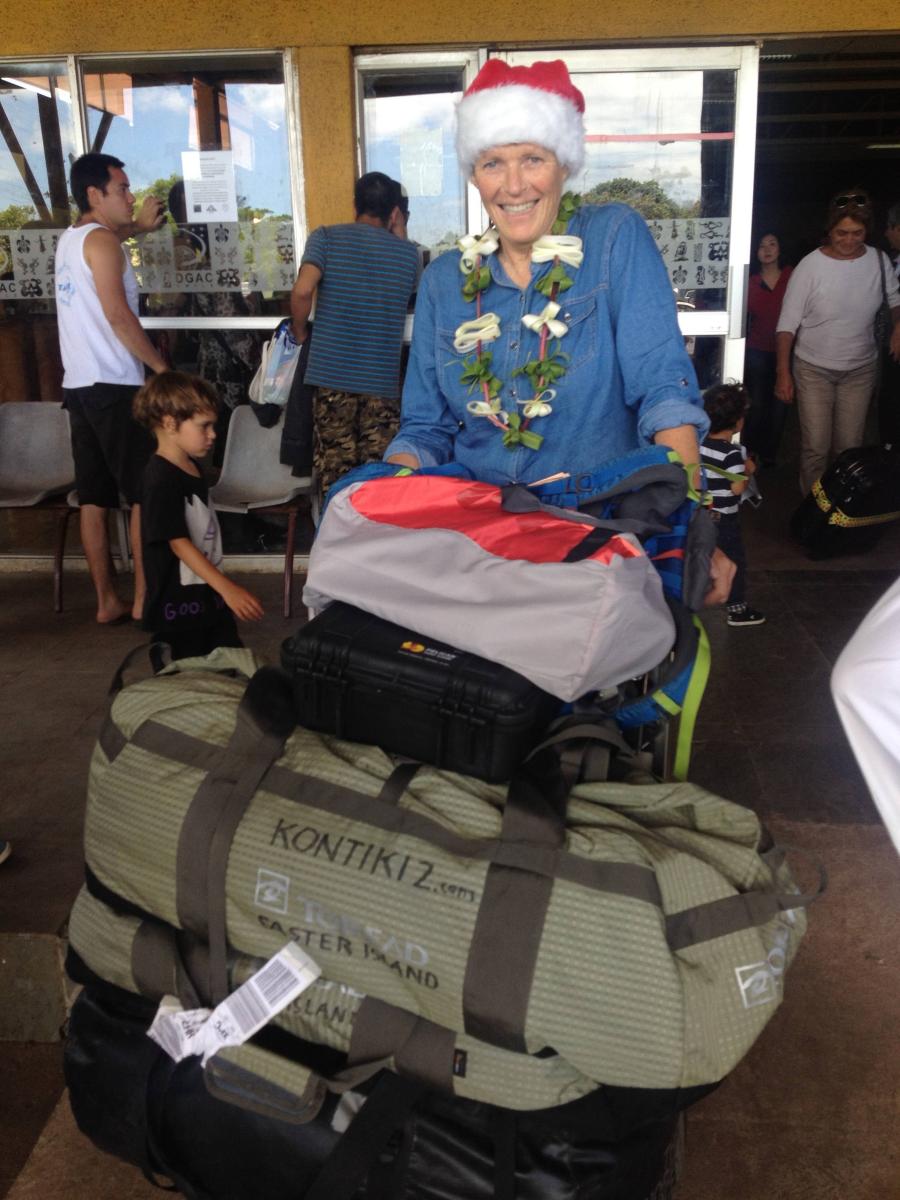
In other news, Liv Arnesen arrives from Norway with a suitable hat, to a warm Polynesian welcome.